Old Maps of West Windsor, Vermont
Explore 44 old maps of West Windsor, spanning from 1906 to today. These high-resolution historic maps reveal how streets, neighborhoods, landmarks, and natural features evolved over time — perfect for genealogy, metal detecting, research, and local history exploration.
What you can do with these maps:
- See how West Windsor changed over time: Compare historical maps to modern-day views to trace roads, homesites, rail lines & more.
- View detailed metadata: Each map includes creators, publishers, year, scale, and archive source.
- Overlay maps with satellite & LiDAR: Visualize the past alongside modern tools to explore terrain & human change.
- Trusted historical sources: Maps sourced from the USGS, Library of Congress, and other archives.
- Access maps your way: View online, download high-res files, or order prints for personal or research use.
Start exploring old maps of West Windsor to uncover forgotten places, hidden landmarks, and the deep history beneath your feet.
West Windsor, VT maps
(44)- 1906 Map of Hanover, 1956 Print
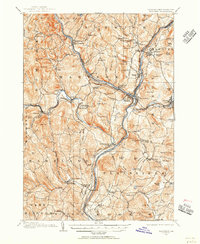 1906 Hanover1956 Print · USGSThe Upper Connecticut River Valley at the turn of the century is a hub of rail activity and collegiate life. Researchers can trace the early footprints of Dartmouth College or locate vanished rail infrastructure at White River Junction and Deweys Mills.2 unique versions available
 - 1908 Map of Hanover
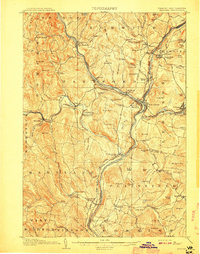 1908 Hanover1908 Print · USGSThe Upper Valley at the dawn of the twentieth century was a vital junction of Vermont and New Hampshire rail lines and river commerce. Researchers can trace the early layout of Dartmouth College, the rail yards of White River Junction, and numerous rural schoolhouses like Podunk School.7 unique versions available
 - 1911 Map of Woodstock, 1958 Print
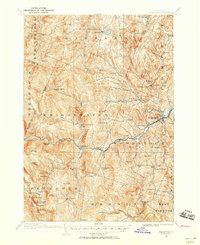 1911 Woodstock1958 Print · USGSWindsor County villages and mountain hollows are captured here at the dawn of the twentieth century. Researchers can trace the early path of the Woodstock Railroad or locate family sites near the Town Farm and Plymouth Notch.
 - 1913 Map of Woodstock
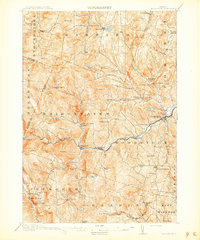 1913 Woodstock1913 Print · USGSWindsor County villages and narrow valley settlements are captured here in the decade before the First World War. Genealogists can trace family lines through numerous rural schoolhouses like Mendall School and early post offices at Bridgewater Center Briggs P O.5 unique versions available
 - 1926 Map of Claremont, 1955 Print
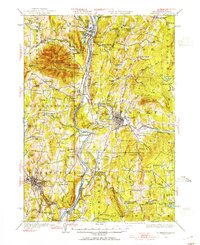 1926 Claremont1955 Print · USGSThe Connecticut River valley thrives in the mid-twenties as a hub of industry and transit between Vermont and New Hampshire. Tracing these hills reveals historic crossings like Cornish Bridge, the Sullivan County Farm, and the early Claremont Airport.
 - 1928 Map of Ludlow
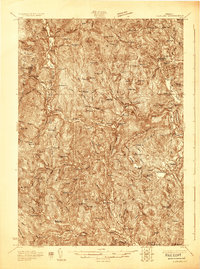 1928 Ludlow1928 Print · USGSWindsor County's industrial river valleys and upland hill farms are captured here in the late twenties just as early aviation arrived. Trace family roots through numerous district schools like Baltimore Sch and vanished post offices at Peaseville.
 - 1929 Map of Claremont
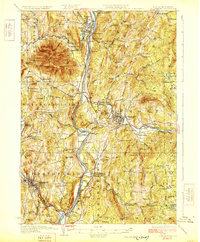 1929 Claremont1929 Print · USGSThe Upper Connecticut River Valley thrives in the late twenties as a hub of manufacturing and mountain farming. You can trace early rail-and-river industrial sites at Claremont and Windsor, or locate ancestral rural schoolhouses like Brick Sch and Red Sch.4 unique versions available
 - 1929 Map of Ludlow, 1961 Print
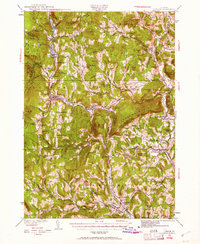 1929 Ludlow1961 Print · USGSThe Black River valley and its busy rail corridor define this Vermont landscape in the late 1920s. Researchers can trace the legacy of rural education at Sawyer Stand Sch and locate vanished local landmarks like Baileys Mills or Grout Cem.2 unique versions available
 - 1932 Map of Ludlow
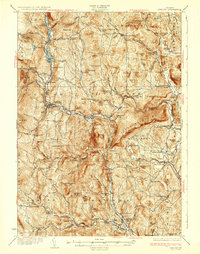 1932 Ludlow1932 Print · USGSWindsor County in the early thirties features a landscape of mountain hamlets and busy river valleys connected by the Rutland Railroad. Trace genealogy and local history through numerous rural landmarks like Plymouth Kingdom, Baileys Mills, and the Sawyer Stand School.4 unique versions available
 - 1943 Map of Woodstock
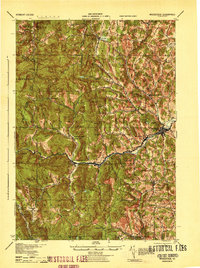 1943 Woodstock1943 Print · USGSWindsor County's high country and river valleys are captured here during the early 1940s, showing a landscape of small hill farms and rural schools. Researchers can locate many former community hubs like English Mills, the Town Farm, and Notown.
 - 1950 Map of Glens Falls
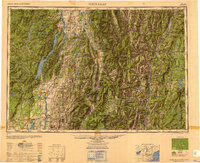 1950 Glens Falls1950 Print · USGSThe Adirondacks and the Green Mountains meet in this mid-century survey of the New York and Vermont borderlands. Researchers can trace the industrial rail corridors of the Rutland RR and Delaware & Hudson RR connecting Glens Falls, Rutland, and the shores of Lake George.
 - 1956 Map of Glens Falls, 1968 Print
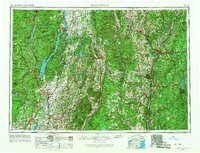 1956 Glens Falls1968 Print · USGSUpper New York and the Vermont mountains are captured here in the mid-fifties, showing the rugged rail-and-river network of the Northeast. Researchers can trace the paths of the Delaware and Hudson RR and Rutland RR as they wind through valley towns like Poultney and Whitehall.3 unique versions available
 - 1957 Map of Claremont, 1960 Print
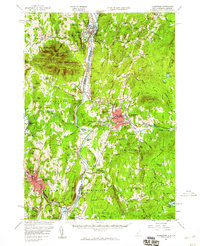 1957 Claremont1960 Print · USGSThe Connecticut River valley thrives during the late fifties, showcasing a robust industrial landscape shaped by the Sugar and Black Rivers. Genealogists and local historians can trace family roots through riverside settlements like Weathersfield Bow, rural outposts like Quaker City, and landmarks such as the Cornish Bridge.3 unique versions available
 - 1959 Map of Glens Falls
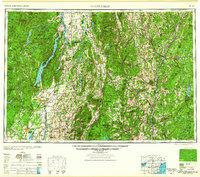 1959 Glens Falls1959 Print · USGSUpper New York and Vermont are captured here during the late 1950s, a period of transition for these mountain communities. Researchers can trace the legacy of the region's river-and-rail economy through landmarks like Lake George, Saratoga Springs, and Killington Peak.2 unique versions available
 - 1959 Map of Hartland, 1961 Print
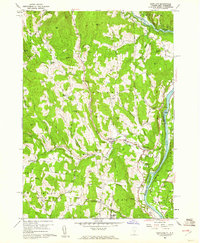 1959 Hartland1961 Print · USGSThe Connecticut River valley south of White River Junction shows its mid-century character, from the State Prison Farm to the North Hartland Reservoir. Researchers can trace old family names at Quaker Village Cem and locate historic sites like Jenneville and the Covered Bridge.4 unique versions available
 - 1964 Map of Glens Falls
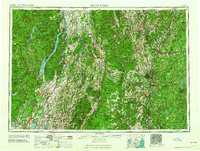 1964 Glens Falls1964 Print · USGSThe tri-state borderlands of New York, Vermont, and New Hampshire appear here in the mid-1960s. Researchers can trace the rail routes of the Rutland RR and find historic sites like Ticonderoga and Saratoga National Historical Park.
 - 1966 Map of Woodstock South, 1968 Print
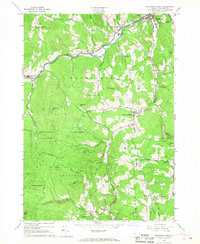 1966 Woodstock South1968 Print · USGSWindsor County in the mid-1960s reflects a landscape of river-valley villages and high mountain forests. Researchers can trace family sites near Riverside Cemetery, locate the Covered Bridge over the Ottauquechee River, or follow the Long Trail.3 unique versions available
 - 1972 Map of Cavendish, 1974 Print
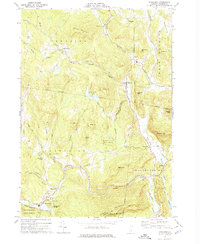 1972 Cavendish1974 Print · USGSWindsor County villages and mountain ridges are documented here in the early 1970s, showing the historical footprint of Vermont's upland towns. Researchers can locate ancestral sites like the Old Revolutionary War Cem, the village of South Reading, and the industrial works at Cavendish Gorge.3 unique versions available
 - 1984 Map of Mt. Ascutney
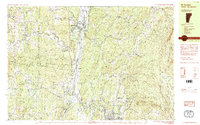 1984 Mt. Ascutney1984 Print · USGSThe Vermont and New Hampshire borderlands are captured here in the early eighties, centered on the Connecticut River and the heights of Mt Ascutney. Genealogists can locate family landmarks like Child Cem and Mountainview Cem or the historic Saint-Gaudens National Historic Site.2 unique versions available
 - 1985 Map of Claremont, 1986 Print
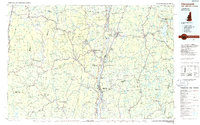 1985 Claremont1986 Print · USGSUpper Valley and Green Mountain life are captured here in the mid-eighties, centered on the river-linked hubs of Claremont and Springfield. Trace old family routes and rail lines like the Boston & Maine RR, or locate properties near Lake Sunapee and Mount Ascutney State Park.2 unique versions available
 - 1985 Map of Rutland, 1988 Print
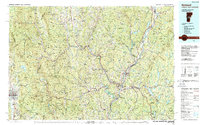 1985 Rutland1988 Print · USGSThe Upper Valley of the mid-1980s comes to life along the winding Connecticut River as it divides the Green Mountain and Granite states. Historians can trace the industrial rail hubs of White River Junction and the paths of the Appalachian Trail and Long Trail.
 - 1998 Map of Hartland, 1999 Print
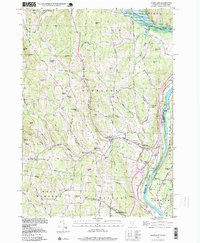 1998 Hartland1999 Print · USGSLate twentieth-century Windsor County reveals a landscape of high hills and river junctions along the New Hampshire border. Genealogists can trace family names across Hoisington Cem, Aldrich Cem, and historic hamlets like Quakers Village.
 - 1998 Map of Woodstock South, 1999 Print
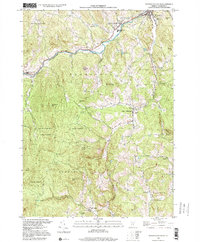 1998 Woodstock South1999 Print · USGSWindsor County, Vermont, retained its classic New England character in the late nineties, from the river valleys to the high state forest peaks. Researchers can trace family history through many small burial sites like Riverside Cemetery or explore the transit history found at the Covered Bridge and Reading Center.
 - 1998 Map of Windsor, 2002 Print
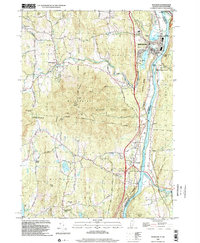 1998 Windsor2002 Print · USGSWindsor and the Connecticut River Valley are captured here in the late nineties, showing the region's transition between conserved highlands and riverfront industry. Trace local landmarks like the Cornish Bridge, the Central Vermont rail line, and the slopes of Mt Ascutney.
 - 2012 Map of Woodstock South, 2012 Print
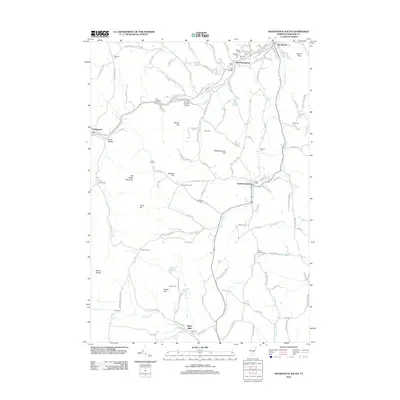 2012 Woodstock South2012 Print · USGSWindsor County villages and river valleys are captured here in the early twenty-first century as they follow the paths of the Ottauquechee and Kedron Brook. Researchers can locate numerous family-named burial grounds like Smith Cem and Walker Jaquith Cem or trace the historic Lincoln Covered Bridge.
Showing maps 1-25 of 44
Top cities near West Windsor
- Lebanon historical maps
- Claremont historical maps
- Hanover historical maps
- Hartford historical maps
- Newport historical maps
- Springfield historical maps
See more
Top neighborhoods of West Windsor
Frequently asked questions
- What are the different types of historical maps available for West Windsor?
- What is the oldest map of West Windsor?
- Where can I purchase historical maps of West Windsor for my home or office?
- Where can I download high-res historical maps of West Windsor?
- Are there historical topographic maps available for West Windsor?
- Is there historical aerial imagery available for West Windsor?
- Where are historical maps of West Windsor sourced from?