Old Maps of Martins Shop, Virginia for Academic Research
Study the evolution of Martins Shop with 14 high-resolution historic maps. Whether you're teaching, researching, or modeling changes in land use, these maps provide essential visual documentation of urban, environmental, and geographic change.
- Analyze long-term change: Track patterns in development, transportation, and natural features.
- Ideal for environmental or urban studies: Support academic projects with primary historical map data.
- Use in the classroom or lab: Educators and researchers rely on these maps to bring historical context to life.
These maps are a powerful tool for teaching, research, and visualizing how Martins Shop has changed over the decades.
Martins Shop, VA maps
(14)- 1892 Map of Lynchburg
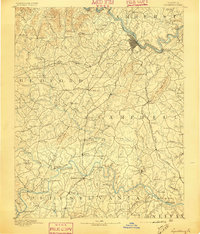 1892 Lynchburg1892 Print · USGSCentral Virginia in the 1890s centered on the vital rail and river junction of Lynchburg and its surrounding tobacco-growing counties. Family historians can trace ancestral crossings at Wards Road Ferry, locate the Academy church, and follow the early Virginia Midland Rail Road through Evington.6 unique versions available
 - 1944 Map of Lynchburg
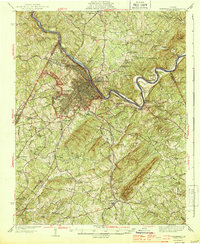 1944 Lynchburg1944 Print · USGSThe James River corridor hums with activity during the mid-1940s as four major railways converge on the industrial and collegiate city of Lynchburg. Researchers can trace old family sites and schools like the Rosenwald Sch, Oxford Furnace, and Galts Mill.3 unique versions available
 - 1947 Map of Roanoke, 1948 Print
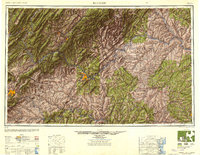 1947 Roanoke1948 Print · USGSCentral Virginia in the late 1940s reveals a region defined by its great mountain ridges and the powerful river-and-rail economy connecting Roanoke to Lynchburg. Researchers can trace the path of the Virginian RR and locate historic county seats like Charlotte Court House.2 unique versions available
 - 1950 Map of Lynchburg, 1963 Print
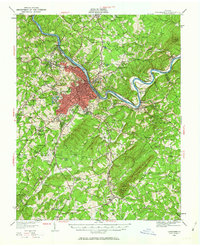 1950 Lynchburg1963 Print · USGSMid-century Lynchburg and the surrounding Piedmont hills are caught in a moment of industrial and rail prominence. Researchers can trace the legacy of local commerce and community through landmarks like Oxford Furnace, Tomahawk Mill, and Lynchburg Womens College.
 - 1959 Map of Roanoke
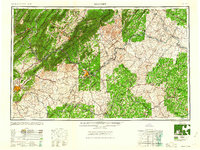 1959 Roanoke1959 Print · USGSCentral Virginia and the Blue Ridge appear in great detail during the late fifties, showcasing the transition from mountain industry to Piedmont farmland. Trace the path of the Norfolk and Western railroad or find old river towns like Appomattox and Amelia Court House.
 - 1963 Map of Roanoke
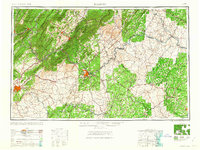 1963 Roanoke1963 Print · USGSCentral Virginia and the Blue Ridge front appear here in the early sixties, caught between their deep railroad roots and new postwar developments. Genealogists and historians can trace the rail lines of the Norfolk and Western through towns like Bedford and Altavista, or locate family landmarks near Smith Mountain Lake.
 - 1963 Map of Kelly, 1965 Print
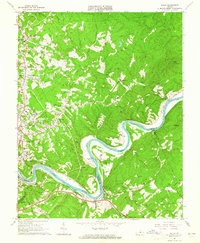 1963 Kelly1965 Print · USGSThe James River corridor in the early 1960s reveals a landscape of industrial railways and deep-rooted family homesteads. Genealogists and historians can trace the locations of Brightwell Mill, the Oxford Furnace site, and family cemeteries like Megginson Cem.3 unique versions available
 - 1971 Map of Roanoke, 1977 Print
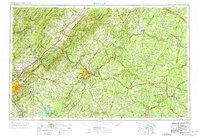 1971 Roanoke1977 Print · USGSThe Virginia Piedmont and Blue Ridge mountains meet in this early 1970s landscape of river valleys and rail hubs. Researchers can trace historic transportation routes and landmarks like the Appomattox Court House Nat Hist Pk, the Peaks of Otter, and Amelia Court House.2 unique versions available
 - 1985 Map of Roanoke, 1986 Print
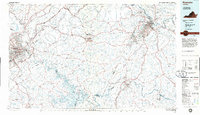 1985 Roanoke1986 Print · USGSMid-eighties Virginia comes into focus across the Blue Ridge and the upper Roanoke River valley during a period of steady regional growth. Genealogists and historians can trace family-named landmarks like Mt Moriah Ch, local hubs such as Cave Spring, and sites like the New London Airport (Drag Strip).2 unique versions available
 - 2010 Map of Kelly, 2010 Print
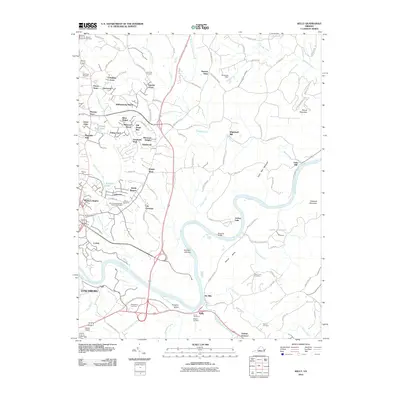 2010 Kelly2010 Print · USGSThe James River corridor in Amherst County appears here in the early twenty-first century, showing the intersection of industrial heritage and modern growth. Genealogists can trace family sites at Megginson Cemetery or locate historic landmarks like Oxford Furnace and Galts Mill.
 - 2013 Map of Kelly, 2013 Print
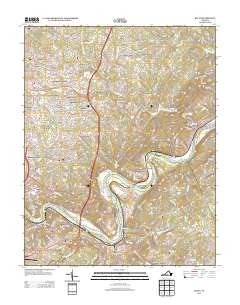 2013 Kelly2013 Print · USGSMadison Heights and the surrounding Amherst County hills are documented here in the early twenty-first century as suburban growth meets river history. Trace the landscape from the James River banks at Oxford Furnace to landmarks like Joshua Falls and Mount Athos.
 - 2016 Map of Kelly, 2016 Print
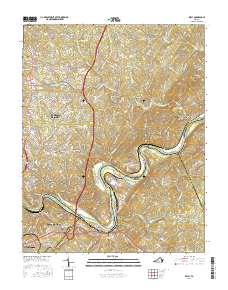 2016 Kelly2016 Print · USGSThe James River corridor near Madison Heights comes into focus in the mid-2010s, showcasing the intersection of industrial heritage and modern growth. Genealogists and historians can trace numerous family burial sites like Feagans Cemetery or locate historic landmarks such as Brightwell Mill and the Oxford Furnace site.
 - 2019 Map of Kelly, 2019 Print
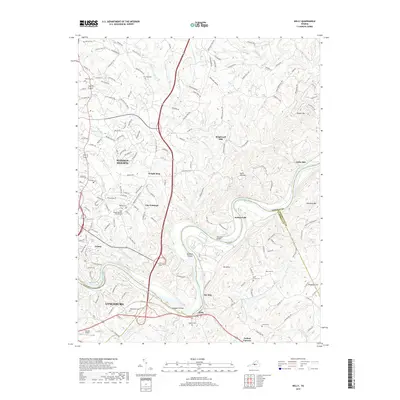 2019 Kelly2019 Print · USGSThe James River valley near Lynchburg and Madison Heights was a center of early industry and transport during the twentieth century. Researchers can trace historic mill sites like Brightwell Mill, several family cemeteries such as Megginson Cem, and the landmark Oxford Furnace.
 - 2022 Map of Kelly, 2022 Print
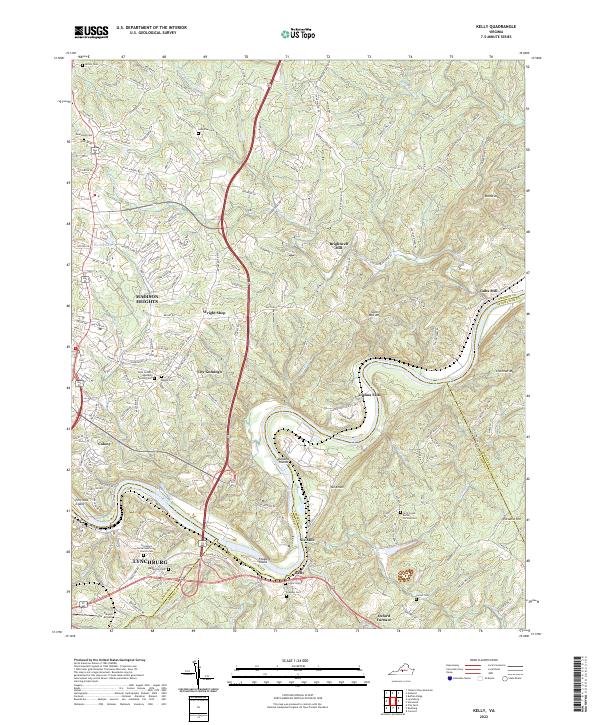 2022 Kelly2022 Print · USGSThe river valley at the crossing of Amherst and Campbell Counties is captured here in the early twenty-first century. Researchers can trace historic industrial sites like Oxford Furnace and Galts Mill, or locate family sites at Grace Cem and Meade Cem.
End of results
Showing maps 1-14 of 14
Top cities near Martins Shop
- Lynchburg historical maps
- Timberlake historical maps
- Forest historical maps
- Madison Heights historical maps
- Amherst historical maps
- Appomattox historical maps
See more
Frequently asked questions
- What are the different types of historical maps available for Martins Shop?
- What is the oldest map of Martins Shop?
- Where can I purchase historical maps of Martins Shop for my home or office?
- Where can I download high-res historical maps of Martins Shop?
- Are there historical topographic maps available for Martins Shop?
- Is there historical aerial imagery available for Martins Shop?
- Where are historical maps of Martins Shop sourced from?