Old Maps of Dillons Mill, Virginia for Genealogy
Trace your family roots with 12 historic maps of Dillons Mill. These high-res maps reveal old neighborhoods, homesites, landmarks, and streets — helping you uncover where your ancestors lived and how the area evolved over time.
- Explore historic neighborhoods: Identify where your relatives may have lived in the 1800s or 1900s.
- Compare maps over time: Trace the changes in streets, buildings, and landmarks for multi-generational research.
- Perfect for genealogy & ancestry research: Used by family historians and researchers to map out lineage and migration.
These maps are an incredible resource for exploring your personal connection to Dillons Mill's past.
Dillons Mill, VA maps
(12)- 1890 Map of Christiansburg
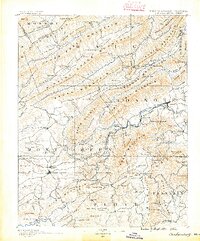 1890 Christiansburg1890 Print · USGSSouthwestern Virginia in the late nineteenth century centers on the emerging rail and resort economy. Trace the Norfolk and Western Railroad through Christiansburg and find historic resorts like Alleghany Springs.10 unique versions available
 - 1950 Map of Elliston, 1952 Print
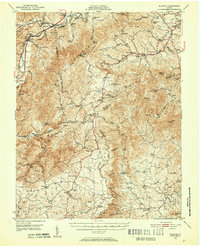 1950 Elliston1952 Print · USGSThe Roanoke River headwaters and Blue Ridge highlands are captured here in the early postwar era. Genealogists and historians can trace community roots through numerous country landmarks like Check High Sch, Dillons Mill, and Bend Union Ch.4 unique versions available
 - 1955 Map of Bluefield
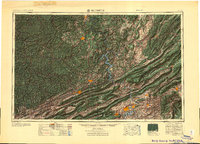 1955 Bluefield1955 Print · USGSThe Central Appalachian borderlands come alive in the mid-fifties, showing the coal and rail networks connecting Bluefield to Beckley. Researchers can trace the industrial landscape of the New River Ordnance Plant and the terrain of Burkes Garden.
 - 1957 Map of Bluefield, 1967 Print
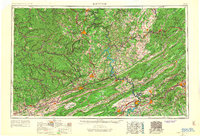 1957 Bluefield1967 Print · USGSThe heart of Central Appalachia in the mid-fifties is defined by the winding rail lines and river valleys of the coalfields. Researchers can trace the industrial footprints of towns like Welch and Princeton or locate landmarks such as the Bluestone Reservoir and Claytor Lake.2 unique versions available
 - 1961 Map of Bluefield
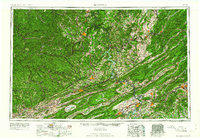 1961 Bluefield1961 Print · USGSThe coalfields and mountain ridges of southern West Virginia and southwest Virginia are captured in the early sixties. Genealogists can trace family ties through rail-linked towns like Princeton and Richlands or along the shores of Bluestone Reservoir.
 - 1963 Map of Callaway, 1964 Print
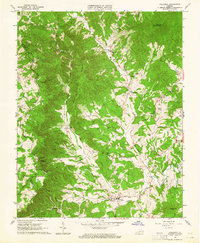 1963 Callaway1964 Print · USGSFranklin County's high ridges and hollows come into focus in the early sixties as the Blue Ridge Parkway skirts the county line. Researchers can locate dozens of family-named landmarks and cemeteries, from Dillons Mill and Algoma to the Wilson Cem and Adney Gap Fire Tower.2 unique versions available
 - 1982 Map of Radford, 1983 Print
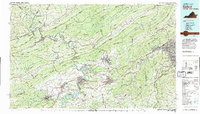 1982 Radford1983 Print · USGSThe New River Valley and surrounding highlands are shown during a period of significant regional growth in the early eighties. Genealogists and historians can trace the development of VPI, locate historic sites like Yellow Sulphur Springs, and follow the Norfolk and Western rail lines through the gaps.2 unique versions available
 - 2010 Map of Callaway, 2010 Print
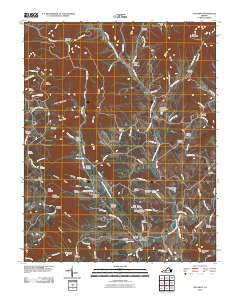 2010 Callaway2010 Print · USGSFranklin County's high ridges and river headwaters are captured here at the start of the 21st century. Genealogists can trace family heritage through dozens of local sites like Waldron-Bowles Cemetery, Dillons Mill, and the community of Algoma.
 - 2013 Map of Callaway, 2013 Print
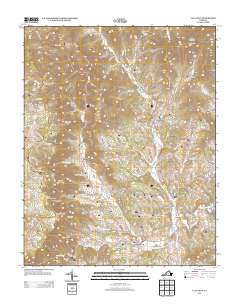 2013 Callaway2013 Print · USGSThe foothills of the Blue Ridge in the early twenty-first century reveal a landscape of mountain hollows and river forks. Researchers can trace the layout of Callaway and Algoma or locate family landmarks like Dillons Mill and Graveyard Knob.
 - 2016 Map of Callaway, 2016 Print
 2016 Callaway2016 Print · USGSFranklin County's high country is documented in the mid-2010s, showing the intersection of the ridge-top parkway and the valley communities below. Genealogists can trace family burial sites like Guerrant-Calloway Cem, Johnson-Mills Cem, and Piedmont Cem.
 - 2019 Map of Callaway, 2019 Print
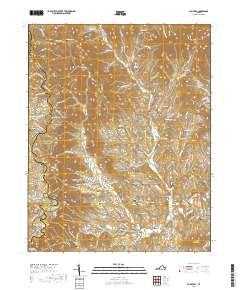 2019 Callaway2019 Print · USGSIn the foothills of the Blue Ridge, the Callaway and Algoma area is shown here as a landscape shaped by the headwaters of the Blackwater River. Genealogists can trace family heritage through dozens of named sites, from Piedmont Cem to the Johnson-Mills Cem and Cahas Mtn.
 - 2022 Map of Callaway, 2022 Print
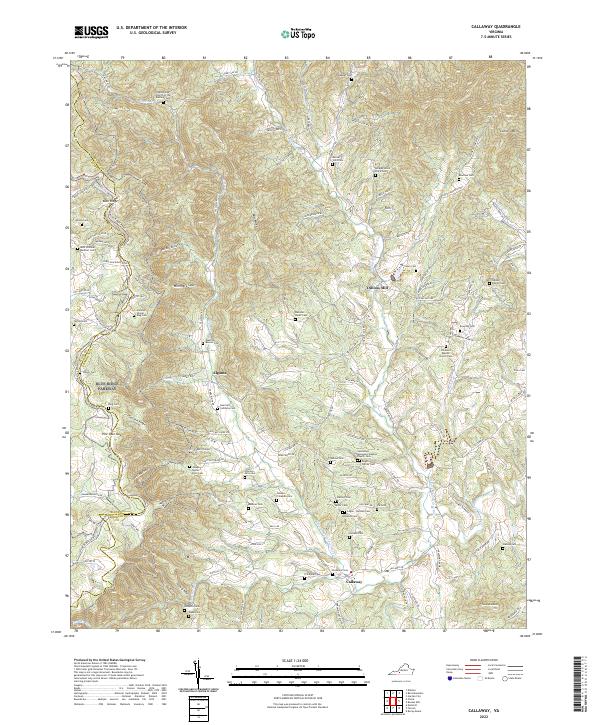 2022 Callaway2022 Print · USGSFranklin County's mountain hollows and river forks are documented here in the early twenty-first century. Researchers can trace family lineages through numerous remote burial sites, including the Guerrant Calloway Cem, Toney Cem, and Dillons Mill.
End of results
Showing maps 1-12 of 12
Top cities near Dillons Mill
- Roanoke historical maps
- Salem historical maps
- Cave Spring historical maps
- Vinton historical maps
- Rocky Mount historical maps
- Henry Fork historical maps
See more
Frequently asked questions
- What are the different types of historical maps available for Dillons Mill?
- What is the oldest map of Dillons Mill?
- Where can I purchase historical maps of Dillons Mill for my home or office?
- Where can I download high-res historical maps of Dillons Mill?
- Are there historical topographic maps available for Dillons Mill?
- Is there historical aerial imagery available for Dillons Mill?
- Where are historical maps of Dillons Mill sourced from?