Old Maps of Vaucluse, Virginia
Explore 17 old maps of Vaucluse, spanning from 1894 to today. These high-resolution historic maps reveal how streets, neighborhoods, landmarks, and natural features evolved over time — perfect for genealogy, metal detecting, research, and local history exploration.
What you can do with these maps:
- See how Vaucluse changed over time: Compare historical maps to modern-day views to trace roads, homesites, rail lines & more.
- View detailed metadata: Each map includes creators, publishers, year, scale, and archive source.
- Overlay maps with satellite & LiDAR: Visualize the past alongside modern tools to explore terrain & human change.
- Trusted historical sources: Maps sourced from the USGS, Library of Congress, and other archives.
- Access maps your way: View online, download high-res files, or order prints for personal or research use.
Start exploring old maps of Vaucluse to uncover forgotten places, hidden landmarks, and the deep history beneath your feet.
Vaucluse, VA maps
(17)- 1894 Map of Winchester, 1899 Print
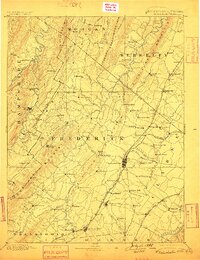 1894 Winchester1899 Print · USGSThe Virginia and West Virginia borderlands appear here in the late nineteenth century, showing a landscape defined by mountain ridges and bustling rail junctions. Researchers can trace early rural life through family-named sites like Unger Store and Fawcetts Gap or the resort history of Capon Springs.6 unique versions available
 - 1938 Map of Winchester
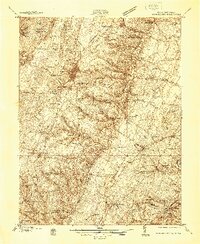 1938 Winchester1938 Print · USGSThe Shenandoah Valley appears here in the late 1930s as a vital crossroads of rail and road. Genealogists and historians can trace old homesteads and landmarks like Greenway Court, the Civil War-era Star Fort, and Berrys Ferry Bridge.
 - 1942 Map of Winchester
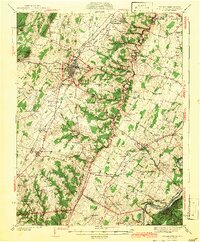 1942 Winchester1942 Print · USGSThe Shenandoah Valley during the early years of the war shows a landscape of busy pikes and vital rail junctions. Researchers can trace historic fortifications like Star Fort, family sites at Ridings Mill, and landmarks like Greenway Court.3 unique versions available
 - 1948 Map of Cumberland
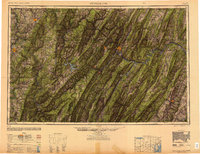 1948 Cumberland1948 Print · USGSMid-century Appalachia and the Shenandoah Valley are shown in detail, documenting the industrial and transportation hubs of the tri-state area. Genealogists can trace family roots through settlements like Double Tollgate and Bunker Hill or along the Baltimore & Ohio RR.3 unique versions available
 - 1952 Map of Cumberland
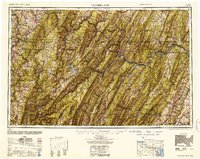 1952 Cumberland1952 Print · USGSThe Potomac Highlands and the Shenandoah Valley are revealed in this early 1950s survey of the Appalachian interior. Researchers can trace the river-and-rail corridors connecting Cumberland, Winchester, and the recreational waters of Deep Creek Lake.
 - 1956 Map of Cumberland, 1966 Print
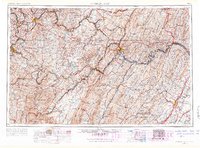 1956 Cumberland1966 Print · USGSThe tri-state Highlands in the mid-1950s show a landscape shaped by coal, timber, and the massive presence of the Baltimore & Ohio RR. Researchers can trace the industrial corridor from Cumberland through the Allegheny Mountains to mountain retreats like Deep Creek Lake.6 unique versions available
 - 1957 Map of Cumberland
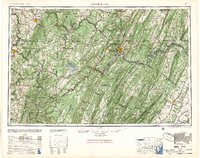 1957 Cumberland1957 Print · USGSThe Potomac River valley and the ridges of the Allegheny Front define this mid-century landscape at the intersection of Maryland, West Virginia, and Pennsylvania. Trace the steam-era rail lines of the Baltimore and Ohio RR or locate rural landmarks like St Stephens Church and Stony River Dam.
 - 1961 Map of Cumberland
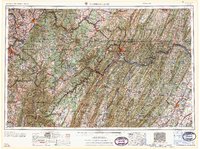 1961 Cumberland1961 Print · USGSThe tri-state highlands of Maryland, West Virginia, and Pennsylvania are shown in the mid-twentieth century as a complex landscape of ridges and river valleys. Researchers can trace the winding Potomac River and find old rail-and-river towns like Cumberland, Keyser, and Morgantown.
 - 1962 Map of Cumberland
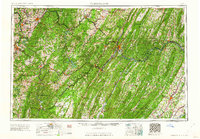 1962 Cumberland1962 Print · USGSThe central Appalachians meet at the height of the mid-century industrial era, showing the rugged topography between Morgantown and Winchester. Genealogists can trace family lands near Fort Necessity or along the vital Baltimore & Ohio RR corridors.
 - 1966 Map of Stephens City, 1967 Print
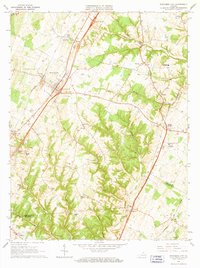 1966 Stephens City1967 Print · USGSStephens City and the northern Shenandoah Valley are shown in the mid-1960s as new interstates began to intersect with old rail lines and rural mills. Genealogists and local historians can trace family landmarks like Green Hill Cem, Ridings Chapel, and the historic Klines Mill site.3 unique versions available
 - 1972 Map of Stephens City, 1977 Print
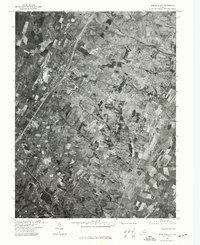 1972 Stephens City1977 Print · USGSStephens City and the surrounding Frederick County countryside are captured during the early 1970s as modern highways reshaped the valley. Trace the layout of family farms and the growth of Stephens City and Reliance through this detailed aerial photography.
 - 1983 Map of Winchester, 1985 Print
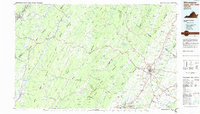 1983 Winchester1985 Print · USGSThe northern Shenandoah Valley and the rugged West Virginia borderlands are captured here in the early eighties. Researchers can trace the rail networks of the B & O RR and find local landmarks like Potomac State College, Three Churches, and the Old Iron Furnace.3 unique versions available
 - 2010 Map of Stephens City, 2010 Print
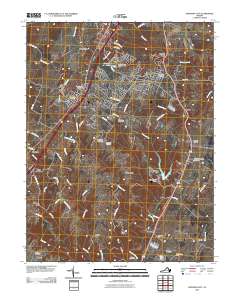 2010 Stephens City2010 Print · USGSStephens City and the Opequon Creek valley are documented here in the early twenty-first century as suburban growth meets long-standing farmsteads. Genealogists and local historians can locate several historic mill sites like Klines Mill and family-linked grounds such as Macedonia Cemetery.
 - 2013 Map of Stephens City, 2013 Print
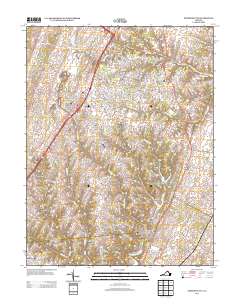 2013 Stephens City2013 Print · USGSStephens City and the surrounding Frederick County countryside are captured here in the early twenty-first century as modern interstate travel meets deep-rooted local history. Researchers can trace historic industry and community landmarks from the Springdale Mill Complex and Klines Mill to Refuge Church.
 - 2016 Map of Stephens City, 2016 Print
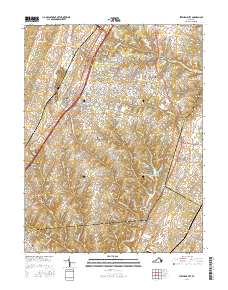 2016 Stephens City2016 Print · USGSStephens City and the surrounding Shenandoah Valley hamlets are shown in the mid-2010s as they balance historic roots with modern growth. Researchers can trace ancestral locations through numerous burial grounds like Green Hill Cem and old industrial sites including Klines Mill and Ridings Mill.
 - 2019 Map of Stephens City, 2019 Print
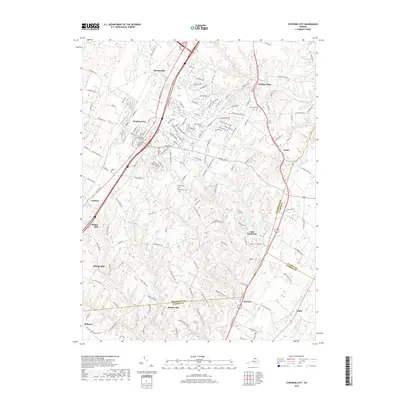 2019 Stephens City2019 Print · USGSStephens City and the Shenandoah Valley are shown here in the late twenty-teens, during a period of modern growth among historic mill sites. Family historians can trace legacies at Green Hill Cem, Macedonia Church, and old valley outposts like Klines Mill or Vaucluse.
 - 2022 Map of Stephens City, 2022 Print
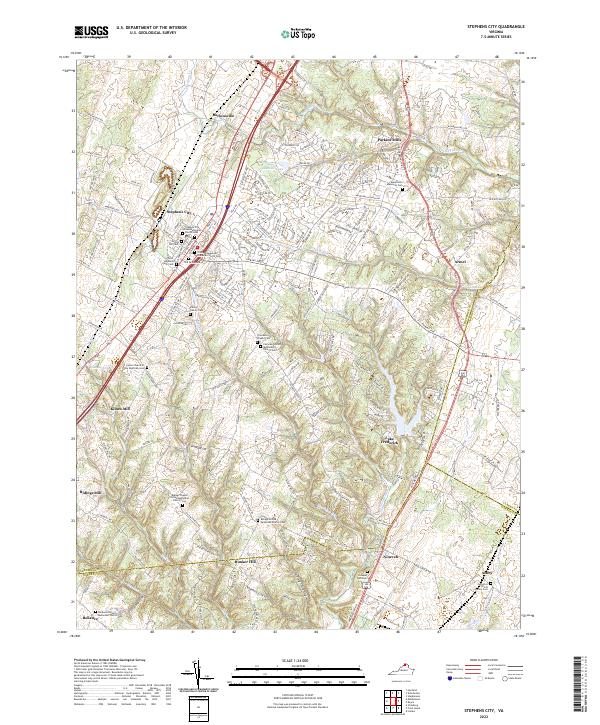 2022 Stephens City2022 Print · USGSStephens City and the surrounding Frederick County countryside are captured here in the early 2020s, showing a landscape defined by deep family roots. Researchers can trace ancestral locations through the Peter Stephens Farm Cem, Ridings Mill, and Vaucluse Spring.
End of results
Showing maps 1-17 of 17
Top cities near Vaucluse
- Winchester historical maps
- Front Royal historical maps
- Strasburg historical maps
- Shenandoah Farms historical maps
- Stephens City historical maps
- Shawneeland historical maps
See more
Frequently asked questions
- What are the different types of historical maps available for Vaucluse?
- What is the oldest map of Vaucluse?
- Where can I purchase historical maps of Vaucluse for my home or office?
- Where can I download high-res historical maps of Vaucluse?
- Are there historical topographic maps available for Vaucluse?
- Is there historical aerial imagery available for Vaucluse?
- Where are historical maps of Vaucluse sourced from?