Old Maps of Crozier, Virginia
Explore 15 old maps of Crozier, spanning from 1890 to today. These high-resolution historic maps reveal how streets, neighborhoods, landmarks, and natural features evolved over time — perfect for genealogy, metal detecting, research, and local history exploration.
What you can do with these maps:
- See how Crozier changed over time: Compare historical maps to modern-day views to trace roads, homesites, rail lines & more.
- View detailed metadata: Each map includes creators, publishers, year, scale, and archive source.
- Overlay maps with satellite & LiDAR: Visualize the past alongside modern tools to explore terrain & human change.
- Trusted historical sources: Maps sourced from the USGS, Library of Congress, and other archives.
- Access maps your way: View online, download high-res files, or order prints for personal or research use.
Start exploring old maps of Crozier to uncover forgotten places, hidden landmarks, and the deep history beneath your feet.
Crozier, VA maps
(15)- 1890 Map of Goochland
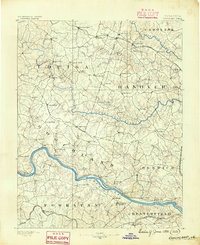 1890 Goochland1890 Print · USGSGoochland and the surrounding Virginia Piedmont are captured here in the late nineteenth century as the river-and-rail economy thrived. Researchers can trace the paths of the Chesapeake and Ohio Railroad and find landmarks like Hopeful Church or the Coal Pits.
 - 1892 Map of Goochland
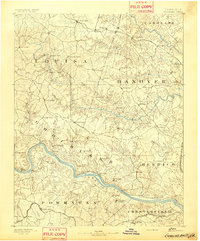 1892 Goochland1892 Print · USGSThe rural heart of central Virginia is captured here in the decade before the turn of the century, showing a landscape shaped by major rivers and early rail lines. Genealogists can trace family names and early settlements like Negro Foot, Mabelton, and the historic Hanover Academy.8 unique versions available
 - 1943 Map of Perkinsville
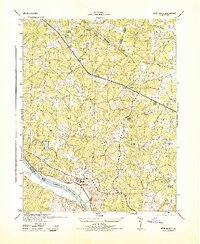 1943 Perkinsville1943 Print · USGSGoochland County at the height of the Second World War remains a landscape of rural stores and riverside rail transport. Genealogists and historians can trace the foundations of State Farm, find old community hubs like Gammons Store, or locate country parishes such as Hebron Church.2 unique versions available
 - 1943 Map of Richmond, 1972 Print
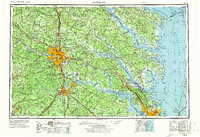 1943 Richmond1972 Print · USGSCoastal Virginia and the state capital are shown in detail during the mid-century era of infrastructure expansion. Genealogists and historians can trace the grounds of Richmond Nat Battlefield Park, locate the Yorktown Nat Cem, or follow the many rural routes through Amelia Court House and Tappahannock.
 - 1949 Map of Richmond, 1951 Print
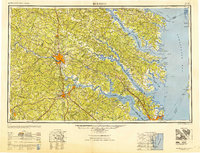 1949 Richmond1951 Print · USGSCoastal Virginia in the years following World War II remained a landscape of historic river towns and expanding military bases. Genealogists and historians can trace the rail lines of the Southern Ry and locate established landmarks from Camp Lee to the remote reaches of Dragon Swamp.
 - 1959 Map of Richmond
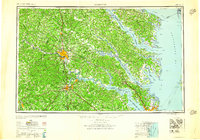 1959 Richmond1959 Print · USGSMid-century Virginia is captured here at its most vital rail and river junctions, from the capital city to the Chesapeake Bay. Genealogists and historians can trace the development of colonial settlements like Williamsburg and military landmarks including Fort Monroe and Camp Lee.
 - 1964 Map of Richmond
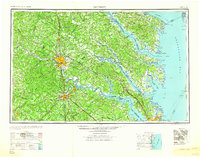 1964 Richmond1964 Print · USGSCoastal and central Virginia are mapped during the mid-twentieth century, showing the critical intersection of rail, river, and military life. Genealogists can trace family roots through rural county seats like Amelia or find vanished coastal neighborhoods near Phoebus and Hilton Village.
 - 1968 Map of Perkinsville, 1970 Print
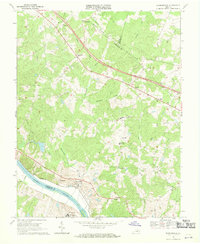 1968 Perkinsville1970 Print · USGSGoochland County in the late sixties reveals a landscape of Piedmont ridges and river-bottom industry along the James River. Genealogists and local historians can trace family locations near Gammons Store, Randolph Sch, and the State Farm Penal Institution.3 unique versions available
 - 1973 Map of Richmond, 1974 Print
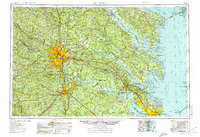 1973 Richmond1974 Print · USGSThe Virginia Tidewater and Piedmont come alive in the early seventies, showcasing a region defined by its great rivers and massive military installations. Researchers can trace the mid-century growth of Richmond or locate family sites near Amelia Court House and Highland Springs.2 unique versions available
 - 1984 Map of Richmond, 1986 Print
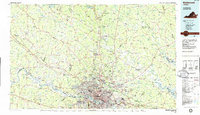 1984 Richmond1986 Print · USGSCentral Virginia during the mid-eighties shows a landscape of rapid suburban expansion centered on the state capital and its historic riverfront. Genealogists and historians can trace institutional sites like Randolph-Macon College, the grounds of Fort Lee, and small community landmarks like Hebron Ch.3 unique versions available
 - 2010 Map of Perkinsville, 2010 Print
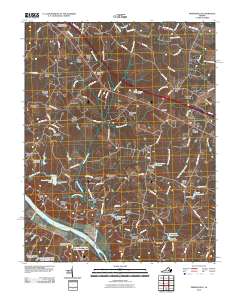 2010 Perkinsville2010 Print · USGSGoochland County, Virginia, is captured in this 2010 study as the suburban landscape meets the historic James River corridor. Researchers can locate the extensive Virginia State Farm, the Crozier Post Office, and established locales like Oilville and Perkinsville.
 - 2013 Map of Perkinsville, 2013 Print
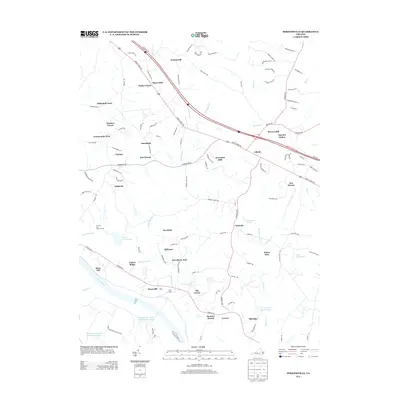 2013 Perkinsville2013 Print · USGSGoochland County in the early twenty-first century is a landscape defined by the winding James River and the rural-to-suburban transition. Researchers can trace local landmarks like the Virginia State Farm Penal Institution and the R E Lee Boy Scout Camps near Oilville.
 - 2016 Map of Perkinsville, 2016 Print
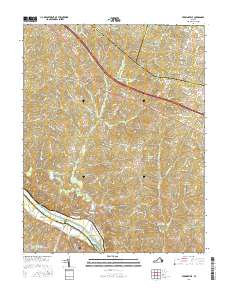 2016 Perkinsville2016 Print · USGSGoochland County at the turn of the twenty-first century remains a landscape of river-bottom farms and rural crossroads. Researchers can trace land patterns and family landmarks near Perkinsville, Oilville, and the Virginia State Farm along the James River.
 - 2019 Map of Perkinsville, 2019 Print
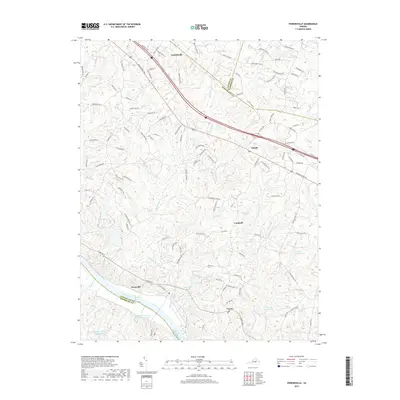 2019 Perkinsville2019 Print · USGSGoochland County, Virginia, maintains its rural character along the James River corridor in this recent survey. Local historians can trace the development of established settlements like Perkinsville, Oilville, and Crozier near numerous named ponds and creek forks.
 - 2022 Map of Perkinsville, 2022 Print
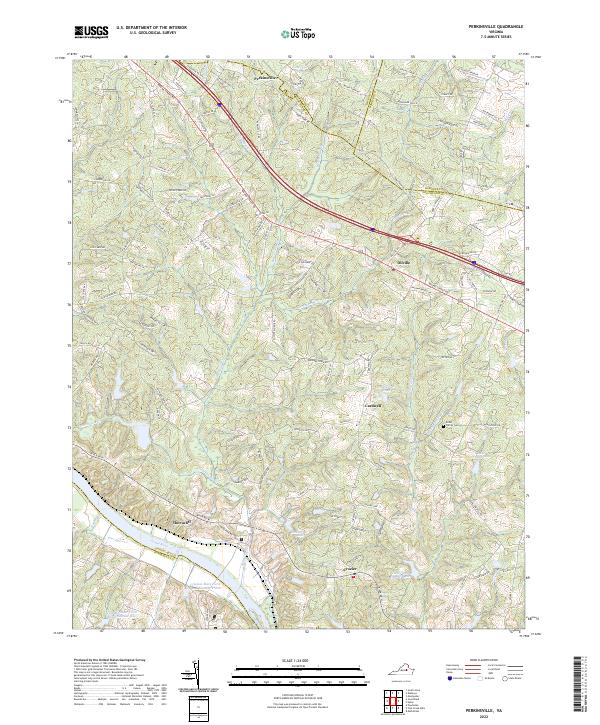 2022 Perkinsville2022 Print · USGSGoochland County at the start of the 2020s shows a landscape defined by the James River and historic road networks. Researchers can trace family sites like Knibb Family Cem or locate rural communities such as Oilville, Crozier, and Perkinsville.
End of results
Showing maps 1-15 of 15
Top cities near Crozier
Frequently asked questions
- What are the different types of historical maps available for Crozier?
- What is the oldest map of Crozier?
- Where can I purchase historical maps of Crozier for my home or office?
- Where can I download high-res historical maps of Crozier?
- Are there historical topographic maps available for Crozier?
- Is there historical aerial imagery available for Crozier?
- Where are historical maps of Crozier sourced from?