Old Maps of Halifax County, Virginia for Academic Research
Study the evolution of Halifax County with 179 high-resolution historic maps. Whether you're teaching, researching, or modeling changes in land use, these maps provide essential visual documentation of urban, environmental, and geographic change.
- Analyze long-term change: Track patterns in development, transportation, and natural features.
- Ideal for environmental or urban studies: Support academic projects with primary historical map data.
- Use in the classroom or lab: Educators and researchers rely on these maps to bring historical context to life.
These maps are a powerful tool for teaching, research, and visualizing how Halifax County has changed over the decades.
Halifax County, VA maps
(179)- 1892 Map of Lynchburg
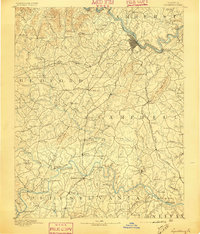 1892 Lynchburg1892 Print · USGSCentral Virginia in the 1890s centered on the vital rail and river junction of Lynchburg and its surrounding tobacco-growing counties. Family historians can trace ancestral crossings at Wards Road Ferry, locate the Academy church, and follow the early Virginia Midland Rail Road through Evington.6 unique versions available
 - 1892 Map of Appomattox
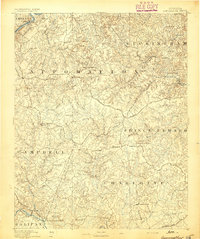 1892 Appomattox1892 Print · USGSCentral Virginia in the 1890s appears as a landscape of small agricultural hubs and vital river crossings. Genealogists can trace family names and landmarks like Morris Church, the Grave of Patrick Henry, and crossings such as Beazleys Ford.6 unique versions available
 - 1941 Map of Clarksville
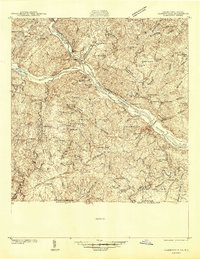 1941 Clarksville1941 Print · USGSMecklenburg County and the Virginia-North Carolina border are captured here just before the Roanoke River valley was transformed by mid-century dam projects. Researchers can trace ancestral roots through dozens of local landmarks like Oakhurst Cem, Buffalo Junc, and Occaneechi Island.
 - 1943 Map of Clarksville
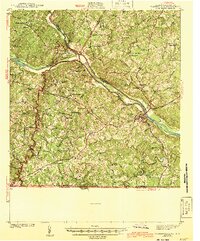 1943 Clarksville1943 Print · USGSThe Clarksville region in the early 1940s was defined by its vibrant river life and deep-rooted rural communities. Genealogists and historians can trace the foundations of local society through Buffalo Springs, the Oakhurst Cem, and Prestwould.2 unique versions available
 - 1947 Map of Roanoke, 1948 Print
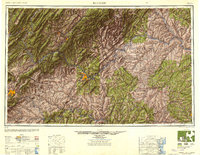 1947 Roanoke1948 Print · USGSCentral Virginia in the late 1940s reveals a region defined by its great mountain ridges and the powerful river-and-rail economy connecting Roanoke to Lynchburg. Researchers can trace the path of the Virginian RR and locate historic county seats like Charlotte Court House.2 unique versions available
 - 1952 Map of Milton, 1953 Print
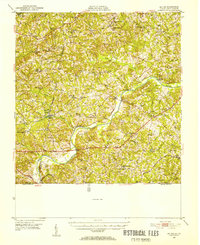 1952 Milton1953 Print · USGSThe Dan River valley at the start of the 1950s reveals a landscape of tobacco farms and rural schoolhouses across the Virginia-North Carolina line. Genealogists and local historians can trace family roots through landmarks like Sutherlin Millpond, Mercy Seat Ch, and the Tan-yard.
 - 1953 Map of South Boston, 1955 Print
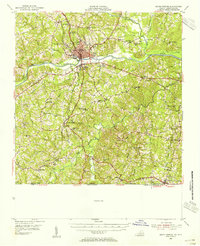 1953 South Boston1955 Print · USGSThe Virginia Southside in the early fifties shows a bustling rail-and-river economy centered on the tobacco and textile hub of South Boston. Genealogists and historians can trace family locations through numerous rural landmarks like Berry Hill, the Wall Mine, and Orange Grove Sch.2 unique versions available
 - 1953 Map of Greensboro, 1981 Print
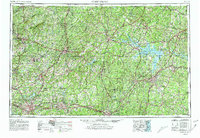 1953 Greensboro1981 Print · USGSThe Piedmont borderlands of North Carolina and Virginia show a landscape defined by new reservoirs and old rail lines. Trace family roots and the changing river geography through Elon College, the John H Kerr Reservoir, and South Boston.
 - 1954 Map of Greensboro
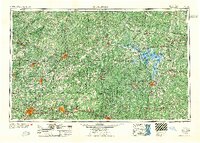 1954 Greensboro1954 Print · USGSThe Piedmont borderlands of North Carolina and Virginia come alive in this mid-fifties study of a region defined by its rivers and rails. Researchers can trace the growing Buggs Island Lake or follow the paths of the Southern Ry and Seaboard Air Line RR through towns like Oxford and Reidsville.
 - 1954 Map of Clover, 1956 Print
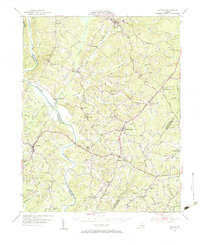 1954 Clover1956 Print · USGSThe Roanoke River valley in the mid-1950s remained a landscape of rural schoolhouses and family-named creek branches. Genealogists can trace property near Drakes Branch or Wylliesburg, locating long-standing landmarks like Blackcastle School and New Hope Church.2 unique versions available
 - 1954 Map of Halifax, 1956 Print
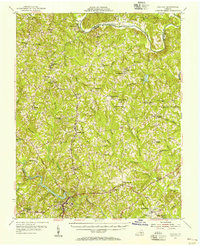 1954 Halifax1956 Print · USGSHalifax County in the mid-1950s was a landscape defined by tobacco-growing tradition and river-fed industry. Genealogists can trace family footprints through numerous rural landmarks like Clays Mill, Murphy Grove Sch, and Ridgeway Ch.
 - 1954 Map of Riceville, 1956 Print
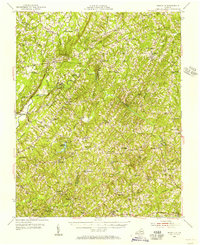 1954 Riceville1956 Print · USGSCentral Virginia in the mid-1950s is captured here, showing the rural landscape along the Banister River. Local researchers can locate family landmarks like Henrys Mill, the Carter Glass Sch, and County Line Cem Ch.
 - 1956 Map of Brookneal, 1957 Print
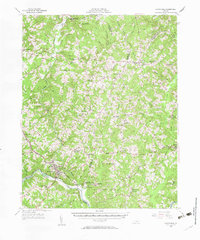 1956 Brookneal1957 Print · USGSBrookneal and the southern Piedmont are seen here in the mid-1950s at the confluence of the Staunton and Falling rivers. Genealogists and historians can locate family landmarks such as Red Hill (Home of Patrick Henry), Hat Creek Sch, and the St Lukes Ch.2 unique versions available
 - 1956 Map of Charlotte Court House, 1957 Print
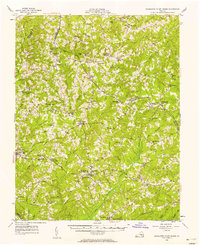 1956 Charlotte Court House1957 Print · USGSCharlotte County in the mid-fifties is captured here as a landscape of crossroads settlements and historic rail lines. Researchers can trace the layout of Charlotte Court House, locate the VPI Experimental Farm, and find rural landmarks like Wards Fork Mill.2 unique versions available
 - 1956 Map of Gladys, 1957 Print
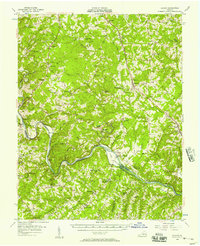 1956 Gladys1957 Print · USGSSouthern Campbell County in the mid-fifties is captured here as a landscape of rail-junction towns and river-bottom farms. Genealogists can trace family roots through numerous local landmarks like Mitchell Mill, Organ Chapel, and the Franklin Cem.2 unique versions available
 - 1956 Map of Milton, 1957 Print
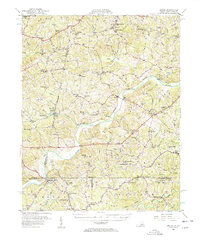 1956 Milton1957 Print · USGSThe borderlands of Caswell County and southern Virginia are captured here in the mid-1950s as a landscape of river-driven commerce and rail depots. Researchers can trace family sites from Milton to Ghent, locating landmarks like Sutherlin Millpond and the Archibald Murphy Sch.2 unique versions available
 - 1957 Map of South Boston, 1958 Print
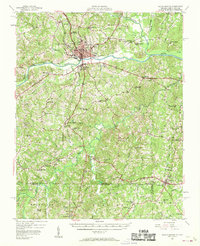 1957 South Boston1958 Print · USGSSouth Boston and the surrounding borderlands of Virginia and North Carolina are captured here in the mid-fifties, centered on the confluence of the Banister and Dan Rivers. Genealogists and historians can trace numerous rural landmarks, including the Wolf Mine Sch, Five Forks Cem, and the settlement of Virgilina.3 unique versions available
 - 1957 Map of Clarksville, 1959 Print
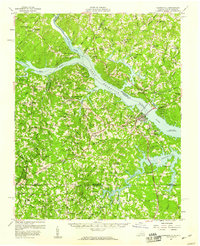 1957 Clarksville1959 Print · USGSSouthern Mecklenburg County and the North Carolina borderlands are captured here in the late fifties, just as Kerr Reservoir reshaped the local geography. Family historians can trace ancestral sites like Siddon Hebron Ch, Wharton Memorial, and the West End High Sch.2 unique versions available
 - 1959 Map of Roanoke
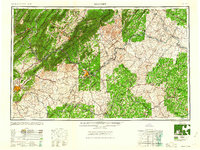 1959 Roanoke1959 Print · USGSCentral Virginia and the Blue Ridge appear in great detail during the late fifties, showcasing the transition from mountain industry to Piedmont farmland. Trace the path of the Norfolk and Western railroad or find old river towns like Appomattox and Amelia Court House.
 - 1962 Map of Greensboro
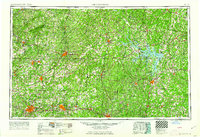 1962 Greensboro1962 Print · USGSThe Piedmont region along the Virginia and North Carolina border comes alive in the early 1960s, showing a landscape defined by industry and new reservoirs. Trace the path of the Virginian RR or explore the early development of Greensboro and Durham.
 - 1963 Map of Roanoke
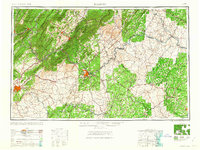 1963 Roanoke1963 Print · USGSCentral Virginia and the Blue Ridge front appear here in the early sixties, caught between their deep railroad roots and new postwar developments. Genealogists and historians can trace the rail lines of the Norfolk and Western through towns like Bedford and Altavista, or locate family landmarks near Smith Mountain Lake.
 - 1966 Map of Greensboro
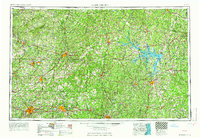 1966 Greensboro1966 Print · USGSThe North Carolina and Virginia Piedmont thrives during the mid-sixties, showcasing a landscape of textile hubs and expanding river reservoirs. Researchers can trace the rail corridors of the Southern Railway, find local landmarks like Elon College, or locate the extensive Camp Butner Military Reservation.
 - 1966 Map of Java, 1967 Print
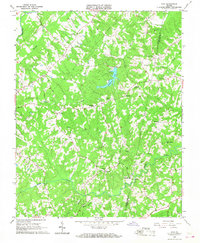 1966 Java1967 Print · USGSThe crossroads and creek-side settlements of Pittsylvania and Halifax counties are shown here in the mid-1960s. Genealogists and local historians can trace family locations near Chaneys Store, Henrys Mill, and the County Line Sch.3 unique versions available
 - 1966 Map of Brookneal, 1968 Print
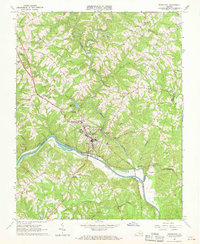 1966 Brookneal1968 Print · USGSThe Roanoke River valley and the historic estate of Fed Hill appear here in the mid-sixties. Genealogists and local historians can trace rural family-named landmarks, old rail stops at Holts Crossing, and country churches like Mt Calvary Ch.3 unique versions available
 - 1966 Map of Long Island, 1968 Print
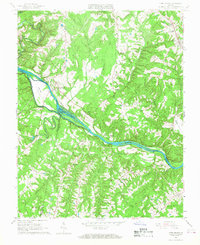 1966 Long Island1968 Print · USGSSouthern Virginia's river country is frozen in time during the mid-sixties, showing the rural life along the Roanoke River. Researchers can locate old community landmarks like Naruna, Cedar Forest, and several local pulpits including First Buffalo Ch.2 unique versions available
Showing maps 1-25 of 179
Top cities of Halifax County
- South Boston historical maps
- Halifax historical maps
- Mountain Road historical maps
- Riverdale historical maps
- Cluster Springs historical maps
- Clover historical maps
See more
Frequently asked questions
- What are the different types of historical maps available for Halifax County?
- What is the oldest map of Halifax County?
- Where can I purchase historical maps of Halifax County for my home or office?
- Where can I download high-res historical maps of Halifax County?
- Are there historical topographic maps available for Halifax County?
- Is there historical aerial imagery available for Halifax County?
- Where are historical maps of Halifax County sourced from?