Old Maps of Pamunkey Estates, Virginia for Hiking & Exploration
Hike through history with 17 historic maps of Pamunkey Estates. Explore old trails, ghost towns, and forgotten backroads — perfect for outdoor adventurers and local explorers.
- Rediscover forgotten places: Map out old mining camps, roads, and footpaths that no longer exist on modern maps.
- Layer with modern tools: Combine with LiDAR or satellite views to plan hikes through historical terrain.
- Made for exploration: Popular among hikers, overlanders, and local history lovers.
Use these maps to find adventure and explore the hidden past of Pamunkey Estates.
Pamunkey Estates, VA maps
(17)- 1894 Map of Richmond
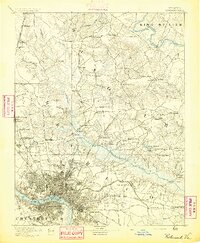 1894 Richmond1894 Print · USGSThe Richmond area at the close of the nineteenth century reveals a city expanding into its rural surroundings via a complex network of turnpikes and railroads. Genealogists and historians can trace family-named sites like Hawes Shop, Hazelgrove's Store, and Gilman's Mill alongside civil war landmarks at Seven Pines and Old Cold Harbor.
 - 1895 Map of Richmond
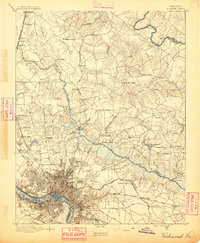 1895 Richmond1895 Print · USGSRichmond and Manchester thrive as bustling riverfront hubs in the 1890s, where rail lines and historic turnpikes converge on the James River. Genealogists and historians can trace family locations near Merry Oaks Church or follow the road to Old Cold Harbor and Seven Pines.5 unique versions available
 - 1938 Map of Studley
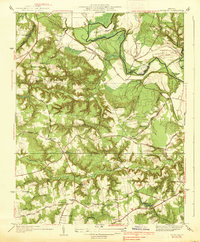 1938 Studley1938 Print · USGSHanover County's rural character is captured in the mid-1930s before the expansion of the Richmond suburbs. Genealogists can trace family landmarks and community hubs like Bethesda Ch, Studley, and the Pole Green Sch along the historic Pamunkey River corridor.3 unique versions available
 - 1943 Map of Richmond, 1972 Print
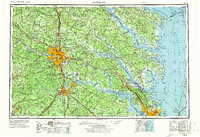 1943 Richmond1972 Print · USGSCoastal Virginia and the state capital are shown in detail during the mid-century era of infrastructure expansion. Genealogists and historians can trace the grounds of Richmond Nat Battlefield Park, locate the Yorktown Nat Cem, or follow the many rural routes through Amelia Court House and Tappahannock.
 - 1949 Map of Richmond, 1951 Print
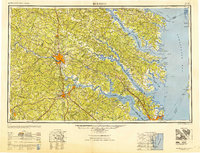 1949 Richmond1951 Print · USGSCoastal Virginia in the years following World War II remained a landscape of historic river towns and expanding military bases. Genealogists and historians can trace the rail lines of the Southern Ry and locate established landmarks from Camp Lee to the remote reaches of Dragon Swamp.
 - 1951 Map of Studley
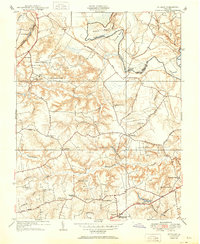 1951 Studley1951 Print · USGSHanover County at mid-century reveals a rural landscape defined by the winding Pamunkey River and its many creek systems. Researchers can trace family roots through historic crossroads like Rural Point and Hundleys Corner, or locate institutions like Battlefield Park High Sch and New Bethesda Ch.
 - 1959 Map of Richmond
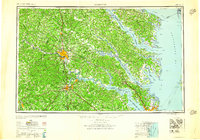 1959 Richmond1959 Print · USGSMid-century Virginia is captured here at its most vital rail and river junctions, from the capital city to the Chesapeake Bay. Genealogists and historians can trace the development of colonial settlements like Williamsburg and military landmarks including Fort Monroe and Camp Lee.
 - 1964 Map of Richmond
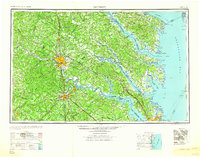 1964 Richmond1964 Print · USGSCoastal and central Virginia are mapped during the mid-twentieth century, showing the critical intersection of rail, river, and military life. Genealogists can trace family roots through rural county seats like Amelia or find vanished coastal neighborhoods near Phoebus and Hilton Village.
 - 1964 Map of Studley, 1965 Print
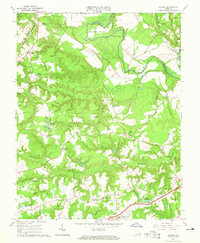 1964 Studley1965 Print · USGSHanover County at the start of the 1960s reveals a Tidewater landscape shaped by the winding Pamunkey River and deep-rooted rural communities. Local historians can trace family locations near Studley, Pole Green, and the State Industrial School, or locate early sites like Talley Millpond and Cypress Cem.5 unique versions available
 - 1973 Map of Richmond, 1974 Print
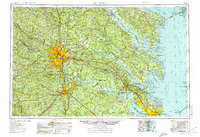 1973 Richmond1974 Print · USGSThe Virginia Tidewater and Piedmont come alive in the early seventies, showcasing a region defined by its great rivers and massive military installations. Researchers can trace the mid-century growth of Richmond or locate family sites near Amelia Court House and Highland Springs.2 unique versions available
 - 1974 Map of Studley, 1977 Print
 1974 Studley1977 Print · USGSMid-century Hanover County farmland and forest are preserved in detail in this orthophotograph produced during the 1970s. Trace the meandering path of the Pamunkey River and examine the clear-cut boundaries of historical field patterns and woodland tracts.
 - 1984 Map of Richmond, 1986 Print
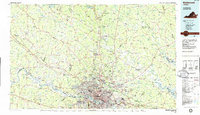 1984 Richmond1986 Print · USGSCentral Virginia during the mid-eighties shows a landscape of rapid suburban expansion centered on the state capital and its historic riverfront. Genealogists and historians can trace institutional sites like Randolph-Macon College, the grounds of Fort Lee, and small community landmarks like Hebron Ch.3 unique versions available
 - 2010 Map of Studley, 2010 Print
 2010 Studley2010 Print · USGSCoastal Virginia's river-fed plains appear in this recent survey, showing the expansion of rural communities between the Pamunkey and Totopotomoy rivers. Researchers can locate family burial grounds at Abraham Cemetery or trace the old Hawes Millrace and Studley Post Office.
 - 2013 Map of Studley, 2013 Print
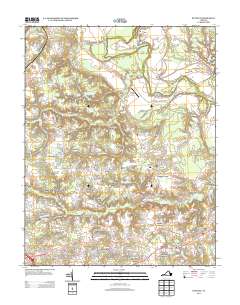 2013 Studley2013 Print · USGSThe Hanover County countryside south of the Pamunkey River is shown here in the early twenty-first century, balancing modern growth with deep agricultural roots. Researchers can trace the layout of legacy sites like Hawes Millrace and Studley alongside rural crossroads at Hundleys Corner.
 - 2016 Map of Studley, 2016 Print
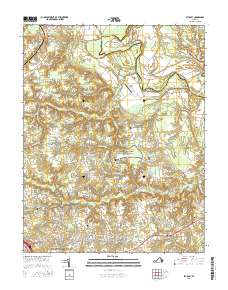 2016 Studley2016 Print · USGSHanover and King William counties are seen here in the mid-2010s, defined by the winding Pamunkey River and preserved Civil War history. Genealogists can locate several local burial grounds like Second Union Cem and family landmarks near Studley and Cady.
 - 2019 Map of Studley, 2019 Print
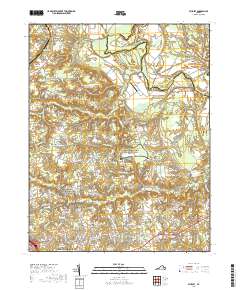 2019 Studley2019 Print · USGSThe Hanover and King William County borderlands come to life in this recent survey, showing the preserved grounds of the Richmond National Battlefield Park. Researchers can trace old family sites and rural landmarks like Hawes Millrace and the New Bethesda Church Cem.
 - 2022 Map of Studley, 2022 Print
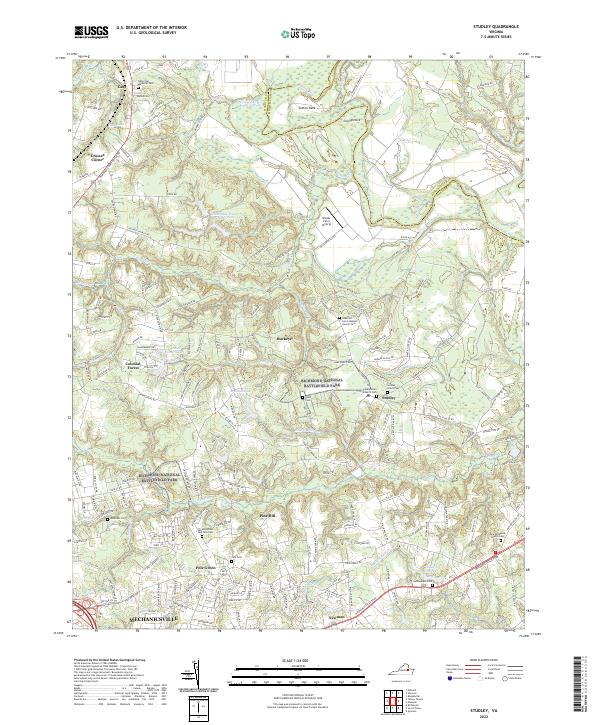 2022 Studley2022 Print · USGSHanover County at the start of the 2020s remains a landscape where Civil War history and rural heritage meet expanding modern life. Researchers can trace historic churchyards and community sites like Salem Presbyterian Church Cem, Pole Green, and the sprawling reaches of the Richmond National Battlefield Park.
End of results
Showing maps 1-17 of 17
Top cities near Pamunkey Estates
- Richmond historical maps
- Mechanicsville historical maps
- Highland Springs historical maps
- Lakeside historical maps
- Dumbarton historical maps
- Montrose historical maps
See more
Frequently asked questions
- What are the different types of historical maps available for Pamunkey Estates?
- What is the oldest map of Pamunkey Estates?
- Where can I purchase historical maps of Pamunkey Estates for my home or office?
- Where can I download high-res historical maps of Pamunkey Estates?
- Are there historical topographic maps available for Pamunkey Estates?
- Is there historical aerial imagery available for Pamunkey Estates?
- Where are historical maps of Pamunkey Estates sourced from?