1960s Maps of Warren County, Virginia
Explore 12 historic maps of Warren County from the 1960s. These maps offer a rare glimpse into what life looked like during the 1960s — showing old roads, neighborhoods, homes, and landmarks that have changed or disappeared over time.
Whether you're researching your family's past, planning a metal detecting trip, or studying how Warren County's landscape evolved across the 1960s, these high-resolution maps are a powerful tool for exploring the history of this region.
- Focus on a specific era: All maps on this page are from the 1960s, giving you a focused view of this time period.
- See what’s changed: Compare century-old streets, trails, and buildings to today's modern landscape using overlays and satellite layers.
- Research with precision: Use these maps for genealogy, historical research, land use analysis, or educational projects.
- View, download, or print: Maps are fully viewable online in high resolution, and can be downloaded or printed for your own records.
Start exploring Warren County's history through authentic maps from the 1960s. This is your window into the past.
Warren County, VA maps
(12)- 1961 Map of Cumberland
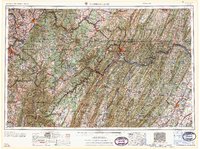 1961 Cumberland1961 Print · USGSThe tri-state highlands of Maryland, West Virginia, and Pennsylvania are shown in the mid-twentieth century as a complex landscape of ridges and river valleys. Researchers can trace the winding Potomac River and find old rail-and-river towns like Cumberland, Keyser, and Morgantown.
 - 1962 Map of Cumberland
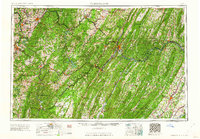 1962 Cumberland1962 Print · USGSThe central Appalachians meet at the height of the mid-century industrial era, showing the rugged topography between Morgantown and Winchester. Genealogists can trace family lands near Fort Necessity or along the vital Baltimore & Ohio RR corridors.
 - 1966 Map of Stephens City, 1967 Print
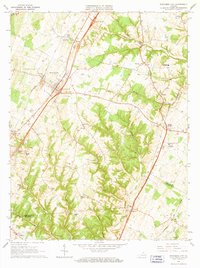 1966 Stephens City1967 Print · USGSStephens City and the northern Shenandoah Valley are shown in the mid-1960s as new interstates began to intersect with old rail lines and rural mills. Genealogists and local historians can trace family landmarks like Green Hill Cem, Ridings Chapel, and the historic Klines Mill site.3 unique versions available
 - 1966 Map of Boyce, 1967 Print
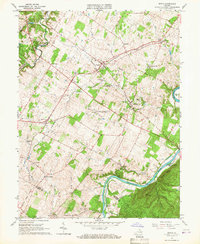 1966 Boyce1967 Print · USGSThe Shenandoah Valley in the 1960s remains a landscape of historic estates and river islands. Researchers can trace family sites near White Post, the grounds of Carter Hall, and landmark river features like Robinson Crusoe Island.3 unique versions available
 - 1966 Map of Bentonville, 1968 Print
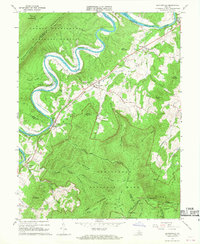 1966 Bentonville1968 Print · USGSThe Shenandoah River valley at the mid-century reveals a landscape framed by national parks and the river's great loops. Genealogists and hikers can trace the original paths of the Appalachian Trail near Bentonville, find old riverside communities like Overall, and locate rural landmarks such as Mt Carmel Ch.4 unique versions available
 - 1966 Map of Linden, 1968 Print
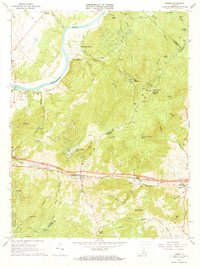 1966 Linden1968 Print · USGSThe Blue Ridge mountain passes of Warren and Fauquier counties are captured here in the mid-1960s. Genealogists and hikers can trace the Appalachian Trail across Blue Mountain or locate old community centers like Linden, Markham, and Mt Paran Ch.5 unique versions available
 - 1966 Map of Middletown, 1968 Print
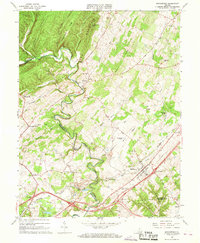 1966 Middletown1968 Print · USGSMiddletown and the surrounding Shenandoah Valley are captured in the mid-1960s, showing a landscape defined by Civil War history and rural industry. Researchers can trace ancestral sites like Quaker Cem, the ruins of Nieswander's Fort, and landmarks such as Monroe College.3 unique versions available
 - 1966 Map of Flint Hill, 1968 Print
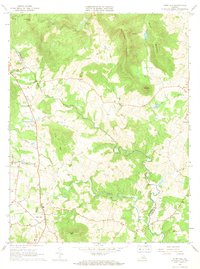 1966 Flint Hill1968 Print · USGSThe Rappahannock River valley remains deeply rural in the mid-sixties, characterized by small farming hamlets and prominent Blue Ridge foothills. Researchers can trace the original paths of the Appalachian Trail, locate Rockland Cem, and explore landmarks like Wakefield Manor and Willis Chapel.2 unique versions available
 - 1966 Map of Rileyville, 1968 Print
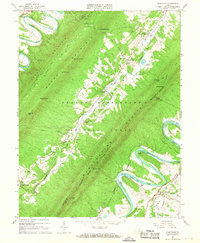 1966 Rileyville1968 Print · USGSThe Shenandoah Valley during the mid-sixties reveals a landscape of ridge-top lookouts and river-bottom agriculture. Researchers can locate family landmarks like Fosters Landing, Saint Davids Church, and the Norfolk and Western rail line.4 unique versions available
 - 1966 Map of Strasburg, 1973 Print
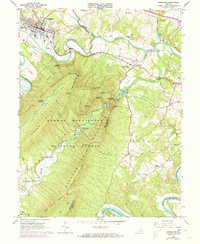 1966 Strasburg1973 Print · USGSThe Shenandoah Valley during the mid-1960s shows a mix of mountain wilderness and riverside rail hubs. Trace local history through the Elizabeth Furnace Recreational Area ruins, the Otterburn Sch, and established crossroads like Waterlick and Buckton.2 unique versions available
 - 1967 Map of Front Royal, 1968 Print
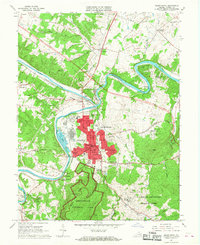 1967 Front Royal1968 Print · USGSFront Royal and the Shenandoah forks were centerpieces of Warren County life in the late sixties. Genealogists and historians can trace family locations near Viscose City, Prospect Hill Cem, and the grounds of Randolph Macon Military Academy.4 unique versions available
 - 1967 Map of Chester Gap, 1968 Print
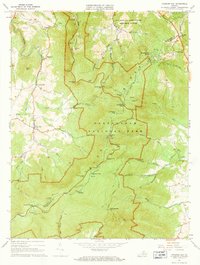 1967 Chester Gap1968 Print · USGSThe Blue Ridge high country is captured here in the late sixties, where the nascent Blue Ridge Mts Estates meets the established wilderness of the national park. Genealogists and hikers can trace the Appalachian Trail past Boyds Mill, Browntown Ch, and the Williams Cem.2 unique versions available
End of results
Showing maps 1-12 of 12
Top cities of Warren County
- Front Royal historical maps
- Shenandoah Farms historical maps
- Apple Mountain Lake historical maps
- Shenandoah Shores historical maps
- Skyland Estates historical maps
Frequently asked questions
- What are the different types of historical maps available for Warren County?
- What is the oldest map of Warren County?
- Where can I purchase historical maps of Warren County for my home or office?
- Where can I download high-res historical maps of Warren County?
- Are there historical topographic maps available for Warren County?
- Is there historical aerial imagery available for Warren County?
- Where are historical maps of Warren County sourced from?