Old Maps of Abingdon, Virginia for Hiking & Exploration
Hike through history with 34 historic maps of Abingdon. Explore old trails, ghost towns, and forgotten backroads — perfect for outdoor adventurers and local explorers.
- Rediscover forgotten places: Map out old mining camps, roads, and footpaths that no longer exist on modern maps.
- Layer with modern tools: Combine with LiDAR or satellite views to plan hikes through historical terrain.
- Made for exploration: Popular among hikers, overlanders, and local history lovers.
Use these maps to find adventure and explore the hidden past of Abingdon.
Abingdon, VA maps
(34)- 1891 Map of Abingdon
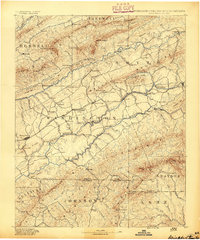 1891 Abingdon1891 Print · USGSSouthwest Virginia in the 1890s reveals a landscape of mountain ridges and thriving valley settlements along the Norfolk and Western R. R. Lineages can be traced through sites like Emory and Henry College, Saltville, and numerous family-named landmarks like Vance's Mill.
 - 1894 Map of Abingdon, 1896 Print
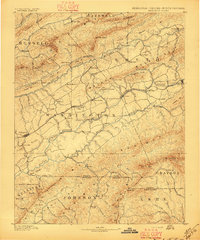 1894 Abingdon1896 Print · USGSSouthwest Virginia's valley and ridge country is captured here during the peak of the rail era, centered on the Abingdon and Marion corridors. Local historians can trace the foundations of Emory and Henry College and numerous rural mill sites like Belfast Mills or Vance's Mill.5 unique versions available
 - 1897 Map of Bristol
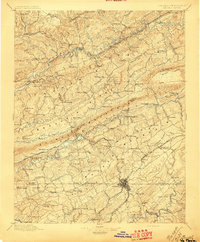 1897 Bristol1897 Print · USGSThe Tennessee-Virginia borderlands in the late nineteenth century were a landscape of steep ridges and river-dependent commerce. Genealogists can trace family homesteads near Bickley Mill, locate river crossings like Childress Ferry, or find early rail stops along the Norfolk and Western RR.
 - 1902 Map of Bristol
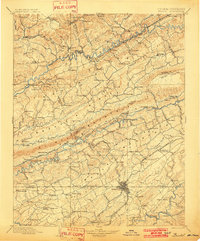 1902 Bristol1902 Print · USGSThe interstate border region around Bristol appears here at the start of the twentieth century, defined by its deep mountain ridges and river valleys. Researchers can trace the early industrial footprint of the area through numerous landmarks like Bickley Mill, Kings Mill, and the Norfolk and Western RR.6 unique versions available
 - 1909 Map of Abingdon
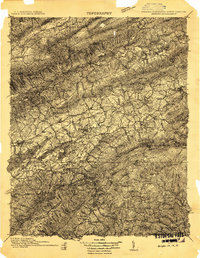 1909 Abingdon1909 Print · USGSSouthwest Virginia at the first decade's end shows a valley landscape defined by the iron rail and steep ridges. Genealogists and historians can trace the early layouts of Abingdon and Glade Spring, or locate landmarks like Dove Mills and the County Farm.2 unique versions available
 - 1911 Map of Abingdon
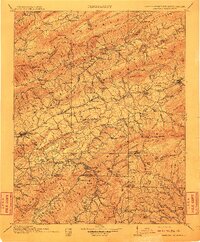 1911 Abingdon1911 Print · USGSSouthwest Virginia's rugged corridors are captured here during the height of the mountain rail era. Genealogists and historians can trace old homesteads and local landmarks such as Whites Mill, Valley Church, and the County Farm near Abingdon.5 unique versions available
 - 1934 Map of Wyndale
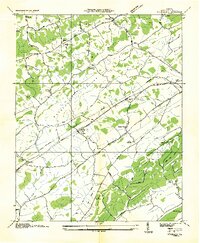 1934 Wyndale1934 Print · USGSWashington County during the mid-1930s shows a landscape of mountain ridges and fertile valleys connected by the Norfolk and Western railroad. Genealogists can trace rural life through numerous landmarks like Heavenly Rest Chapel, Needmore Sch, and the community of Wyndale.
 - 1935 Map of Abingdon
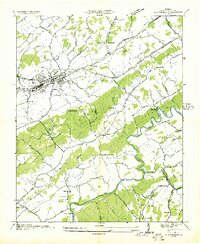 1935 Abingdon1935 Print · USGSIn the mid-1930s, Abingdon and its surrounding Washington County landscape were shaped by the confluence of the Holston River forks and the Norfolk and Western Railway. Researchers can trace ancestral connections through rural landmarks like Knollkreg Cem, Stone Mill, and numerous country schoolhouses including Locustdale Sch and Shiloh Sch.
 - 1935 Map of Beaver Creek
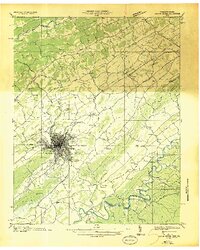 1935 Beaver Creek1935 Print · USGSThe border city of Bristol serves as a bustling rail and highway hub in the mid-1930s. Genealogists and historians can trace family locations near Beidleman Mill, Mountain View Cemetery, and the Twin States Fairgrounds.2 unique versions available
 - 1935 Map of River Knobs
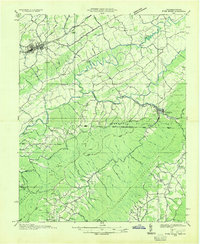 1935 River Knobs1935 Print · USGSThe Virginia and Tennessee borderlands come alive in the mid-1930s, showing a landscape of river forks and mountain ridges. Trace the early Appalachian Trail, locate Great Depression-era sites like CCC Camp Shelby, and find family history at Knotts Cem.
 - 1938 Map of Wyndale
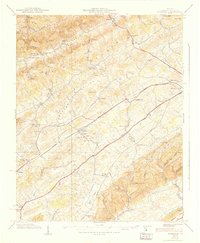 1938 Wyndale1938 Print · USGSWashington County at the height of the New Deal era reveals a rural landscape organized around the Norfolk and Western rail line and valley homesteads. Genealogists can locate specific family hubs like Needmore Sch, Bakers Chapel, and the community of Fractionville.3 unique versions available
 - 1938 Map of Abingdon, 1954 Print
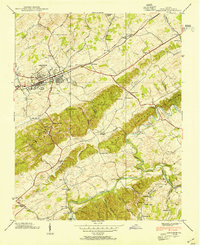 1938 Abingdon1954 Print · USGSWashington County at the end of the 1930s shows a landscape of river-bottom farms and emerging rail corridors. Genealogists can trace family footprints through sites like Roberts Chapel, Stony Point Sch, and the County Farm near the Holston River forks.
 - 1939 Map of Abingdon
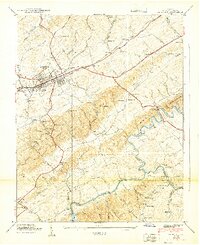 1939 Abingdon1939 Print · USGSAbingdon and the surrounding Washington County hills are shown here just before the Second World War, capturing a landscape of river-bottom farms and ridge-top schools. Genealogists and local historians can trace family locations near Alvarado, Stone Mill, or Roberts Chapel.
 - 1953 Map of Winston-Salem, 1974 Print
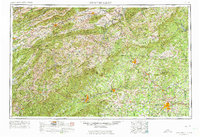 1953 Winston-Salem1974 Print · USGSThe North Carolina Piedmont and Virginia highlands meet in the mid-1950s, a landscape defined by the tobacco and textile hubs of the Blue Ridge foothills. Researchers can trace the rail-and-river geography connecting Winston-Salem to mountain towns like Mount Airy and Galax.2 unique versions available
 - 1955 Map of Johnson City
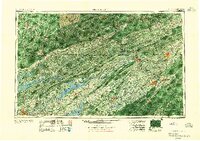 1955 Johnson City1955 Print · USGSEast Tennessee and the bordering highlands of Virginia and Kentucky appear here during the post-war industrial boom. You can trace the complex network of mountain ridges and new TVA lakes, from Johnson City to the coalfields near Middlesboro and Lynch.
 - 1955 Map of Winston-Salem
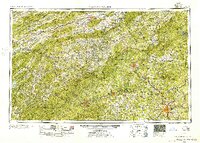 1955 Winston-Salem1955 Print · USGSThe Central Blue Ridge and Piedmont transition are captured here in the mid-fifties, from the industrial hub of Winston-Salem to the high peaks of Southwest Virginia. Genealogists can trace family landmarks like Richmond Hill Ch, Siloam Ch, and the old rail stops along the Southern Railway.
 - 1957 Map of Johnson City, 1966 Print
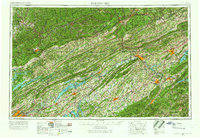 1957 Johnson City1966 Print · USGSUpper East Tennessee and Southwest Virginia are shown here during the mid-sixties transition of the Appalachians. Researchers can trace the industrial rail hubs of Kingsport, the sprawling waters of Cherokee Lake, and the historic Cumberland Gap.
 - 1960 Map of Johnson City
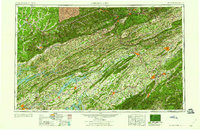 1960 Johnson City1960 Print · USGSUpper East Tennessee and the surrounding tri-state area are shown in the mid-fifties during the height of the TVA reservoir era. Trace the industrial rail lines of the Southern and Louisville and Nashville between Kingsport and Johnson City.
 - 1960 Map of Abingdon, 1962 Print
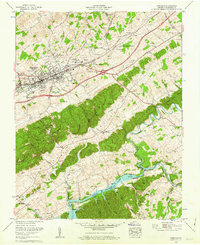 1960 Abingdon1962 Print · USGSWashington County at the dawn of the 1960s reveals a landscape of growing towns and rising waters. Genealogists and historians can trace the foundations of Abingdon, locating Stone Mill, the Southwest Virginia 4-H Center, and the shores of South Fork Holston Lake.4 unique versions available
 - 1960 Map of Wyndale, 1962 Print
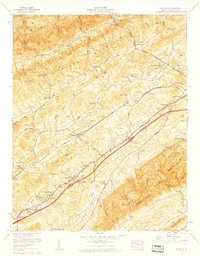 1960 Wyndale1962 Print · USGSWestern Washington County during the early sixties shows the growth of suburbs like Preston Hills alongside long-established rural congregations. Researchers can locate family burial grounds like Pippin Cem and landmark institutions including John S Battle High School.5 unique versions available
 - 1962 Map of Winston-Salem
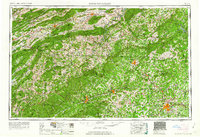 1962 Winston-Salem1962 Print · USGSThe North Carolina Piedmont meets the Virginia highlands in the early sixties, showing the rail corridors and mountain gaps of the southern Appalachians. Researchers can trace the Blue Ridge Parkway or locate family sites near Winston-Salem, Mount Airy, and Hanging Rock Mountain.
 - 1963 Map of Johnson City
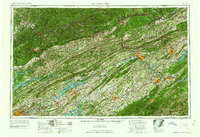 1963 Johnson City1963 Print · USGSThe Tri-Cities and the surrounding Appalachian ridges are shown in detail during the early sixties, highlighting the era's vital rail and river networks. Genealogists and historians can trace the routes of the Clinchfield RR and locate settlements from Rogersville to Elizabethton.
 - 1981 Map of Bristol
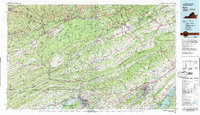 1981 Bristol1981 Print · USGSAppalachia and the Tri-Cities region are shown at a peak of industrial and rail development in the early eighties. Researchers can trace the Clinchfield Railroad through the mountains or find local landmarks like King College and the Holston Army Ammunition Plant.2 unique versions available
 - 1982 Map of Wytheville, 1983 Print
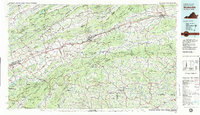 1982 Wytheville1983 Print · USGSSouthwest Virginia's ridge-and-valley landscape is shown here in the early 1980s as the Interstate era fully connected the region. Genealogists and historians can trace family locations near Emory and Henry College, the historic Austinville Mine, and settlements like Saltville or Lansing.3 unique versions available
 - 2010 Map of Wyndale, 2010 Print
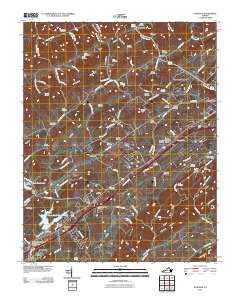 2010 Wyndale2010 Print · USGSWashington County in the modern era shows a landscape where historic rural settlements meet contemporary infrastructure. Genealogists and researchers can map family burial sites like Tate Cemetery or trace landmarks from Wyndale to Virginia Highlands Airport.
Showing maps 1-25 of 34
Top cities near Abingdon
- Bristol historical maps
- Bristol historical maps
- Lebanon historical maps
- Mountain City historical maps
- Saltville historical maps
- Glade Spring historical maps
See more
Top neighborhoods of Abingdon
- Fractionville historical maps
- Shady Grove historical maps
- Morningside Hills historical maps
- Scott Addition historical maps
Frequently asked questions
- What are the different types of historical maps available for Abingdon?
- What is the oldest map of Abingdon?
- Where can I purchase historical maps of Abingdon for my home or office?
- Where can I download high-res historical maps of Abingdon?
- Are there historical topographic maps available for Abingdon?
- Is there historical aerial imagery available for Abingdon?
- Where are historical maps of Abingdon sourced from?