Old Maps of Osceola, Virginia for Hiking & Exploration
Hike through history with 18 historic maps of Osceola. Explore old trails, ghost towns, and forgotten backroads — perfect for outdoor adventurers and local explorers.
- Rediscover forgotten places: Map out old mining camps, roads, and footpaths that no longer exist on modern maps.
- Layer with modern tools: Combine with LiDAR or satellite views to plan hikes through historical terrain.
- Made for exploration: Popular among hikers, overlanders, and local history lovers.
Use these maps to find adventure and explore the hidden past of Osceola.
Osceola, VA maps
(18)- 1891 Map of Abingdon
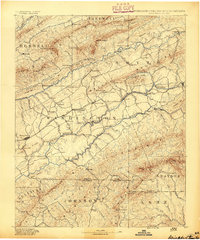 1891 Abingdon1891 Print · USGSSouthwest Virginia in the 1890s reveals a landscape of mountain ridges and thriving valley settlements along the Norfolk and Western R. R. Lineages can be traced through sites like Emory and Henry College, Saltville, and numerous family-named landmarks like Vance's Mill.
 - 1894 Map of Abingdon, 1896 Print
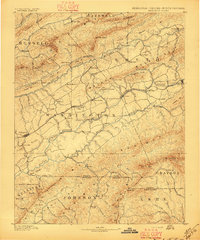 1894 Abingdon1896 Print · USGSSouthwest Virginia's valley and ridge country is captured here during the peak of the rail era, centered on the Abingdon and Marion corridors. Local historians can trace the foundations of Emory and Henry College and numerous rural mill sites like Belfast Mills or Vance's Mill.5 unique versions available
 - 1909 Map of Abingdon
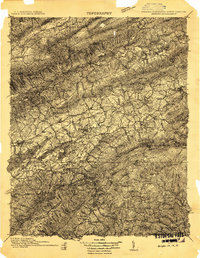 1909 Abingdon1909 Print · USGSSouthwest Virginia at the first decade's end shows a valley landscape defined by the iron rail and steep ridges. Genealogists and historians can trace the early layouts of Abingdon and Glade Spring, or locate landmarks like Dove Mills and the County Farm.2 unique versions available
 - 1911 Map of Abingdon
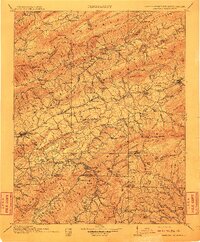 1911 Abingdon1911 Print · USGSSouthwest Virginia's rugged corridors are captured here during the height of the mountain rail era. Genealogists and historians can trace old homesteads and local landmarks such as Whites Mill, Valley Church, and the County Farm near Abingdon.5 unique versions available
 - 1935 Map of Damascus
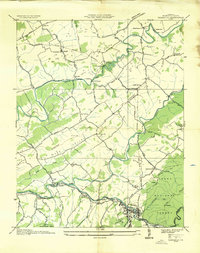 1935 Damascus1935 Print · USGSWashington County during the mid-thirties shows a rural landscape at the intersection of river power and mountain wilderness. Genealogists can trace early homesteads and community hubs like Vestal P O, DeBusk Mill, and Oak Hill Cem across Rhea Valley.
 - 1935 Map of River Knobs
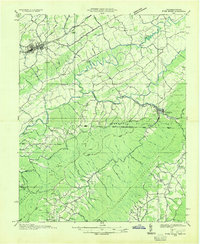 1935 River Knobs1935 Print · USGSThe Virginia and Tennessee borderlands come alive in the mid-1930s, showing a landscape of river forks and mountain ridges. Trace the early Appalachian Trail, locate Great Depression-era sites like CCC Camp Shelby, and find family history at Knotts Cem.
 - 1938 Map of Damascus
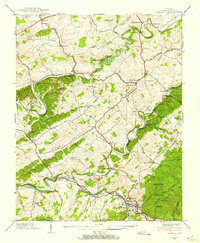 1938 Damascus1938 Print · USGSSouthwest Virginia's valley and mountain landscapes are captured here in the late 1930s as rural industry and transport intersected at Damascus. Researchers can locate vanished rural infrastructure like De Busk Mill, the Appalachian Trail, and the Drowning Ford Vestal (P O).3 unique versions available
 - 1939 Map of Damascus
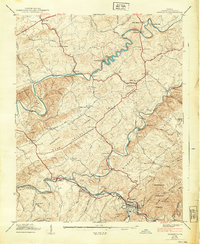 1939 Damascus1939 Print · USGSWashington County at the end of the 1930s shows a landscape of mountain river industry and valley farmsteads. Trace early milling sites like De Busk Mill, the post office at Vestal (P O), and old country schools like Beech Grove Sch.
 - 1953 Map of Winston-Salem, 1974 Print
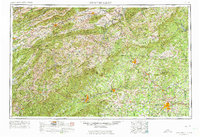 1953 Winston-Salem1974 Print · USGSThe North Carolina Piedmont and Virginia highlands meet in the mid-1950s, a landscape defined by the tobacco and textile hubs of the Blue Ridge foothills. Researchers can trace the rail-and-river geography connecting Winston-Salem to mountain towns like Mount Airy and Galax.2 unique versions available
 - 1955 Map of Winston-Salem
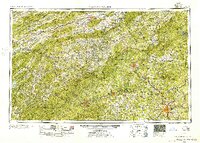 1955 Winston-Salem1955 Print · USGSThe Central Blue Ridge and Piedmont transition are captured here in the mid-fifties, from the industrial hub of Winston-Salem to the high peaks of Southwest Virginia. Genealogists can trace family landmarks like Richmond Hill Ch, Siloam Ch, and the old rail stops along the Southern Railway.
 - 1962 Map of Winston-Salem
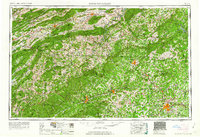 1962 Winston-Salem1962 Print · USGSThe North Carolina Piedmont meets the Virginia highlands in the early sixties, showing the rail corridors and mountain gaps of the southern Appalachians. Researchers can trace the Blue Ridge Parkway or locate family sites near Winston-Salem, Mount Airy, and Hanging Rock Mountain.
 - 1982 Map of Wytheville, 1983 Print
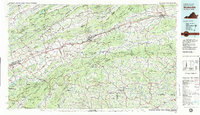 1982 Wytheville1983 Print · USGSSouthwest Virginia's ridge-and-valley landscape is shown here in the early 1980s as the Interstate era fully connected the region. Genealogists and historians can trace family locations near Emory and Henry College, the historic Austinville Mine, and settlements like Saltville or Lansing.3 unique versions available
 - 2002 Map of Damascus, 2004 Print
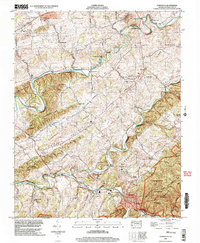 2002 Damascus2004 Print · USGSIn the early 2000s, the mountain corridors around Damascus maintained a landscape steeped in local history and milling. Researchers can trace family sites like Roe Cem, old valley schools such as Beech Grove Sch, and historic water-power sites including De Busk Mill.
 - 2011 Map of Damascus, 2011 Print
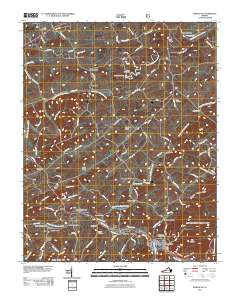 2011 Damascus2011 Print · USGSSouthwestern Virginia’s river valleys are shown here during a period of steady rural character and hydroelectric development. Researchers can trace historic family-named landmarks and water-powered industries like De Busk Mill, Vails Mill, and the Oak Hill Cemetery.
 - 2013 Map of Damascus, 2013 Print
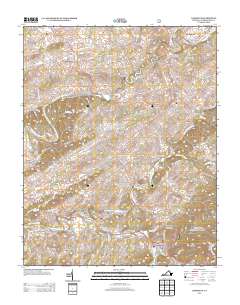 2013 Damascus2013 Print · USGSDamascus and the Holston River forks are captured in the early 21st century, showing a landscape shaped by river-crossing history and mountain ridges. Genealogists can trace family locations near De Busk Mill, Groseclose Corner, and the crossing at Drowning Ford.
 - 2016 Map of Damascus, 2016 Print
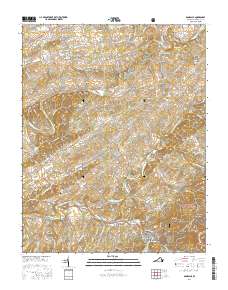 2016 Damascus2016 Print · USGSThe trail town of Damascus and its mountain surroundings are captured in this recent survey, showing the modern intersection of wilderness and rural life. Trace the historic milling sites at De Busk Mill and Mock Mill or locate family burial grounds like the Moore Cem.
 - 2019 Map of Damascus, 2019 Print
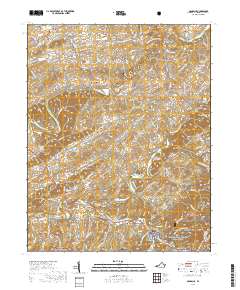 2019 Damascus2019 Print · USGSSouthwest Virginia's river valleys and mountain gaps are captured in this recent survey of Washington County. Researchers can trace family sites from the Mount Olivet Church down to old crossings at Drowning Ford and the De Busk Mill.
 - 2022 Map of Damascus, 2022 Print
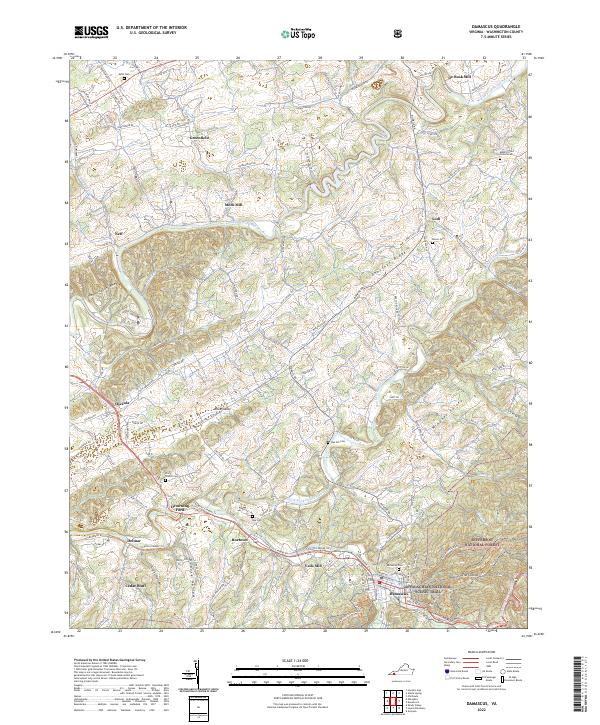 2022 Damascus2022 Print · USGSDamascus and the surrounding hollows of Washington County are shown here in the 2020s as they border the National Forest. Researchers can trace ancestral lands near Drowning Ford, locate family plots at Mount Olivet Church Cem, or find old milling sites like Mock Mill.
End of results
Showing maps 1-18 of 18
Top cities near Osceola
- Abingdon historical maps
- Lebanon historical maps
- Mountain City historical maps
- Saltville historical maps
- Chilhowie historical maps
- Glade Spring historical maps
See more
Frequently asked questions
- What are the different types of historical maps available for Osceola?
- What is the oldest map of Osceola?
- Where can I purchase historical maps of Osceola for my home or office?
- Where can I download high-res historical maps of Osceola?
- Are there historical topographic maps available for Osceola?
- Is there historical aerial imagery available for Osceola?
- Where are historical maps of Osceola sourced from?