Old Maps of Don, West Virginia for Academic Research
Study the evolution of Don with 18 high-resolution historic maps. Whether you're teaching, researching, or modeling changes in land use, these maps provide essential visual documentation of urban, environmental, and geographic change.
- Analyze long-term change: Track patterns in development, transportation, and natural features.
- Ideal for environmental or urban studies: Support academic projects with primary historical map data.
- Use in the classroom or lab: Educators and researchers rely on these maps to bring historical context to life.
These maps are a powerful tool for teaching, research, and visualizing how Don has changed over the decades.
Don, WV maps
(18)- 1891 Map of Oceana
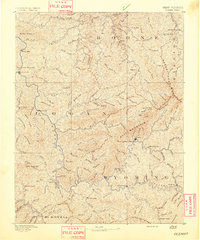 1891 Oceana1891 Print · USGSSouthern West Virginia in the late nineteenth century was a world of deep valleys and isolated mountain settlements. Genealogists and historians can trace early family sites along the Guyandotte River near Oceana, Logan C.H., and Whites Mills.
 - 1893 Map of Oceana
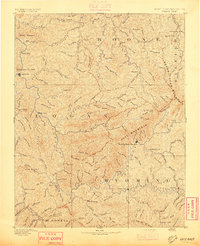 1893 Oceana1893 Print · USGSSouthern West Virginia’s rugged coal country is captured here in the late nineteenth century, showing a landscape of deep hollows and high ridges. Researchers can trace ancestral homes and early industry at Logan C.H., Whites Mills, and Jarrold's Valley.
 - 1898 Map of Oceana
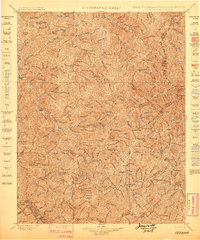 1898 Oceana1898 Print · USGSSouthern West Virginia in the late nineteenth century remains a landscape of isolated mountain settlements and complex river drainages. Genealogists can trace early homesteads and family-named landmarks near Oceana, Pineville, and Baileysville before the rise of the modern coal industry.4 unique versions available
 - 1909 Map of Gilbert
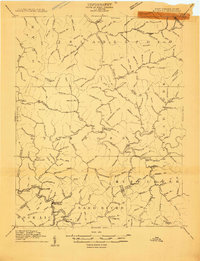 1909 Gilbert1909 Print · USGSSouthern West Virginia at the height of the coal and rail expansion is shown here through its dense network of river-valley settlements and mountain gaps. Genealogists can trace early homesteads and rail stops like Glenalum Sta, Wharncliffe, and Twisted Gun Gap.
 - 1912 Map of Gilbert
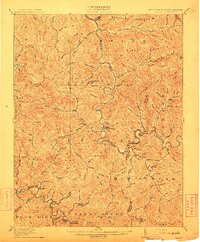 1912 Gilbert1912 Print · USGSThe Guyandot River valley and the industrial Tug Fork corridor define this region in the early nineteen-hundreds. Researchers can trace rail-tied settlements like Wharncliffe and War Eagle or find rural landmarks such as Twisted Gun Gap and North Spring.2 unique versions available
 - 1925 Map of Gilbert
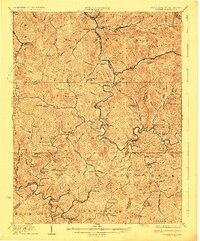 1925 Gilbert1925 Print · USGSSouthern West Virginia in the mid-twenties shows a landscape defined by steep hollows and a burgeoning coal-and-rail economy. Researchers can trace ancestral footprints at several family-named institutions like Hatfield School or find old mining hubs such as Wharncliffe and Glenalum.
 - 1927 Map of Gilbert
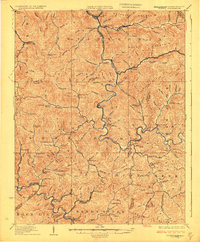 1927 Gilbert1927 Print · USGSIn the late 1920s, southern West Virginia's mountain hollows were connected by narrow-gauge rails and family-centered school districts. Genealogists can trace family footprints through sites like the Craig Hatfield School, Wharncliffe, and War Eagle.4 unique versions available
 - 1955 Map of Bluefield
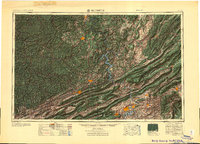 1955 Bluefield1955 Print · USGSThe Central Appalachian borderlands come alive in the mid-fifties, showing the coal and rail networks connecting Bluefield to Beckley. Researchers can trace the industrial landscape of the New River Ordnance Plant and the terrain of Burkes Garden.
 - 1957 Map of Bluefield, 1967 Print
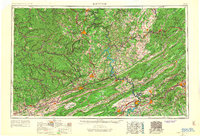 1957 Bluefield1967 Print · USGSThe heart of Central Appalachia in the mid-fifties is defined by the winding rail lines and river valleys of the coalfields. Researchers can trace the industrial footprints of towns like Welch and Princeton or locate landmarks such as the Bluestone Reservoir and Claytor Lake.2 unique versions available
 - 1961 Map of Bluefield
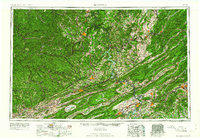 1961 Bluefield1961 Print · USGSThe coalfields and mountain ridges of southern West Virginia and southwest Virginia are captured in the early sixties. Genealogists can trace family ties through rail-linked towns like Princeton and Richlands or along the shores of Bluestone Reservoir.
 - 1963 Map of Man, 1965 Print
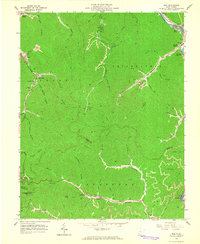 1963 Man1965 Print · USGSThe coal country of Logan and Mingo Counties is shown here in the early 1960s as industrial hollows and family homesteads line the creeks. Researchers can trace ancestral sites like Hatfield Cem or explore the rail hubs of Man and Stirrat.3 unique versions available
 - 1982 Map of Beckley, 1984 Print
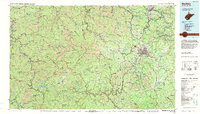 1982 Beckley1984 Print · USGSSouthern West Virginia coal country is captured here in the early eighties as industrial heritage met new wilderness protections. Genealogists and historians can trace the rail-linked communities of Beckley, Oak Hill, and the coal camps near Macdonald.
 - 1996 Map of Man, 2003 Print
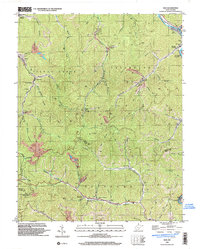 1996 Man2003 Print · USGSMid-century Logan and Mingo counties are defined here by a dense network of mining operations and river-valley settlements during the 1990s. Genealogists and historians can trace family locations through Greenville (Hunt PO), Stirrat, and Sarah Ann while locating historic coal infrastructure like Tipples and the Island Creek RR.
 - 2011 Map of Man, 2011 Print
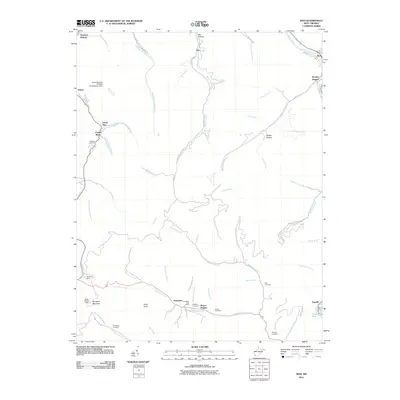 2011 Man2011 Print · USGSMan and the surrounding Logan County hollows are shown in the early 2000s, where coal-country infrastructure meets deep family history. Researchers can locate several Hatfield Cemetery sites and historical settlements like Sarah Ann and Crystal Block.
 - 2014 Map of Man, 2014 Print
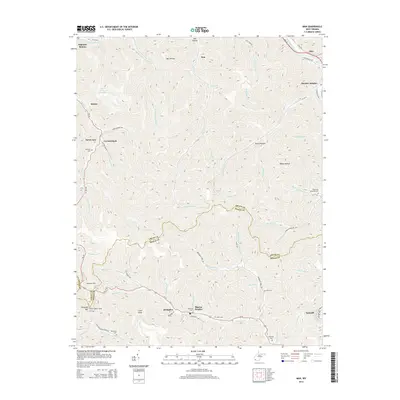 2014 Man2014 Print · USGSModern Logan and Mingo Counties are shown here during a period of continued industrial and community activity. Researchers can trace family history through sites like the Hatfield Cem, the town of Man, and the Mingo Lookout Tower on Horsepen Mt.
 - 2016 Map of Man, 2016 Print
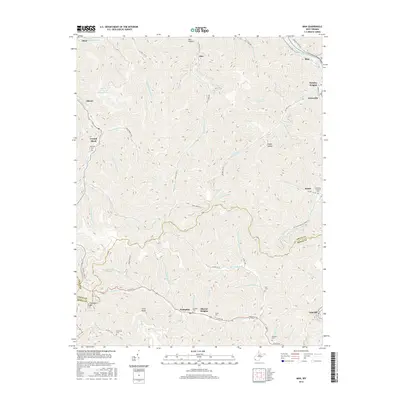 2016 Man2016 Print · USGSSouthern West Virginia's coal and river valleys are shown here in the 2010s at the intersection of Logan and Mingo Counties. Researchers can trace family history at Hatfield Cemetery and Ellis Cemetery or locate industrial sites like the Stirrat Number 15 Impoundment.
 - 2019 Map of Man, 2019 Print
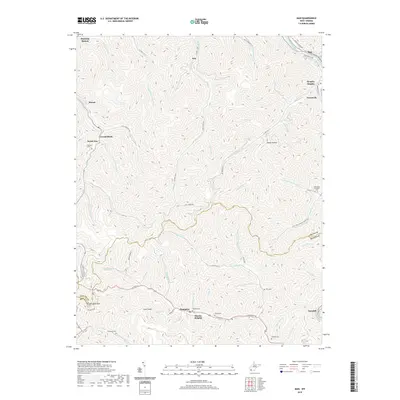 2019 Man2019 Print · USGSThe Guyandotte River valley and the surrounding hollows of Logan and Mingo counties are shown here in recent detail. Researchers can trace family history through numerous documented sites like Hatfield Cem, Sarah Ann, and the community of Greenville.
 - 2023 Map of Man, 2023 Print
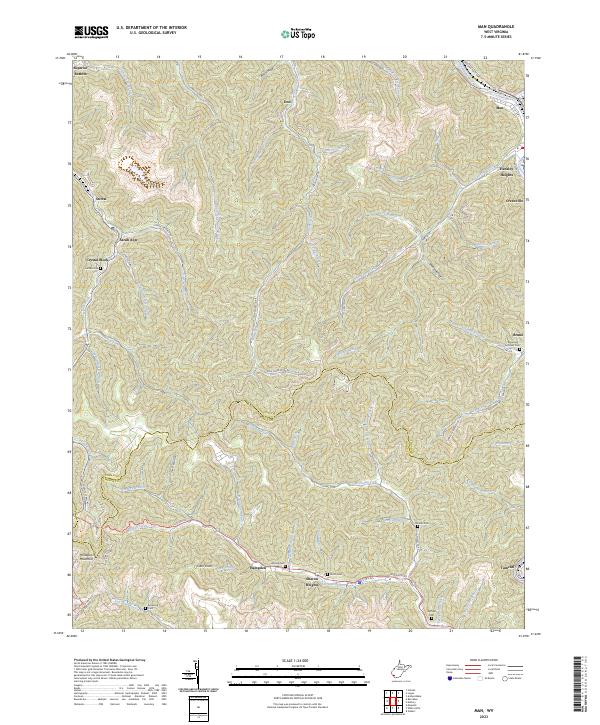 2023 Man2023 Print · USGSThe Guyandotte River valley and the Logan-Mingo county line define this mountain landscape in the 2020s. Genealogists can trace family landmarks like Hatfield Cem, Old Ellis Cem, and settlements such as Crystal Block and Tamcliff.
End of results
Showing maps 1-18 of 18
Top cities near Don
- Mallory historical maps
- Logan historical maps
- Chapmanville historical maps
- Holden historical maps
- Man historical maps
- Accoville historical maps
See more
Frequently asked questions
- What are the different types of historical maps available for Don?
- What is the oldest map of Don?
- Where can I purchase historical maps of Don for my home or office?
- Where can I download high-res historical maps of Don?
- Are there historical topographic maps available for Don?
- Is there historical aerial imagery available for Don?
- Where are historical maps of Don sourced from?