1900s (20th Century) Maps of Pedro, West Virginia
Explore 9 historic maps of Pedro from the 1900s (20th Century). These maps offer a rare glimpse into what life looked like during the 1900s — showing old roads, neighborhoods, homes, and landmarks that have changed or disappeared over time.
Whether you're researching your family's past, planning a metal detecting trip, or studying how Pedro's landscape evolved across the 1900s, these high-resolution maps are a powerful tool for exploring the history of this region.
- Focus on a specific era: All maps on this page are from the 1900s, giving you a focused view of this time period.
- See what’s changed: Compare century-old streets, trails, and buildings to today's modern landscape using overlays and satellite layers.
- Research with precision: Use these maps for genealogy, historical research, land use analysis, or educational projects.
- View, download, or print: Maps are fully viewable online in high resolution, and can be downloaded or printed for your own records.
Start exploring Pedro's history through authentic maps from the 1900s. This is your window into the past.
Pedro, WV maps
(9)- 1921 Map of Ronceverte
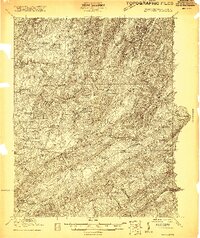 1921 Ronceverte1921 Print · USGSThe West Virginia and Virginia borderlands come alive in this early 1920s record of the Greenbrier Valley and Allegheny ridges. Genealogists can trace family roots through numerous local landmarks like Organ Cave, Red Mill, and the Highland Green School.2 unique versions available
 - 1923 Map of Ronceverte
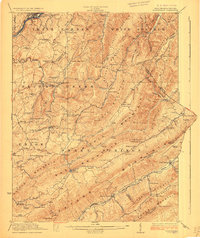 1923 Ronceverte1923 Print · USGSSoutheast West Virginia in the early twenties is a landscape of mountain ridges and remote hollows. Genealogists can trace the rural communities of Gap Mills and Sweet Springs, alongside dozens of landmarks like Organ Cave and Schley School.4 unique versions available
 - 1948 Map of Ronceverte, 1964 Print
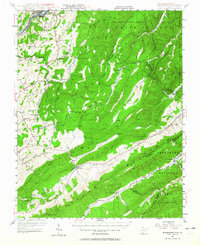 1948 Ronceverte1964 Print · USGSThe West Virginia and Virginia borderlands come into focus in the late 1940s, showing the mountain communities between the Greenbrier River and the Jefferson National Forest. Genealogists can locate family-named landmarks like McGlone and Gutes, or trace rural institutions such as Pleasant Valley Sch and Red Mill.
 - 1952 Map of Ronceverte
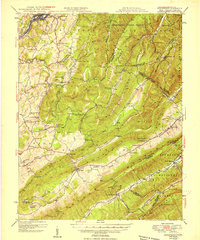 1952 Ronceverte1952 Print · USGSThe West Virginia and Virginia borderlands come alive in the early fifties, showing a rugged landscape of high ridges and narrow valleys. Genealogists can trace family roots through numerous local landmarks like Dowdy Cem, Organ Cave, and rural centers such as Gap Mills or Paint Bank.
 - 1955 Map of Bluefield
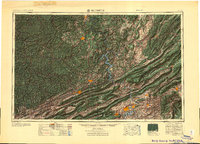 1955 Bluefield1955 Print · USGSThe Central Appalachian borderlands come alive in the mid-fifties, showing the coal and rail networks connecting Bluefield to Beckley. Researchers can trace the industrial landscape of the New River Ordnance Plant and the terrain of Burkes Garden.
 - 1957 Map of Bluefield, 1967 Print
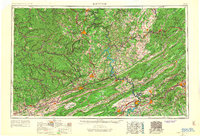 1957 Bluefield1967 Print · USGSThe heart of Central Appalachia in the mid-fifties is defined by the winding rail lines and river valleys of the coalfields. Researchers can trace the industrial footprints of towns like Welch and Princeton or locate landmarks such as the Bluestone Reservoir and Claytor Lake.2 unique versions available
 - 1961 Map of Bluefield
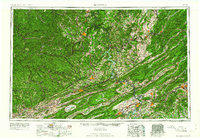 1961 Bluefield1961 Print · USGSThe coalfields and mountain ridges of southern West Virginia and southwest Virginia are captured in the early sixties. Genealogists can trace family ties through rail-linked towns like Princeton and Richlands or along the shores of Bluestone Reservoir.
 - 1966 Map of Glace, 1968 Print
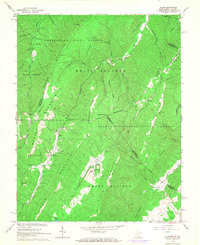 1966 Glace1968 Print · USGSThe West Virginia and Virginia borderlands come to life in the mid-sixties, showing the rugged topography of the Greenbrier State Forest. Genealogists and hikers can trace old landmarks like Hylton Ch, the Catholic Cem, and Moncove Lake.2 unique versions available
 - 1984 Map of Lewisburg, 1985 Print
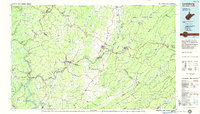 1984 Lewisburg1985 Print · USGSThe Greenbrier Valley in the mid-eighties shows a landscape of river-town commerce, mountain agriculture, and major institutional landmarks. Researchers can trace the rail corridors of the Chesapeake and Ohio and locate sites like the Federal Reformatory for Women and the Sam Black Church.2 unique versions available
End of results
Showing maps 1-9 of 9
Top cities near Pedro
- Lewisburg historical maps
- White Sulphur Springs historical maps
- Fairlea historical maps
- Ronceverte historical maps
- Union historical maps
- New Castle historical maps
Frequently asked questions
- What are the different types of historical maps available for Pedro?
- What is the oldest map of Pedro?
- Where can I purchase historical maps of Pedro for my home or office?
- Where can I download high-res historical maps of Pedro?
- Are there historical topographic maps available for Pedro?
- Is there historical aerial imagery available for Pedro?
- Where are historical maps of Pedro sourced from?