Old Maps of Fort Seybert, West Virginia
Explore 15 old maps of Fort Seybert, spanning from 1892 to today. These high-resolution historic maps reveal how streets, neighborhoods, landmarks, and natural features evolved over time — perfect for genealogy, metal detecting, research, and local history exploration.
What you can do with these maps:
- See how Fort Seybert changed over time: Compare historical maps to modern-day views to trace roads, homesites, rail lines & more.
- View detailed metadata: Each map includes creators, publishers, year, scale, and archive source.
- Overlay maps with satellite & LiDAR: Visualize the past alongside modern tools to explore terrain & human change.
- Trusted historical sources: Maps sourced from the USGS, Library of Congress, and other archives.
- Access maps your way: View online, download high-res files, or order prints for personal or research use.
Start exploring old maps of Fort Seybert to uncover forgotten places, hidden landmarks, and the deep history beneath your feet.
Fort Seybert, WV maps
(15)- 1892 Map of Franklin
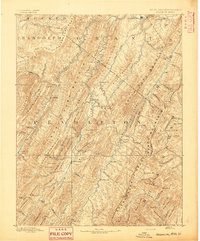 1892 Franklin1892 Print · USGSPendleton County and the Potomac Highlands are shown here in the 1890s, organized by the dramatic ridges and river valleys of the Alleghanies. Researchers can trace historic homesteads and early post offices at Fort Seybert, Upper Tract, and the riverside crossroads of Kline Cross Roads.
 - 1896 Map of Franklin, 1907 Print
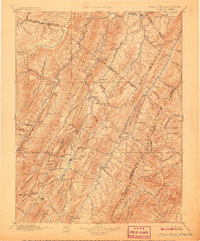 1896 Franklin1907 Print · USGSThe Potomac River's headwaters and the high ridges of the Alleghenies are documented here in the final years of the nineteenth century. Genealogists and local historians can trace early valley communities like Fort Seybert, Sugar Grove, and the mills at Harper Mill.4 unique versions available
 - 1922 Map of Fort Seybert
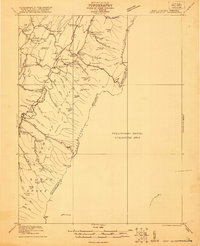 1922 Fort Seybert1922 Print · USGSPendleton County's South Fork Valley is captured in the early 1920s, showing a landscape of remote mountain homesteads and small valley hamlets. Genealogists can locate family landmarks like Locust Grove School, New Bethel Church, and the high peaks of Shenandoah Mountain.2 unique versions available
 - 1924 Map of Fort Seybert
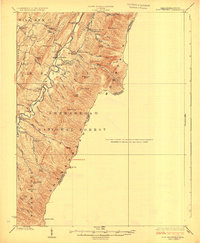 1924 Fort Seybert1924 Print · USGSIn the early 1920s, the Pendleton County highlands were defined by remote mountain gaps and close-knit valley settlements. Genealogists can locate family-named landmarks and rural hubs like Fort Seybert, Brandywine, and the Cedar Grove School.3 unique versions available
 - 1947 Map of Fort Seybert, 1958 Print
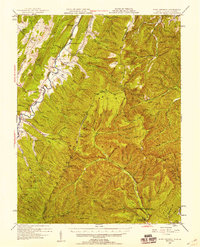 1947 Fort Seybert1958 Print · USGSThe South Fork Potomac River highlands are captured here in the late 1940s, showing a landscape defined by isolated farmsteads and rural mountain schools. Researchers can trace family-named landmarks and community centers like Fort Seybert, Pleasant Grove Ch, and the Dale Hill Sch.2 unique versions available
 - 1949 Map of Charlottesville
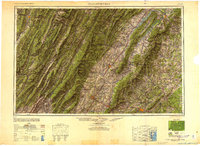 1949 Charlottesville1949 Print · USGSThe Shenandoah Valley and Blue Ridge appear in the late 1940s as a thriving corridor of rail and river commerce. Researchers can trace the mid-century footprints of Harrisonburg, Staunton, and Culpeper alongside the historic routes of the Southern Railway.2 unique versions available
 - 1951 Map of Fort Seybert
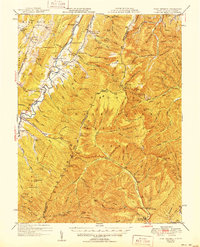 1951 Fort Seybert1951 Print · USGSThe South Fork Potomac River valley in the early 1950s reveals a landscape of isolated mountain hollows and tight-knit highland settlements. Genealogists can locate family landmarks such as Fort Seybert, New Bethlehem Ch, and the Cedar Grove Sch.2 unique versions available
 - 1956 Map of Charlottesville, 1966 Print
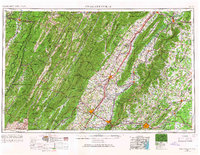 1956 Charlottesville1966 Print · USGSThe Shenandoah Valley and Blue Ridge are captured in detail during the mid-1960s as the modern interstate system began to emerge. Genealogists and historians can trace rail-connected hubs like Waynesboro or follow the river paths of the Rapidan River and Rivanna River.4 unique versions available
 - 1969 Map of Fort Seybert, 1970 Print
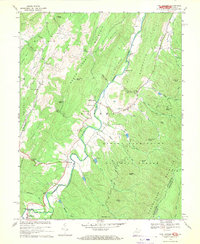 1969 Fort Seybert1970 Print · USGSSettlements along the South Fork Potomac River are captured here in the late sixties as they sit between high Appalachian ridges. Genealogists and historians can locate family sites near Fort Seybert, Brandywine, and Fairview Bethel Ch, or trace property lines along Troublesome Valley.2 unique versions available
 - 1981 Map of Elkins, 1983 Print
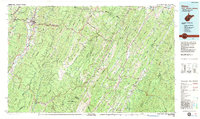 1981 Elkins1983 Print · USGSThe West Virginia mountains in the early eighties were a hub of rail-based industry and emerging conservation lands. Genealogists and historians can trace the paths of the Western Maryland RR through Elkins and locate small upland communities like Harpertown, Bowden, and Wymer.
 - 2011 Map of Fort Seybert, 2011 Print
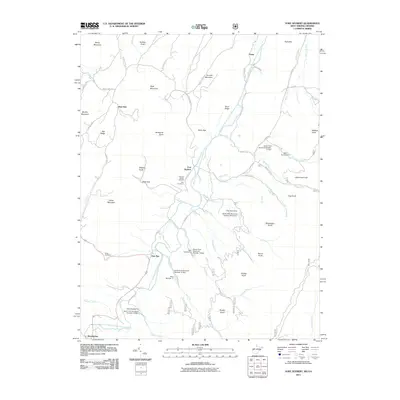 2011 Fort Seybert2011 Print · USGSThe South Fork valley of the Potomac River in West Virginia is documented here in the early twenty-first century. Researchers can trace the layout of historic settlements like Fort Seybert and Brandywine, or locate family burial sites at Hinkle Cemetery and Dice Cemetery.
 - 2014 Map of Fort Seybert, 2014 Print
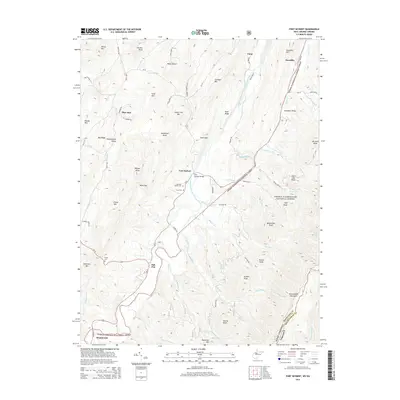 2014 Fort Seybert2014 Print · USGSThe West Virginia-Virginia borderlands are captured here in the early twenty-first century as the traditional valley communities maintain their footprint. Researchers can trace family roots at Fairview Bethel Cem, locate the Fort Seybert Bridge, and explore the geography of Oak Flat.
 - 2016 Map of Fort Seybert, 2016 Print
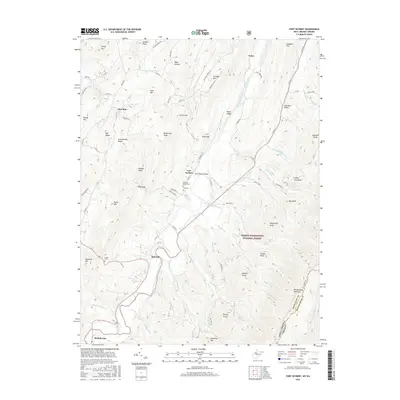 2016 Fort Seybert2016 Print · USGSNestled in the ridges of Pendleton County during the mid-2010s, this area shows the enduring rural character of the Potomac River's south fork. Researchers can trace family history at Fairview Bethel Cem or explore the mountain settlements of Oak Flat and Fort Seybert.
 - 2019 Map of Fort Seybert, 2019 Print
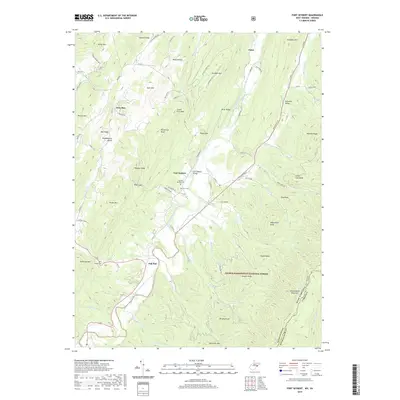 2019 Fort Seybert2019 Print · USGSPendleton County's mountain landscape was well-established by the early twenty-first century, centered on the river valleys and high ridges. Researchers can trace family sites at Fairview Bethel Cem, locate the river crossing at Fort Seybert Bridge, and explore the rural settlements of Oak Flat and Fame.
 - 2023 Map of Fort Seybert, 2023 Print
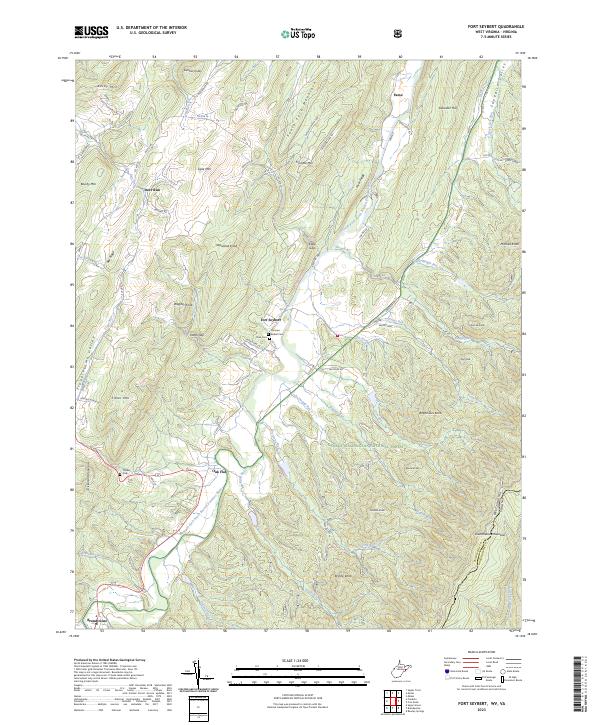 2023 Fort Seybert2023 Print · USGSThe South Fork of the Potomac River winds through this part of Pendleton County during the early twenty-first century. Researchers can locate family burial sites at Bethel Cem and Hinkle Cem or trace old routes through Kane Gap and Sweedlin Valley.
End of results
Showing maps 1-15 of 15
Top cities near Fort Seybert
Frequently asked questions
- What are the different types of historical maps available for Fort Seybert?
- What is the oldest map of Fort Seybert?
- Where can I purchase historical maps of Fort Seybert for my home or office?
- Where can I download high-res historical maps of Fort Seybert?
- Are there historical topographic maps available for Fort Seybert?
- Is there historical aerial imagery available for Fort Seybert?
- Where are historical maps of Fort Seybert sourced from?