Old Maps of Itasca, Superior for Genealogy
Trace your family roots with 12 historic maps of Itasca. These high-res maps reveal old neighborhoods, homesites, landmarks, and streets — helping you uncover where your ancestors lived and how the area evolved over time.
- Explore historic neighborhoods: Identify where your relatives may have lived in the 1800s or 1900s.
- Compare maps over time: Trace the changes in streets, buildings, and landmarks for multi-generational research.
- Perfect for genealogy & ancestry research: Used by family historians and researchers to map out lineage and migration.
These maps are an incredible resource for exploring your personal connection to Itasca's past.
Itasca, Superior maps
(12)- 1915 Map of Superior
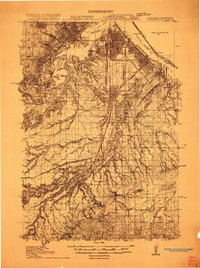 1915 Superior1915 Print · USGSThe Twin Ports region at the peak of the industrial era shows a landscape defined by massive rail yards and shoreline development. Genealogists and historians can locate early neighborhoods like Morgan Park, find rural landmarks like Saunders Cem, and trace the numerous lines of the Northern Pacific railroad.2 unique versions available
 - 1917 Map of Superior
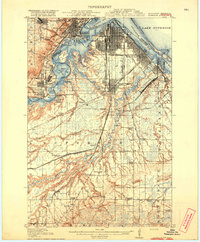 1917 Superior1917 Print · USGSThe Twin Ports region at the height of its industrial boom reveals a landscape of massive rail yards and shipping docks. Trace the development of South Superior and Steelton, or locate early rural landmarks like Selden School and Manitou Falls.3 unique versions available
 - 1953 Map of Duluth, 1964 Print
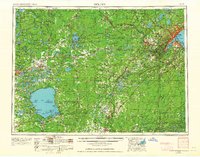 1953 Duluth1964 Print · USGSNortheastern Minnesota and northwestern Wisconsin are shown here during a period of industrial maturity and expanding conservation. Genealogists and historians can trace rail-connected towns like McGrath and Wahkon, or locate heritage sites within the Fond du Lac Indian Reservation.2 unique versions available
 - 1954 Map of Superior, 1955 Print
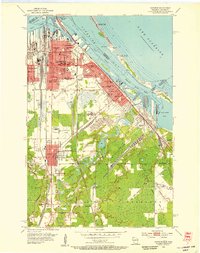 1954 Superior1955 Print · USGSThe industrial waterfront of Superior at mid-century is captured in this survey, showing a landscape defined by shipping and rail. Researchers can trace family roots through numerous sites like St Francis Cem, Wisconsin State College, and South Itasca.6 unique versions available
 - 1954 Map of Superior, 1959 Print
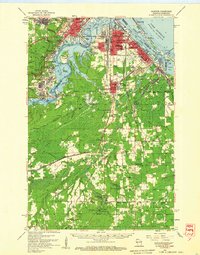 1954 Superior1959 Print · USGSThe Twin Ports and Douglas County are captured in the mid-fifties, showing the industrial waterfronts and rail yards at their peak. Researchers can locate vanished landmarks like the Concrete Sch or trace family roots at St Joseph Orphanage and Morgan Park.
 - 1958 Map of Duluth
 1958 Duluth1958 Print · USGSNortheastern Minnesota and the Wisconsin borderlands are shown in detail during the late 1950s, centered on the bustling rail yards and ports of Duluth. You can trace the historic routes of the Soo Line and Duluth Missabe & Iron Range through small towns like McGrath, Bruno, and Wrenshall.
 - 1980 Map of Duluth
 1980 Duluth1980 Print · USGSThe Twin Ports of the early 1980s showcase a landscape defined by heavy rail lines and Lake Superior shipping. Trace the iron-ore routes through Proctor or locate family sites near Sunrise Memorial Cem and Floodwood.
 - 2010 Map of Superior, 2010 Print
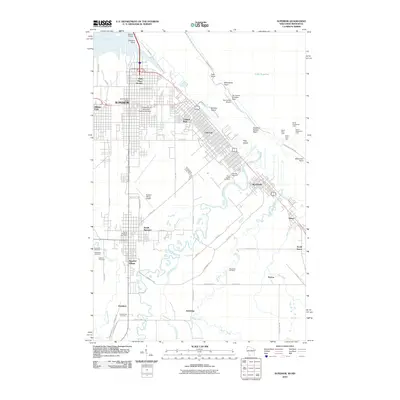 2010 Superior2010 Print · USGSThe Lake Superior shoreline and the busy port of Superior are captured here in the early twenty-first century. Researchers can trace family history through numerous local landmarks like Riverside Cemetery, the University of Wisconsin-Superior Campus, and Barkers Island.
 - 2013 Map of Superior, 2013 Print
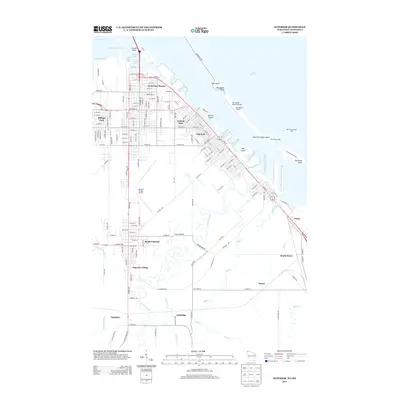 2013 Superior2013 Print · USGSThe Lake Superior shoreline and its industrial waterfront are captured here in the early twenty-first century. Genealogists and local historians can trace the development of neighborhoods like South Superior and Peyton alongside the Nemadji River.
 - 2015 Map of Superior, 2015 Print
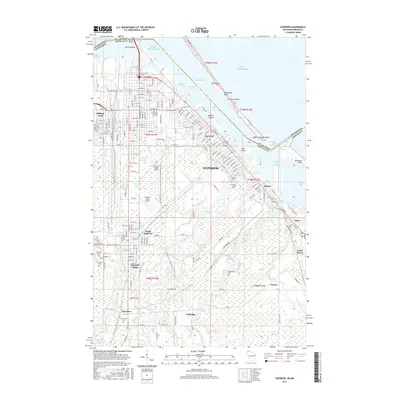 2015 Superior2015 Print · USGSSuperior's industrial waterfront and southern rail corridors are meticulously detailed in this mid-2010s survey. Researchers can trace local genealogy across numerous sites like Saint Francis Cemetery or locate landmarks such as the Univ of Wisconsin - Superior and Richard I Bong Airport.
 - 2018 Map of Superior, 2018 Print
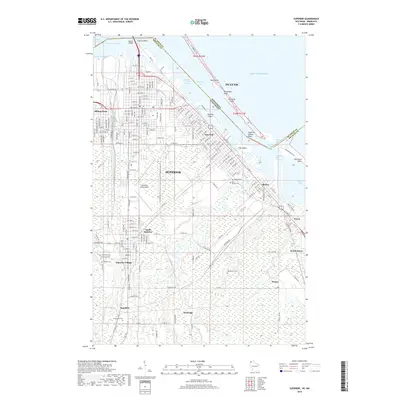 2018 Superior2018 Print · USGSThe Twin Ports region at the head of the Great Lakes comes into focus in this modern era, showing the maritime and rail corridors of Wisconsin and Minnesota. Researchers can trace the layout of the NP RR and locate numerous historic grounds like Saint Francis Cem and Greenwood Cem.
 - 2022 Map of Superior, 2022 Print
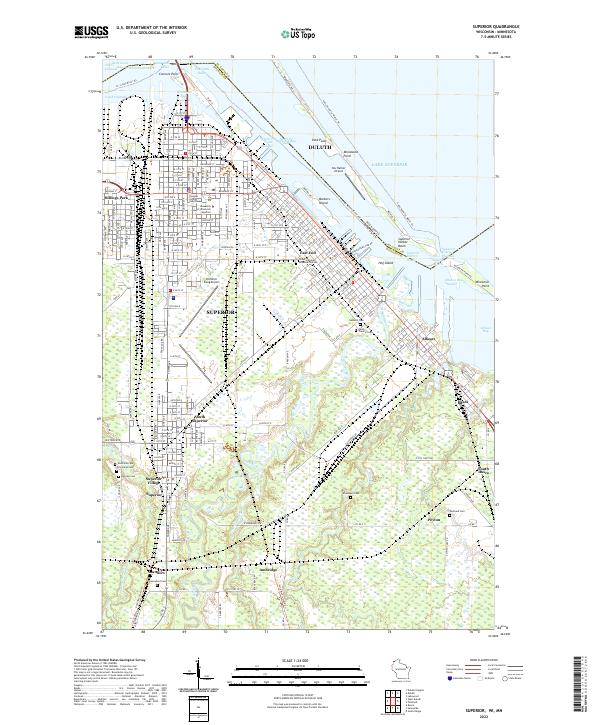 2022 Superior2022 Print · USGSThe industrial waterfront of Superior and the crossing into Duluth appear in high detail at the start of the 2020s. Genealogists and historians can trace numerous burial grounds like Nemadji Cemetery and Graceland Cemetery or locate the University of Wisconsin Superior.
End of results
Showing maps 1-12 of 12
Top cities near Itasca
- Duluth historical maps
- Superior historical maps
- Hermantown historical maps
- Proctor historical maps
- Lakewood historical maps
- Parkland historical maps
See more
Frequently asked questions
- What are the different types of historical maps available for Itasca?
- What is the oldest map of Itasca?
- Where can I purchase historical maps of Itasca for my home or office?
- Where can I download high-res historical maps of Itasca?
- Are there historical topographic maps available for Itasca?
- Is there historical aerial imagery available for Itasca?
- Where are historical maps of Itasca sourced from?