Old Maps of Mount Pleasant, Wisconsin for Metal Detecting
Plan your next treasure hunt with 40 historic maps of Mount Pleasant. Find old homesites, ghost towns, trails, and gathering spots that may be lost to time — perfect for identifying promising metal detecting locations.
- Locate forgotten sites: Uncover places like long-lost settlements, abandoned rail lines, or gathering spots.
- Plan better hunts: Use map overlays combined with LiDAR or satellite views to narrow in on historically rich areas.
- Made for detectorists: Thousands of hobbyists use these maps to discover relics, coins, and hidden history.
Use these historic maps to boost your research and find new opportunities beneath the surface of Mount Pleasant.
Mount Pleasant, WI maps
(40)- 1889 Map of Evansville
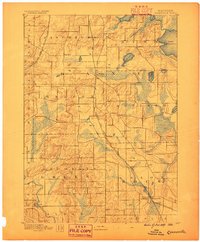 1889 Evansville1889 Print · USGSSouthern Wisconsin at the end of the nineteenth century was a landscape of growing rail towns and post offices scattered across glacial drumlins. Genealogists can trace family roots through the early plats of Evansville, Oregon, and the Lake View Post Office.
 - 1893 Map of Brodhead
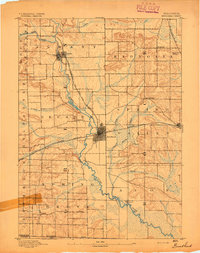 1893 Brodhead1893 Print · USGSSouthern Wisconsin is captured in the late nineteenth century as rail lines and river valleys shaped the landscape. Genealogists and historians can trace early village sites like Brodhead, Magnolia Station, and Orford along the Chicago Milwaukee and Saint Paul Railroad.5 unique versions available
 - 1894 Map of Evansville
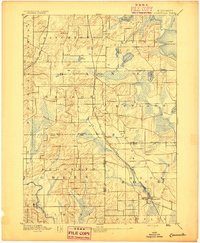 1894 Evansville1894 Print · USGSSouthern Wisconsin at the end of the nineteenth century was a landscape of expanding rail lines and productive prairie farms. Genealogists and local historians can trace early settlements like Oak Hall, the lakeside community of Lakeview, and the winding course of the Sugar River.2 unique versions available
 - 1906 Map of Evansville
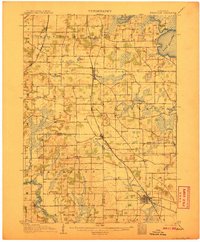 1906 Evansville1906 Print · USGSWisconsin's southern prairie and wetlands are mapped here in the early twentieth century as the railroad transformed rural trade. Trace the iron paths of the C. and N. W. R. R. through Evansville and Oregon, or find local landmarks like Red Bridge Crossing and Liberty Pole Hill.3 unique versions available
 - 1920 Map of Monroe, 1960 Print
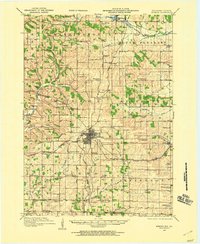 1920 Monroe1960 Print · USGSGreen County at the start of the twenties was a landscape of thriving rail towns and dozens of country schoolhouses. Genealogists can trace family footprints near named sites like Hardscrabble School, the County Farm, or along the Sugar River valley.
 - 1922 Map of Monroe
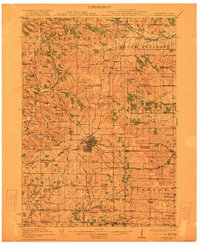 1922 Monroe1922 Print · USGSGreen County at the start of the twenties reveals a landscape of thriving rural school districts and busy rail lines. Genealogists can locate family-named landmarks like Hardscrabble School, the County Farm, and the early village of Juda.
 - 1923 Map of New Glarus
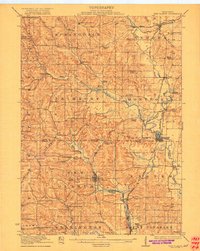 1923 New Glarus1923 Print · USGSGreen and Dane counties are captured here in the early 1920s, showing a region of family farms and emerging rail corridors. Genealogists can trace specific local landmarks like Primrose Churches, the County Farm, and dozens of rural schools including Hanna School.2 unique versions available
 - 1954 Map of Rockford
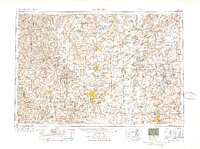 1954 Rockford1954 Print · USGSThe Rock River valley and the Illinois-Wisconsin borderlands are captured here in the mid-1950s during a period of robust industrial and agricultural activity. Genealogists and historians can trace rail-era corridors like the Illinois Central RR and locate landmarks from Big Foot Prairie to Lake Geneva.
 - 1955 Map of Rockford
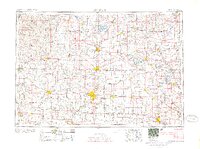 1955 Rockford1955 Print · USGSThe Rock River valley and southern Wisconsin dairy country are shown here in the mid-fifties as the region's manufacturing centers grew. Genealogists and historians can trace the paths of the Chicago and North Western RR and Illinois Central RR through hubs like Rockford and Beloit.
 - 1958 Map of Rockford, 1974 Print
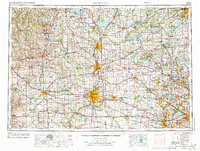 1958 Rockford1974 Print · USGSNorthern Illinois and southern Wisconsin are shown here in the mid-twentieth century as rail-dependent industrial towns began to interface with growing lakefront communities. Genealogists can trace family roots through settlements like Saylesville and Tess Corners or locate historical landmarks like the Rockford Ordnance Depot.4 unique versions available
 - 1961 Map of Evansville, 1963 Print
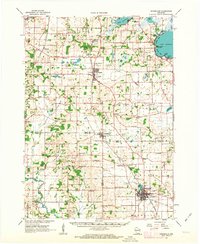 1961 Evansville1963 Print · USGSThe rural landscape between Madison and Janesville is captured here in the early sixties, showing a robust agricultural economy and well-defined town centers. Genealogists can trace family footprints at Franklin Sch, St Marys Cem, and the crossroads at Butts Corners.2 unique versions available
 - 1961 Map of Attica, 1964 Print
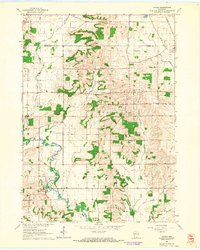 1961 Attica1964 Print · USGSSouthern Wisconsin farmland at the start of the sixties is defined by the winding Sugar River and the rural townships of Brooklyn and Albany. Genealogists and local historians can trace family sites at Jug Prairie Cem, Oak Grove Sch, and the Peace Ch.2 unique versions available
 - 1962 Map of New Glarus, 1964 Print
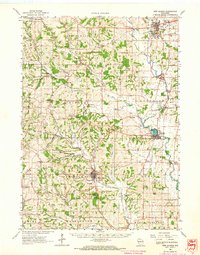 1962 New Glarus1964 Print · USGSSouthern Wisconsin's driftless terrain and Swiss-settled valleys are captured here in the early sixties, showing the rural character of Green and Dane Counties. Researchers can trace family history through sites like East Blue Mounds Church, Oak Hill Cem, and the Andrew Henry School.2 unique versions available
 - 1962 Map of Monticello, 1964 Print
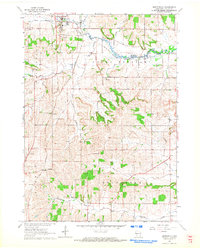 1962 Monticello1964 Print · USGSGreen County’s river valleys and rail junctions are frozen in time during the early sixties, centered on the village of Monticello. Researchers can trace the paths of the Illinois Central railroad through small stops like Stearns or locate family markers in Highland Cem.3 unique versions available
 - 1962 Map of Albany, 1964 Print
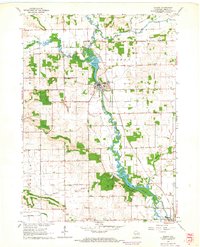 1962 Albany1964 Print · USGSGreen County's river-and-rail landscape is captured here in the early 1960s, showing the vital connection between the Sugar River and the local economy. Genealogists can locate family landmarks like Hillcrest Cem, Smiley Sch, and Moores Cem.2 unique versions available
 - 1962 Map of Monroe, 1964 Print
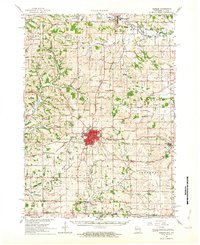 1962 Monroe1964 Print · USGSGreen County in the early sixties remains a center of rail-and-river commerce where the Illinois Central meets the Monroe city limits. Genealogists can trace family footprints through numerous rural sites like Dutch Hollow Sch, Calvary Cem, and the village of Monticello.2 unique versions available
 - 1962 Map of Brodhead, 1964 Print
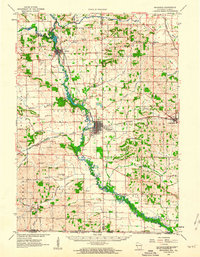 1962 Brodhead1964 Print · USGSSouthern Wisconsin at the start of the sixties reveals a thriving network of rail-side towns and river valleys. Genealogists and local historians can trace family roots at Greenwood Cem, locate the Peebles Sch, or follow the old Chicago and North Western line.2 unique versions available
 - 1962 Map of Belleville, 1972 Print
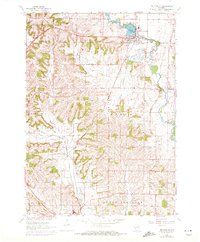 1962 Belleville1972 Print · USGSThe Sugar River valley comes alive in the early seventies, showing a landscape of dairy townships and rail-connected villages. Genealogists and local historians can trace family plots at James Cem or explore the transit corridor of the Illinois Central Gulf and Ross Crossing.2 unique versions available
 - 1963 Map of Rockford
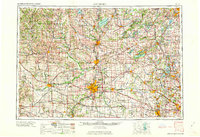 1963 Rockford1963 Print · USGSThe mid-century industrial corridor along the Rock River is shown here during a period of rapid post-war growth. Researchers can trace the extensive rail lines of the Chicago and North Western or locate local landmarks like the Rockford Ordnance Depot and Holy Hill.
 - 1981 Map of Monroe
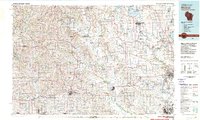 1981 Monroe1981 Print · USGSSouthern Wisconsin and the Illinois borderlands come into focus in the early 1980s, showcasing a landscape defined by dairy farming and river valleys. Genealogists can trace family roots through historic hubs like Monroe, Stoughton, and Brodhead, or locate regional landmarks such as Yellowstone Lake and the Sugar River.
 - 2010 Map of Albany, 2010 Print
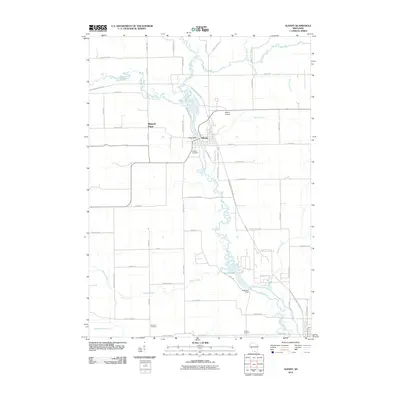 2010 Albany2010 Print · USGSGreen County's river-driven landscape is captured here in the early twenty-first century, centered on the village of Albany. Genealogists and local historians can trace old homesteads near Hillcrest Cemetery or locate the historic Albany Dam and Brodhead Dam along the Sugar River.
 - 2010 Map of Attica, 2010 Print
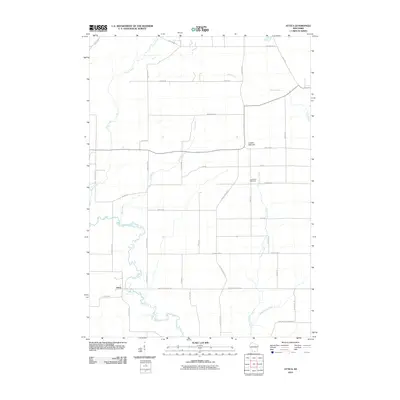 2010 Attica2010 Print · USGSThe rural settlement of Attica and the winding Sugar River define this Green County landscape at the start of the 2010s. Researchers can locate family landmarks like Jug Prairie Cemetery or trace early routes like English Settlement Rd.
 - 2010 Map of Monticello, 2010 Print
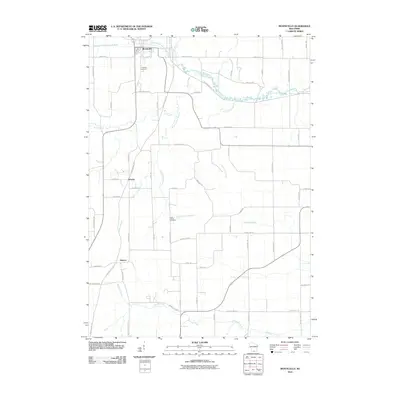 2010 Monticello2010 Print · USGSGreen County’s agricultural heartland is documented here in the early 21st century, centered on the village of Monticello. Genealogists and local historians can locate early burial sites at Highland Cemetery or trace the routes of the Badger State Trl and Sugar River State Trl through the valley.
 - 2010 Map of Belleville, 2010 Print
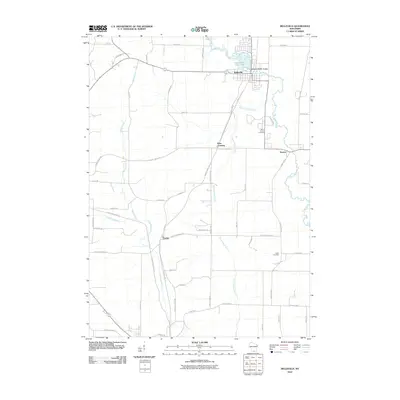 2010 Belleville2010 Print · USGSBelleville and its surrounding dairy-country settlements are shown in 2010 as the local landscape balances agricultural heritage with modern recreation. Trace historical roots at Saint James Cemetery, follow the river to the Belleville Dam, or explore the old crossroads at Exeter and Dayton.
 - 2013 Map of Belleville, 2013 Print
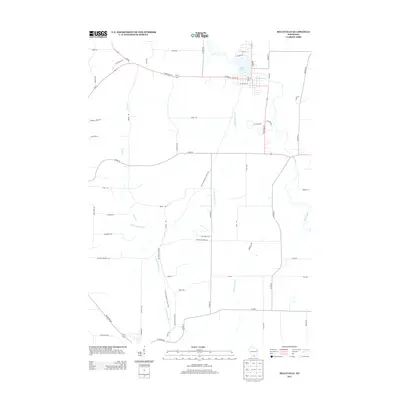 2013 Belleville2013 Print · USGSBelleville and the surrounding countryside are captured here in the early 2000s, centered on the Sugar River and its varied tributaries. Local history researchers can trace family-named roads and the path of the Ice Age National Scenic Trail past landmarks like Lake Belle View and Silver School Br.
Showing maps 1-25 of 40
Top cities near Mount Pleasant
- Fitchburg historical maps
- Monroe historical maps
- Oregon historical maps
- Evansville historical maps
- Brodhead historical maps
- Belleville historical maps
See more
Frequently asked questions
- What are the different types of historical maps available for Mount Pleasant?
- What is the oldest map of Mount Pleasant?
- Where can I purchase historical maps of Mount Pleasant for my home or office?
- Where can I download high-res historical maps of Mount Pleasant?
- Are there historical topographic maps available for Mount Pleasant?
- Is there historical aerial imagery available for Mount Pleasant?
- Where are historical maps of Mount Pleasant sourced from?