1900s (20th Century) Maps of Lake Mills, Wisconsin
Explore 12 historic maps of Lake Mills from the 1900s (20th Century). These maps offer a rare glimpse into what life looked like during the 1900s — showing old roads, neighborhoods, homes, and landmarks that have changed or disappeared over time.
Whether you're researching your family's past, planning a metal detecting trip, or studying how Lake Mills's landscape evolved across the 1900s, these high-resolution maps are a powerful tool for exploring the history of this region.
- Focus on a specific era: All maps on this page are from the 1900s, giving you a focused view of this time period.
- See what’s changed: Compare century-old streets, trails, and buildings to today's modern landscape using overlays and satellite layers.
- Research with precision: Use these maps for genealogy, historical research, land use analysis, or educational projects.
- View, download, or print: Maps are fully viewable online in high resolution, and can be downloaded or printed for your own records.
Start exploring Lake Mills's history through authentic maps from the 1900s. This is your window into the past.
Lake Mills, WI maps
(12)- 1905 Map of Sun Prairie, 1959 Print
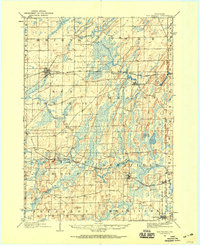 1905 Sun Prairie1959 Print · USGSIn the early twentieth century, this part of Dane County was a thriving network of rail-stop towns and dairy farms. Genealogists and historians can trace the original rail paths of the Milwaukee Road through settlements like Sun Prairie, Deerfield, and Marshall.
 - 1907 Map of Sun Prairie
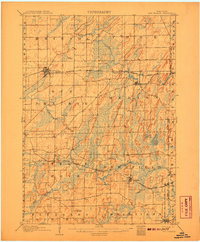 1907 Sun Prairie1907 Print · USGSEastern Dane County at the turn of the century shows a landscape of rail-connected dairy towns and glacial wetlands. Genealogists and historians can trace family locations near York Center, Liberty Mound, and the old rail junction at London.8 unique versions available
 - 1910 Map of Waterloo
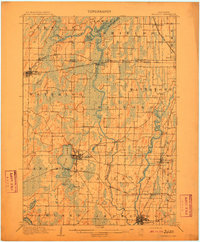 1910 Waterloo1910 Print · USGSJefferson County’s river valleys and rail hubs are preserved here during the Edwardian era. Genealogists and historians can trace the rail-and-river economy through landmarks like Jefferson Junction, Hoopers Mill, and the early shoreline of Rock Lake.2 unique versions available
 - 1957 Map of Madison, 1967 Print
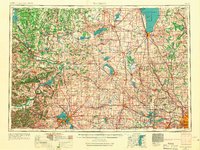 1957 Madison1967 Print · USGSSouth-central Wisconsin in the mid-fifties reveals a landscape of industrial hubs and glacial lakes linked by a dense rail and highway network. Genealogists and historians can trace the development of lakeside communities and find notable sites like Badger Ordnance Works and the Horicon National Wildlife Refuge.3 unique versions available
 - 1959 Map of Lake Mills, 1961 Print
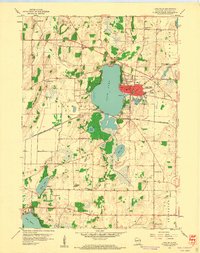 1959 Lake Mills1961 Print · USGSJefferson County in the late fifties showcases a landscape of glacial lakes and dairy-era rural schoolhouses centered on Rock Lake. Genealogists can locate family-named landmarks and institutions like Hoopers Mill, Faville Grove, and the Brick Street Sch.3 unique versions available
 - 1959 Map of Waterloo, 1961 Print
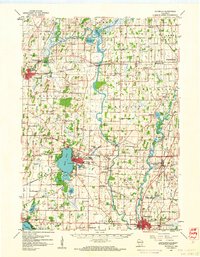 1959 Waterloo1961 Print · USGSJefferson County in the late fifties remains a landscape defined by its river bends and the crossing of major rail lines. Genealogists can locate family landmarks like Moravian Cem and Hoopers Mill, or trace the many rural school districts from Badger Sch to Hilltop Sch.
 - 1960 Map of Madison
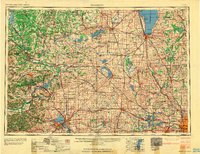 1960 Madison1960 Print · USGSCentral and Southern Wisconsin are captured in the late fifties, showing the region as its rail-and-river network matured. Trace the paths of the Soo Line RR or locate family roots near Lake Mendota and Horicon National Wildlife Refuge.2 unique versions available
 - 1962 Map of Sun Prairie, 1964 Print
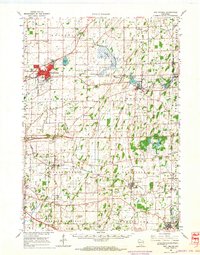 1962 Sun Prairie1964 Print · USGSEastern Dane County thrives as a rail-connected agricultural region in the early sixties, centered on the growing community of Sun Prairie. Researchers can trace old family roots through numerous landmarks like the Prairie Queen Sch, York Center Ch, and the Liberty Prairie Cem.2 unique versions available
 - 1962 Map of Deerfield, 1964 Print
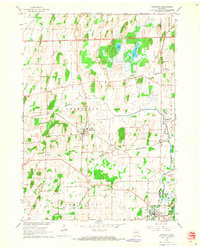 1962 Deerfield1964 Print · USGSIn the early sixties, the farming communities of eastern Dane County were centered around the Chicago and North Western rail line. Genealogists and local historians can trace rural schoolhouses like Oak Park School and family landmarks such as Hauge Cemetery and Kroghville.2 unique versions available
 - 1984 Map of Oconomowoc, 1985 Print
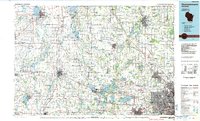 1984 Oconomowoc1985 Print · USGSSoutheast Wisconsin in the mid-eighties shows a landscape defined by its glacial heritage and expanding metropolitan corridors. Genealogists and historians can trace the development of lakeside communities like Oconomowoc and Pewaukee, or find established settlements such as Watertown and Beaver Dam.
 - 1991 Map of Oconomowoc
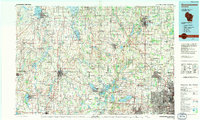 1991 Oconomowoc1991 Print · USGSSoutheastern Wisconsin in the early nineties shows a landscape of glacial lakes and growing suburbs. Trace local history through Aztalan State Park, Carroll College, and the sprawling Horicon Marsh State Wildlife Area.
 - 1991 Map of Madison
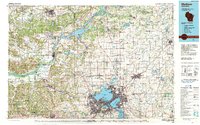 1991 Madison1991 Print · USGSMadison and its iconic glacial lakes are captured here during a time of steady urban expansion and regional growth. Researchers can trace the mid-century development of the University of Wisconsin, locate family sites near Forest Hill Cem, or explore the footprint of the Badger Army Ammunition Plant.
End of results
Showing maps 1-12 of 12
Top cities near Lake Mills
- Watertown historical maps
- Fort Atkinson historical maps
- Whitewater historical maps
- Jefferson historical maps
- Lake Mills historical maps
- Edgerton historical maps
See more
Top neighborhoods of Lake Mills
Frequently asked questions
- What are the different types of historical maps available for Lake Mills?
- What is the oldest map of Lake Mills?
- Where can I purchase historical maps of Lake Mills for my home or office?
- Where can I download high-res historical maps of Lake Mills?
- Are there historical topographic maps available for Lake Mills?
- Is there historical aerial imagery available for Lake Mills?
- Where are historical maps of Lake Mills sourced from?