1900s (20th Century) Maps of Oshkosh, Wisconsin
Explore 11 historic maps of Oshkosh from the 1900s (20th Century). These maps offer a rare glimpse into what life looked like during the 1900s — showing old roads, neighborhoods, homes, and landmarks that have changed or disappeared over time.
Whether you're researching your family's past, planning a metal detecting trip, or studying how Oshkosh's landscape evolved across the 1900s, these high-resolution maps are a powerful tool for exploring the history of this region.
- Focus on a specific era: All maps on this page are from the 1900s, giving you a focused view of this time period.
- See what’s changed: Compare century-old streets, trails, and buildings to today's modern landscape using overlays and satellite layers.
- Research with precision: Use these maps for genealogy, historical research, land use analysis, or educational projects.
- View, download, or print: Maps are fully viewable online in high resolution, and can be downloaded or printed for your own records.
Start exploring Oshkosh's history through authentic maps from the 1900s. This is your window into the past.
Oshkosh, WI maps
(11)- 1955 Map of Green Bay, 1968 Print
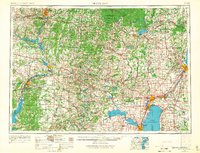 1955 Green Bay1968 Print · USGSCentral and Eastern Wisconsin are captured here in the mid-fifties, showing the industrial growth of the Fox Valley and Wisconsin River corridors. Genealogists and historians can trace rail lines like the Green Bay and Western through settlements like Weyauwega, Clintonville, and Pulaski.2 unique versions available
 - 1956 Map of Rosendale, 1957 Print
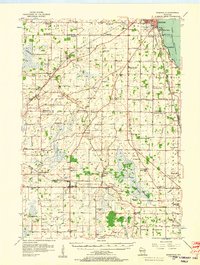 1956 Rosendale1957 Print · USGSWisconsin's farm country meets the shores of Lake Winnebago in the mid-fifties, just as the rural schoolhouse era was fading. Researchers can trace dozens of local landmarks like Paukotuk, Woodhull (Station), and several abandoned sites like Knott Sch.2 unique versions available
 - 1957 Map of Madison, 1967 Print
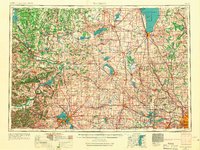 1957 Madison1967 Print · USGSSouth-central Wisconsin in the mid-fifties reveals a landscape of industrial hubs and glacial lakes linked by a dense rail and highway network. Genealogists and historians can trace the development of lakeside communities and find notable sites like Badger Ordnance Works and the Horicon National Wildlife Refuge.3 unique versions available
 - 1960 Map of Madison
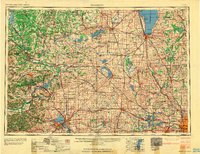 1960 Madison1960 Print · USGSCentral and Southern Wisconsin are captured in the late fifties, showing the region as its rail-and-river network matured. Trace the paths of the Soo Line RR or locate family roots near Lake Mendota and Horicon National Wildlife Refuge.2 unique versions available
 - 1961 Map of Oshkosh, 1962 Print
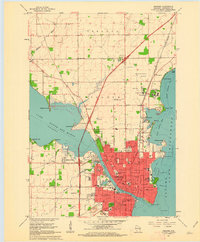 1961 Oshkosh1962 Print · USGSOshkosh and the Fox River waterfront are captured in detail during the early sixties, showing the city's transition from a rail-heavy industrial hub to a regional educational center. Genealogists can locate family sites near Riverside Cemetery, Wisconsin State College, or the Sunny View Sanatorium.2 unique versions available
 - 1961 Map of Oshkosh, 1963 Print
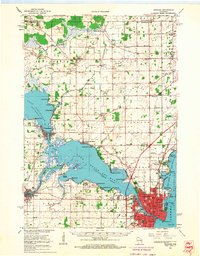 1961 Oshkosh1963 Print · USGSThe Fox River Valley in the early sixties showcases the expansion of Oshkosh and its lakefront settlements. Genealogists and historians can trace family roots through local sites like Calvary Cem, St Peters Cem, and the Winnebago State Hospital grounds.2 unique versions available
 - 1980 Map of Fond Du Lac
 1980 Fond Du Lac1980 Print · USGSThe Fox River Valley and Horicon Marsh meet here during the late twentieth century, showing a transition from lakeside industry to glacial conservation. Genealogists can locate family sites at Estabrook Cem or trace the rail lines through Ripon and Waupun.
 - 1980 Map of Van Dyne, 1981 Print
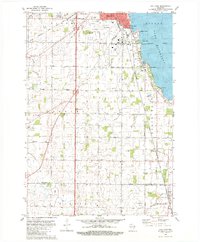 1980 Van Dyne1981 Print · USGSWinnebago and Fond du Lac counties meet along the shores of Lake Winnebago in the early eighties. Local historians can trace established lakefront settlements like Paukotuk and rural landmarks such as Lakeside Sch and St Johns Cem.
 - 1984 Map of Appleton, 1985 Print
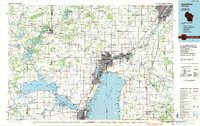 1984 Appleton1985 Print · USGSThe Fox River Valley in the mid-eighties shows a bustling corridor of industry and nature, from the shores of Lake Winnebago to the Oneida Indian Reservation. Trace local heritage through landmarks like Riverside Cem or explore the wetlands of Poygan Marsh State Wildlife Area.2 unique versions available
 - 1992 Map of Van Dyne, 1996 Print
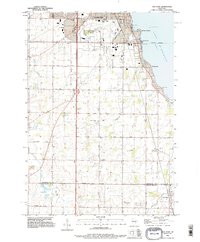 1992 Van Dyne1996 Print · USGSThe western shores of Lake Winnebago appear in the early nineties as the communities of Oshkosh and Van Dyne were steadily growing. Genealogists can trace family roots at numerous rural burial sites like Salem Cem, Schellers Cem, and New Elm Cem.
 - 1992 Map of Oshkosh, 1996 Print
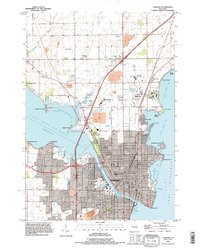 1992 Oshkosh1996 Print · USGSThe Fox River waterfront and the urban core of Oshkosh are shown here in the 1990s. Researchers can trace the grounds of the Winnebago State Hospital, the University of Wisconsin Oshkosh, and the Soo Line rail corridor.
End of results
Showing maps 1-11 of 11
Top cities near Oshkosh
- Appleton historical maps
- Fond du Lac historical maps
- Neenah historical maps
- Fox Crossing historical maps
- Menasha historical maps
- Harrison historical maps
See more
Top neighborhoods of Oshkosh
- Rockaway Beach historical maps
- Keenville historical maps
- Stony Beach historical maps
- North Park historical maps
- Ferry Crossing historical maps
- Lumber River historical maps
See more
Frequently asked questions
- What are the different types of historical maps available for Oshkosh?
- What is the oldest map of Oshkosh?
- Where can I purchase historical maps of Oshkosh for my home or office?
- Where can I download high-res historical maps of Oshkosh?
- Are there historical topographic maps available for Oshkosh?
- Is there historical aerial imagery available for Oshkosh?
- Where are historical maps of Oshkosh sourced from?