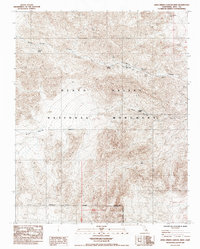
1985 Map of Anvil Spring Canyon West
USGS Topo · Published 1985About this map
Death Valley National Monument dominates this mid-1980s terrain, revealing a landscape defined by isolated water sources and high-desert mining operations. The central topography is carved by Warm Spring Canyon and Anvil Spring Canyon, where elevation changes are punctuated by numerous natural seeps. These water points, such as Grubstake Spring, Mesquite Spring, and Lost Spring, historically dictated movement through the arid environment. Mining activity is concentrated along the canyon walls and northern reaches, represented by the Warm Spring Mine, Grantham Mine, and the Queen of Sheba Mine. This provisional survey preserves the precise locations of historical workings, including a Mine Dump, and topographic landmarks like Sugarloaf Peak during a period of transition for the federal lands in Death Valley.
Find a feature on this map
17 named features on this map. Tap any name to fly to it.
Don’t see what you’re looking for? This feature index may not catch every label — zoom into the map to look around manually.
Map Details
Editions of this 1985 Anvil Spring Canyon West Map
This is the sole edition of this map. No revisions or reprints were ever made.
Other maps of this area
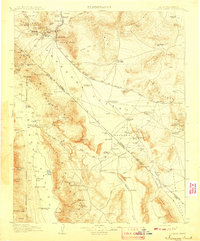
1908 · Furnace Creek
USGS Topo · 1:250,000
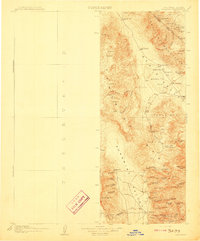
1908 · Ballarat
USGS Topo · 1:250,000
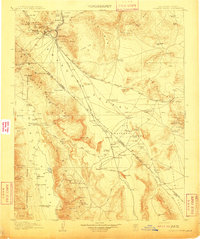
1910 · Furnace Creek
USGS Topo · 1:250,000
1913 · Ballarat
USGS Topo · 1:250,000
1915 · Searles Lake
USGS Topo · 1:250,000
1933 · Avawatz Mountains
USGS Topo · 1:250,000
1947 · Trona
USGS Topo · 1:250,000
1948 · Trona
USGS Topo · 1:250,000
1948 · Death Valley
USGS Topo · 1:250,000
1950 · Manly Peak
USGS Topo · 1:62,500