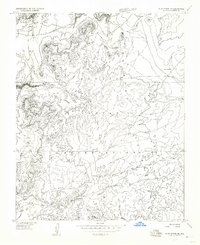
1955 Map of Blue Spring SE
USGS Topo · Published 1957About this map
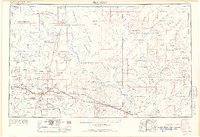
The Navajo Indian Reservation landscape shown here in the mid-1950s is defined by a network of unimproved roads and essential water infrastructure in a high-desert environment. The map records several traditional dwellings, including a cluster of Hogans and a solitary Hogan in the northeast, alongside a simple structure marked as House. These labels provide specific evidence of human habitation and land use patterns during this era. The survival of life in this arid region was tied to the management of surface water, evidenced by the scattered Stock Tanks and other smaller Tanks used for livestock. Significant natural drainage systems like Waterhole Canyon and Big Canyon carve through the terrain, dictating the movement of both people and animals across this part of Coconino County.
Find a feature on this map
9 named features on this map. Tap any name to fly to it.
Don’t see what you’re looking for? This feature index may not catch every label — zoom into the map to look around manually.
Map Details
Editions of this 1955 Blue Spring SE Map
This is the sole edition of this map. No revisions or reprints were ever made.
Other maps of this area
1886 · San Francisco Mtns
USGS Topo · 1:250,000
1886 · Echo Cliffs
USGS Topo · 1:250,000
1891 · San Francisco Mtns
USGS Topo · 1:250,000
1891 · Echo Cliffs
USGS Topo · 1:250,000
1894 · San Francisco Mtns
USGS Topo · 1:250,000
1899 · San Francisco Mtns
USGS Topo · 1:250,000
1947 · Flagstaff
USGS Topo · 1:250,000
1954 · Flagstaff
USGS Topo · 1:250,000
1955 · Coconino Pt NE
USGS Topo · 1:24,000
1955 · Blue Spring NE
USGS Topo · 1:24,000