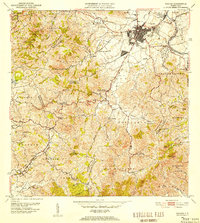
1952 Map of Caguas
USGS Topo · Published 1953About this map
Caguas serves as the focal point of this mid-century landscape, situated where the Río Cagüitas and Río Bairoa flow toward the Río Grande de Loíza. The map reveals a transition between the dense urban grid of the city and the surrounding agricultural valleys, marked by industrial hubs such as Bairoa Central, Santa Juana, and Central Defensa. These processing centers were critical to the local economy, connected by a network of roads that wind through steep terrain divided into barrios like Sumidero and Canaboncito.
Find a feature on this map
63 named features on this map. Tap any name to fly to it.
Don’t see what you’re looking for? This feature index may not catch every label — zoom into the map to look around manually.
Map Details
Editions of this 1952 Caguas Map
2 editions found
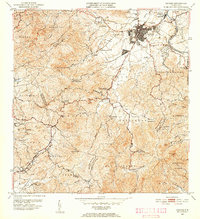
Other maps of this area
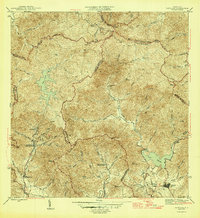
1946 · Patillas
USGS Topo · 1:30,000
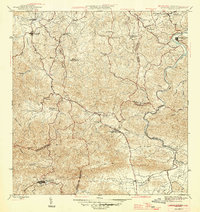
1946 · Aguas Buenas
USGS Topo · 1:30,000
1946 · Cayey
USGS Topo · 1:30,000
1946 · Comerio
USGS Topo · 1:30,000
1946 · Naranjito
USGS Topo · 1:30,000
1946 · Gurabo
USGS Topo · 1:30,000
1946 · Juncos
USGS Topo · 1:30,000
1946 · Yabucoa
USGS Topo · 1:30,000
1946 · Caguas
USGS Topo · 1:30,000
1947 · Caguas NE
USGS Topo · 1:10,000
Featured Places
- Caguas
- Sector Doña Munda, Caguas
- Sector Almena, Aguas Buenas
- Sector Turabo Abajo, Caguas
- Sector Benito Guzmán, Caguas