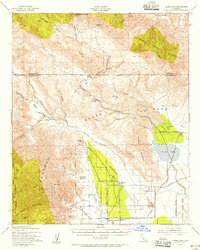
1941 Map of Clark Lake
USGS Topo · Published 1956About this map
Anza-Borrego State Park dominates this desert landscape during the early 1940s, a period when the region was primarily defined by remote cattle ranches and early irrigation efforts. The settlement of Borrego Springs is visible as a developing hub, supported by the local Borrego Sch. Farther north, the isolation of the Santa Rosa Mountains is underscored by primitive routes like the Anza Trail and Rockhouse Trail, which follow the natural contours of deep canyons such as Rockhouse Canyon and Coyote Creek.
Find a feature on this map
41 named features on this map. Tap any name to fly to it.
Don’t see what you’re looking for? This feature index may not catch every label — zoom into the map to look around manually.
Map Details
Editions of this 1941 Clark Lake Map
This is the sole edition of this map. No revisions or reprints were ever made.
Other maps of this area
1901 · Southern California Sheet No. 1
USGS Topo · 1:250,000
1901 · San Jacinto
USGS Topo · 1:125,000
1903 · Ramona
USGS Topo · 1:125,000
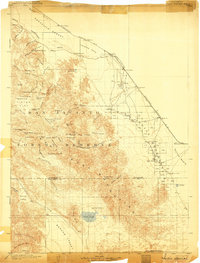
1904 · Indio
USGS Topo · 1:125,000
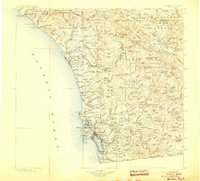
1904 · Southern California Sheet No. 2
USGS Topo · 1:250,000
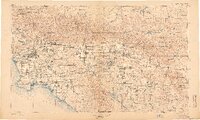
1904 · Southern California Sheet No. 1
USGS Topo · 1:250,000
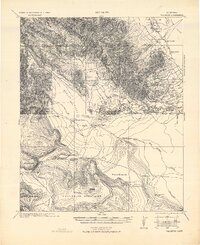
1931 · Vallecito
USGS Topo · 1:125,000
1939 · Warner Springs
USGS Topo · 1:62,500
1939 · Santa Ysabel
USGS Topo · 1:62,500
1939 · Borrego
USGS Topo · 1:62,500