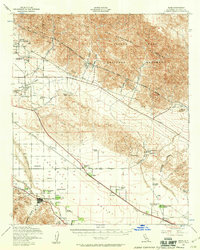
1941 Map of Edom
USGS Topo · Published 1957About this map
Desert Hot Springs and the northern reaches of the Coachella Valley are captured here during a period of expanding desert ranching and early date cultivation. This 1941 aerial survey shows a landscape transitioning from the wild canyons of the Little San Bernardino Mountains and Joshua Tree National Monument to the agricultural developments along the Southern Pacific rail line. Agricultural progress is evident in specialized sites like Snyder Date Gardens and Wonder Date Gardens, while the desert's natural water sources are marked at Willow Hole, Thousand Palms Oasis, and Biskra Palms. The infrastructure of the era is anchored by the Colorado River Aqueduct cutting across the northern foothills and the Dillon Highway providing access to numerous family-named properties, including Two Bunch Palms Ranch, Circle B Ranch, and Ferguson Ranch. The boundaries of the Agua Caliente Indian Reservation are clearly delineated, intersecting with the burgeoning settlements of Cathedral City and Edom.
Find a feature on this map
60 named features on this map. Tap any name to fly to it.
Don’t see what you’re looking for? This feature index may not catch every label — zoom into the map to look around manually.
Map Details
Editions of this 1941 Edom Map
This is the sole edition of this map. No revisions or reprints were ever made.
Other maps of this area
1901 · Southern California Sheet No. 1
USGS Topo · 1:250,000
1901 · San Jacinto
USGS Topo · 1:125,000
1902 · San Gorgonio
USGS Topo · 1:125,000
1904 · Indio
USGS Topo · 1:125,000
1904 · Southern California Sheet No. 1
USGS Topo · 1:250,000
1940 · Palm Springs
USGS Topo · 1:62,500
1940 · Hemet Reservoir
USGS Topo · 1:62,500
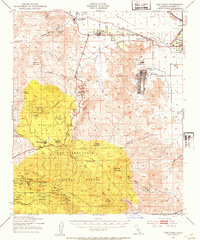
1941 · Toro Peak
USGS Topo · 1:62,500
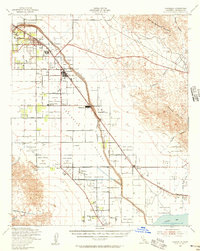
1941 · Coachella
USGS Topo · 1:62,500
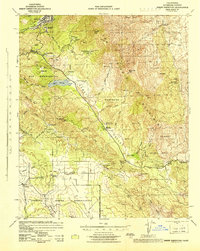
1942 · Hemet Reservoir
USGS Topo · 1:62,500