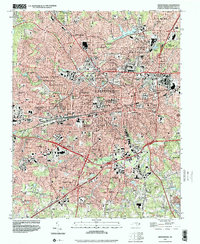
1997 Map of Greensboro
USGS Topo · Published 2001About this map
Greensboro stands as a dense network of neighborhoods and industrial centers in the late 1990s, anchored by its historic educational institutions and rail-driven growth. The map illustrates the city's complex urban fabric, ranging from the manicured grounds of Bennett College and Greensboro College to the industrial signatures of White Oak and Proximity. These mill-oriented communities, alongside Revolution and McAdoo Heights, reflect the long-standing textile legacy of the region.
Find a feature on this map
96 named features on this map. Tap any name to fly to it.
Don’t see what you’re looking for? This feature index may not catch every label — zoom into the map to look around manually.
Map Details
Editions of this 1997 Greensboro Map
This is the sole edition of this map. No revisions or reprints were ever made.
Other maps of this area
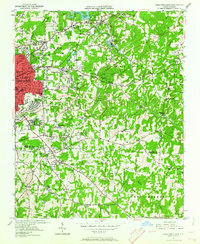
1950 · High Point East
USGS Topo · 1:24,000
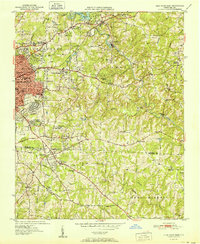
1951 · High Point East
USGS Topo · 1:24,000
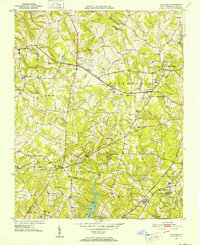
1951 · Guilford
USGS Topo · 1:24,000
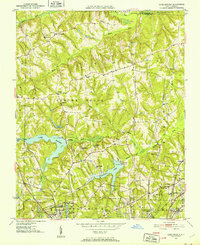
1951 · Lake Brandt
USGS Topo · 1:24,000
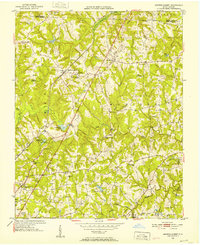
1951 · Browns Summit
USGS Topo · 1:24,000
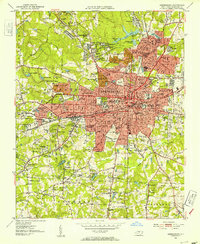
1951 · Greensboro
USGS Topo · 1:24,000
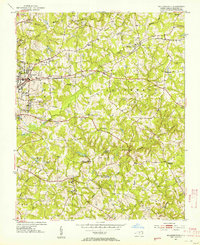
1952 · Mc Leansville
USGS Topo · 1:24,000
1953 · Raleigh
USGS Topo · 1:250,000
1953 · Greensboro
USGS Topo · 1:250,000
1954 · Greensboro
USGS Topo · 1:250,000
Featured Places
- Greensboro, NC
- Sedgefield Park, NC
- Starmount Forest, Greensboro
- Meadowood Homes, Greensboro
- Friendly Acres, Greensboro