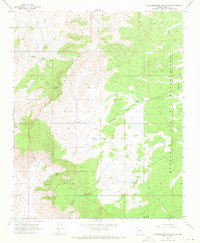
1968 Map of Quartermaster Canyon SW
USGS Topo · Published 1971About this map
The Hualapai Indian Reservation occupies the eastern portion of this high-desert landscape, where the plateau meets the drainage of the Grand Wash. This 1968 survey reveals a territory defined by its water management and sparse access, characterized by a network of seasonal water sources such as Honeymoon Tank, Topside Reservoir, and Lost Creek Reservoir. The presence of these named tanks and springs, including Cedar Spring and Hells Canyon Spring, underscores the critical importance of water for cattle ranching or land management in this arid part of Mohave County. Transportation is limited to rugged routes like the Buck and Doe Road and various unnamed jeep trails that navigate the terrain between Horse Flat and the prominent Cliffs to the west. This map provides a detailed view of the remote infrastructure used to sustain activity on the reservation and the surrounding public lands.
Find a feature on this map
20 named features on this map. Tap any name to fly to it.
Don’t see what you’re looking for? This feature index may not catch every label — zoom into the map to look around manually.
Map Details
Editions of this 1968 Quartermaster Canyon SW Map
This is the sole edition of this map. No revisions or reprints were ever made.
Other maps of this area
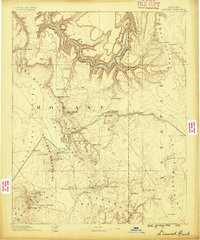
1886 · Diamond Creek
USGS Topo · 1:250,000
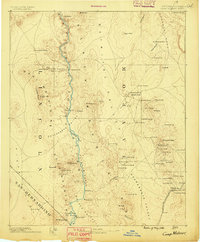
1886 · Camp Mohave
USGS Topo · 1:250,000
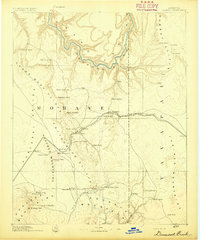
1892 · Diamond Creek
USGS Topo · 1:250,000
1892 · Camp Mohave
USGS Topo · 1:250,000
1942 · Camp Mohave
USGS Topo · 1:250,000
1947 · Kingman
USGS Topo · 1:250,000
1948 · Kingman
USGS Topo · 1:250,000
1948 · Williams
USGS Topo · 1:250,000
1954 · Kingman
USGS Topo · 1:250,000
1954 · Williams
USGS Topo · 1:250,000