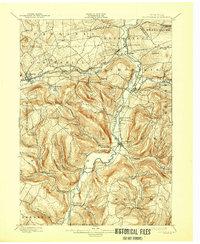
1900 Map of Schoharie
USGS Topo · Published 1944About this map
Schoharie Creek dominates this valley landscape, serving as the central artery for the region's 19th-century development and transport. The valley floor is defined by a series of significant rail junctions and small industrial hamlets, including the prominent rail connection at Schoharie Junction and the critical limestone works at Howes Cave. The map illustrates the specialized rail lines of the era, specifically the Middleburg and Schoharie railroad which follows the creek's western bank through the heart of the territory.
Find a feature on this map
57 named features on this map. Tap any name to fly to it.
Don’t see what you’re looking for? This feature index may not catch every label — zoom into the map to look around manually.
Map Details
Editions of this 1900 Schoharie Map
This is the sole edition of this map. No revisions or reprints were ever made.
Other maps of this area
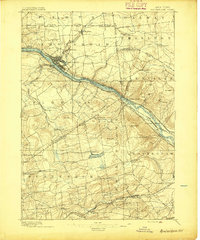
1895 · Amsterdam
USGS Topo · 1:62,500
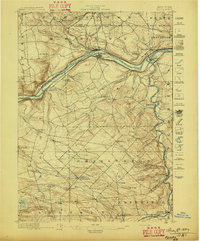
1896 · Fonda
USGS Topo · 1:62,500
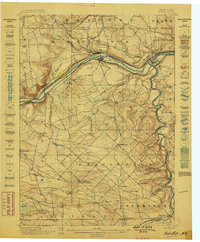
1898 · Fonda
USGS Topo · 1:62,500
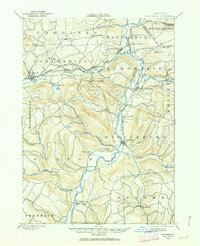
1898 · Schoharie
USGS Topo · 1:62,500
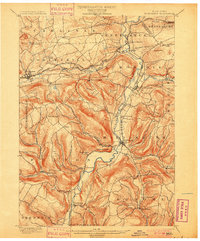
1900 · Schoharie
USGS Topo · 1:62,500
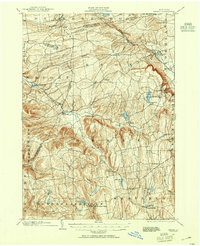
1900 · Berne
USGS Topo · 1:62,500
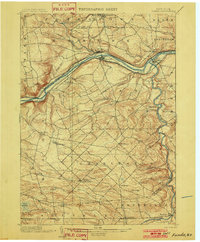
1902 · Fonda
USGS Topo · 1:62,500
1903 · Berne
USGS Topo · 1:62,500
1931 · Amsterdam
USGS Topo · 1:62,500
1943 · Cobleskill
USGS Topo · 1:24,000