1950s Maps of Islote, Arecibo
Explore 6 historic maps of Islote from the 1950s. These maps offer a rare glimpse into what life looked like during the 1950s — showing old roads, neighborhoods, homes, and landmarks that have changed or disappeared over time.
Whether you're researching your family's past, planning a metal detecting trip, or studying how Islote's landscape evolved across the 1950s, these high-resolution maps are a powerful tool for exploring the history of this region.
- Focus on a specific era: All maps on this page are from the 1950s, giving you a focused view of this time period.
- See what’s changed: Compare century-old streets, trails, and buildings to today's modern landscape using overlays and satellite layers.
- Research with precision: Use these maps for genealogy, historical research, land use analysis, or educational projects.
- View, download, or print: Maps are fully viewable online in high resolution, and can be downloaded or printed for your own records.
Start exploring Islote's history through authentic maps from the 1950s. This is your window into the past.
Islote, Arecibo maps
(6)- 1950 Map of Arecibo NO
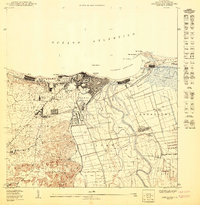 1950 Arecibo NO1950 Print · USGSCoastal Arecibo in the mid-twentieth century was a bustling nexus of sugar production and rail transport. Genealogists and historians can trace family roots through neighborhoods like Obrero or locate industrial sites like Central Cambalache and the American Railroad.
 - 1950 Map of Arecibo NE
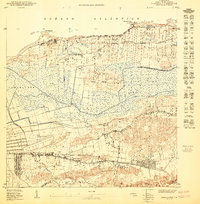 1950 Arecibo NE1950 Print · USGSThe coastal wetlands and barrios of Arecibo are captured here at the mid-point of the century as the region balanced agriculture with new aviation infrastructure. Researchers can trace the layout of Poblado Santana or locate landmarks like the Arecibo Airport and the coastal Pta Caracoles.
 - 1953 Map of Arecibo, 1954 Print
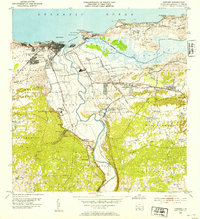 1953 Arecibo1954 Print · USGSArecibo and its coastal surroundings are shown in the early 1950s, a period when the sugar industry and railroads still shaped the local economy. Researchers can trace the lines of the American RR of Porto Rico connecting Central Cambalache and Central Los Caños with the coastal port.2 unique versions available
 - 1953 Map of Barceloneta, 1954 Print
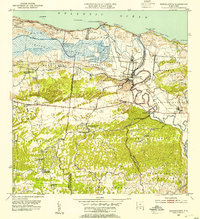 1953 Barceloneta1954 Print · USGSCoastal Puerto Rico in the early fifties reveals a landscape shaped by the sugar industry and the winding Rio Grande De Manati. Researchers can locate historic sugar mills like Central Plazuela and rural schools including Escuela Agustin Balseiro.2 unique versions available
 - 1957 Map of Barceloneta, 1961 Print
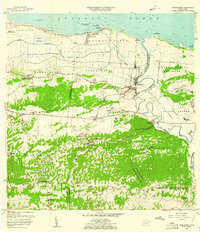 1957 Barceloneta1961 Print · USGSThe northern coast of Puerto Rico in the late fifties shows a landscape defined by sugar production and the winding Río Grande de Manatí. Local researchers can trace family connections through numerous rural schools and industrial landmarks like Central Plazuela and Central Monserrate.
 - 1957 Map of Arecibo, 1961 Print
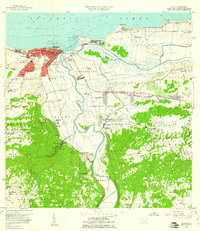 1957 Arecibo1961 Print · USGSPuerto Rico's northern coast comes alive in this mid-century survey, centered on the growing port and sugar economy. Researchers can trace the legacy of Central Cambalache, the old American Railroad, and landmarks like the Faro and Hospital Jefferson.
End of results
Showing maps 1-6 of 6
Frequently asked questions
- What are the different types of historical maps available for Islote?
- What is the oldest map of Islote?
- Where can I purchase historical maps of Islote for my home or office?
- Where can I download high-res historical maps of Islote?
- Are there historical topographic maps available for Islote?
- Is there historical aerial imagery available for Islote?
- Where are historical maps of Islote sourced from?