1950s Maps of Pasto, Coamo
Explore 6 historic maps of Pasto from the 1950s. These maps offer a rare glimpse into what life looked like during the 1950s — showing old roads, neighborhoods, homes, and landmarks that have changed or disappeared over time.
Whether you're researching your family's past, planning a metal detecting trip, or studying how Pasto's landscape evolved across the 1950s, these high-resolution maps are a powerful tool for exploring the history of this region.
- Focus on a specific era: All maps on this page are from the 1950s, giving you a focused view of this time period.
- See what’s changed: Compare century-old streets, trails, and buildings to today's modern landscape using overlays and satellite layers.
- Research with precision: Use these maps for genealogy, historical research, land use analysis, or educational projects.
- View, download, or print: Maps are fully viewable online in high resolution, and can be downloaded or printed for your own records.
Start exploring Pasto's history through authentic maps from the 1950s. This is your window into the past.
Pasto, Coamo maps
(6)- 1952 Map of Rio Descalabrado, 1953 Print
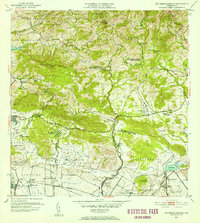 1952 Rio Descalabrado1953 Print · USGSSouthern Puerto Rico's coastal plains and mountain foothills are captured here during the early fifties, showing a landscape defined by military and agricultural life. Researchers can trace the layout of Campo Losey, locate sugar industry landmarks like Central Las Marias, or find family estates such as Hacienda Miranda.2 unique versions available
 - 1952 Map of Coamo, 1953 Print
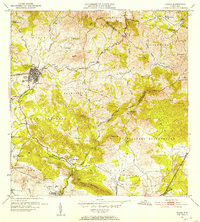 1952 Coamo1953 Print · USGSMid-century Puerto Rico is captured here during a period of transition between its historic hacienda economy and modern development. Researchers can trace family roots through named estates like Hacienda Esmeralda or visit the famous thermal springs at Baños de Coamo.2 unique versions available
 - 1952 Map of Orocovis, 1953 Print
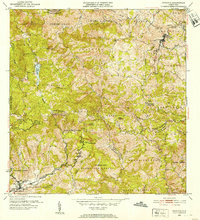 1952 Orocovis1953 Print · USGSThe central Puerto Rican highlands appear in great detail during the early fifties, documenting the complex network of barrio boundaries and mountain roads. Genealogists and historians can trace local landmarks like Hacienda Limon, the Capilla de San Jose, and the Escuela Segunda Unidad de Bauta.2 unique versions available
 - 1953 Map of Barranquitas, 1954 Print
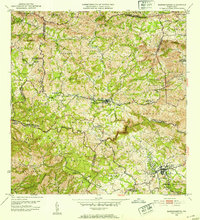 1953 Barranquitas1954 Print · USGSThe heart of the Puerto Rican interior is revealed in the early fifties as a landscape of mountain barrios and growing towns. Researchers can locate dozens of rural landmarks, from Hacienda Córcega to numerous schools like Escuela Segunda Unidad de Botijas No. 2.2 unique versions available
 - 1957 Map of Barranquitas, 1960 Print
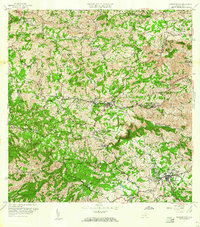 1957 Barranquitas1960 Print · USGSThe central mountains of Puerto Rico are shown here in the mid-fifties, featuring a dense network of rural schools and traditional barrios. Genealogists and historians can trace family roots through the numerous school districts and settlements like Helechal, Hacienda Ortega, and Robles.5 unique versions available
 - 1957 Map of Orocovis, 1960 Print
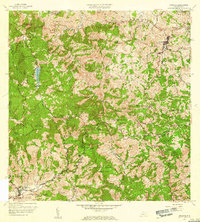 1957 Orocovis1960 Print · USGSThe central cordillera of Puerto Rico comes alive in the late fifties, showcasing the intricate mountain topography surrounding Orocovis. Genealogists and historians can trace family locations near Hacienda Limón, Villalba, and landmarks like Lago de Matrullas.3 unique versions available
End of results
Showing maps 1-6 of 6
Frequently asked questions
- What are the different types of historical maps available for Pasto?
- What is the oldest map of Pasto?
- Where can I purchase historical maps of Pasto for my home or office?
- Where can I download high-res historical maps of Pasto?
- Are there historical topographic maps available for Pasto?
- Is there historical aerial imagery available for Pasto?
- Where are historical maps of Pasto sourced from?