1900s (20th Century) Maps of Union Hill, Alabama
Explore 10 historic maps of Union Hill from the 1900s (20th Century). These maps offer a rare glimpse into what life looked like during the 1900s — showing old roads, neighborhoods, homes, and landmarks that have changed or disappeared over time.
Whether you're researching your family's past, planning a metal detecting trip, or studying how Union Hill's landscape evolved across the 1900s, these high-resolution maps are a powerful tool for exploring the history of this region.
- Focus on a specific era: All maps on this page are from the 1900s, giving you a focused view of this time period.
- See what’s changed: Compare century-old streets, trails, and buildings to today's modern landscape using overlays and satellite layers.
- Research with precision: Use these maps for genealogy, historical research, land use analysis, or educational projects.
- View, download, or print: Maps are fully viewable online in high resolution, and can be downloaded or printed for your own records.
Start exploring Union Hill's history through authentic maps from the 1900s. This is your window into the past.
Union Hill, AL maps
(10)- 1936 Map of Hulaco
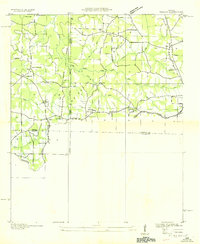 1936 Hulaco1936 Print · USGSDuring the mid-1930s, this portion of northern Alabama was a landscape of mountain crossroads and rural congregations. Genealogists and researchers can trace family landmarks like Crawford Cem, Harvells Store, and local schools including Hulaco Sch.
 - 1949 Map of Hulaco, 1976 Print
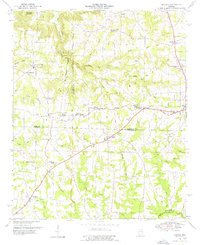 1949 Hulaco1976 Print · USGSNortheastern Cullman County and its neighboring borders are documented here in the late 1940s, showing a landscape defined by the Tennessee Valley Divide. Researchers can trace the early footprints of Joppa, Ryan Crossroads, and Baileyton, or locate rural landmarks like Hulaco Sch and Mt Oak Church.
 - 1952 Map of Hulaco
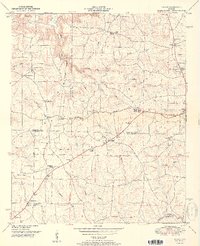 1952 Hulaco1952 Print · USGSAcross the rolling uplands of north Alabama in the early fifties, the Tennessee Valley Divide splits the landscape into distinct drainage basins. Local researchers can trace family roots through numerous rural landmarks like Ryan Crossroads, Hog Jaw, and the Baileyton Cem.2 unique versions available
 - 1956 Map of Gadsden, 1966 Print
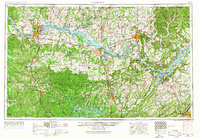 1956 Gadsden1966 Print · USGSNorth Alabama in the mid-1950s shows a region transformed by river engineering and federal industry. Genealogists and local historians can trace the development of the Tennessee Valley through the growth of Huntsville, the sprawling Redstone Arsenal, and the expansive Guntersville Lake.3 unique versions available
 - 1958 Map of Gadsden
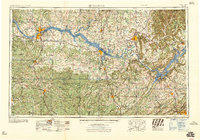 1958 Gadsden1958 Print · USGSNorth Alabama comes alive in the late 1950s as the Tennessee Valley Authority’s massive river projects and the rise of the space industry reshaped the landscape. Researchers can trace the mid-century footprints of Huntsville, Redstone Arsenal, and the riverside rail networks of the Southern railroad.
 - 1960 Map of Gadsden
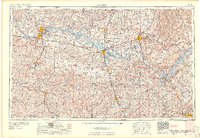 1960 Gadsden1960 Print · USGSNorthern Alabama in the mid-1950s is defined by the mighty Tennessee River and its massive reservoirs. Trace the development of Huntsville and Redstone Arsenal or explore the vast William B Bankhead National Forest.2 unique versions available
 - 1963 Map of Gadsden
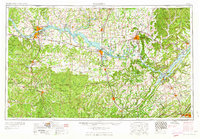 1963 Gadsden1963 Print · USGSNorthern Alabama underwent a dramatic mid-century transformation as the Tennessee Valley became a hub for defense and industry. Researchers can trace the development of the Redstone Arsenal, the route of the Natchez Trace Parkway, and long-standing rail lines like the Southern Railway.
 - 1975 Map of Hulaco, 1977 Print
 1975 Hulaco1977 Print · USGSThe rural landscape around the Cullman and Marshall county line is captured in the mid-seventies, showing the region's transformation into a modern agricultural hub. Researchers can pinpoint property boundaries and land use near settlements like Hulaco, Joppa, and the outskirts of Arab.
 - 1976 Map of Hulaco, 1977 Print
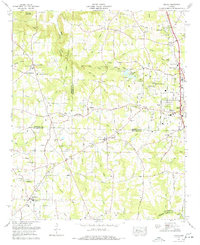 1976 Hulaco1977 Print · USGSNorth Alabama crossroads and family-run lands are captured here in the mid-1970s just as towns like Arab began to expand. Genealogists can trace family names and sites through Hebron Church, Crawford Cem, and the old settlement of Hulaco.
 - 1984 Map of Guntersville, 1985 Print
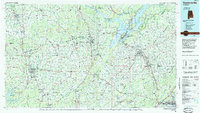 1984 Guntersville1985 Print · USGSNorthern Alabama at the start of the eighties shows a landscape shaped by massive TVA impoundments and a robust rail network. Genealogists and historians can trace family land across Brindley Mountain or near old rail stops on the Louisville and Nashville RR and Southern Ry.2 unique versions available
End of results
Showing maps 1-10 of 10
Top cities near Union Hill
- Guntersville historical maps
- Arab historical maps
- Hanceville historical maps
- New Hope historical maps
- Blountsville historical maps
- Snead historical maps
See more
Frequently asked questions
- What are the different types of historical maps available for Union Hill?
- What is the oldest map of Union Hill?
- Where can I purchase historical maps of Union Hill for my home or office?
- Where can I download high-res historical maps of Union Hill?
- Are there historical topographic maps available for Union Hill?
- Is there historical aerial imagery available for Union Hill?
- Where are historical maps of Union Hill sourced from?