Old Maps of Fort Payne, Alabama for Academic Research
Study the evolution of Fort Payne with 57 high-resolution historic maps. Whether you're teaching, researching, or modeling changes in land use, these maps provide essential visual documentation of urban, environmental, and geographic change.
- Analyze long-term change: Track patterns in development, transportation, and natural features.
- Ideal for environmental or urban studies: Support academic projects with primary historical map data.
- Use in the classroom or lab: Educators and researchers rely on these maps to bring historical context to life.
These maps are a powerful tool for teaching, research, and visualizing how Fort Payne has changed over the decades.
Fort Payne, AL maps
(57)- 1886 Map of Stevenson
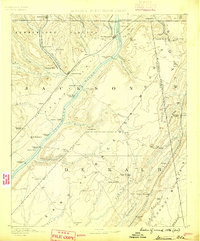 1886 Stevenson1886 Print · USGSNortheast Alabama at the peak of the railroad era shows a landscape tied to the river and the rails. Genealogists can trace family landmarks like Coffey's Store or locate river crossings such as Caperton Ferry and Snodgrass Ferry.
 - 1892 Map of Stevenson
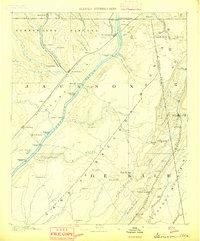 1892 Stevenson1892 Print · USGSNortheast Alabama and the Tennessee border in the 1890s reveal a landscape of mountain coves and vital river crossings. Genealogists and historians can trace rail junctions at Stevenson, river landings like Coffey's Ferry, and landmarks like Nickajack Cave.
 - 1893 Map of Fort Payne
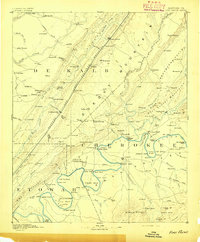 1893 Fort Payne1893 Print · USGSNortheast Alabama is shown here in the late nineteenth century as the rail network transformed the valley floor. Genealogists and historians can trace family-named crossroads like Hoge's X Roads and vital river crossings including Coker Ferry and Sewell Ferry.
 - 1895 Map of Stevenson
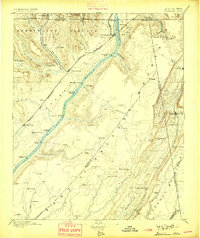 1895 Stevenson1895 Print · USGSThe Tennessee River valley and surrounding plateaus were a hub of rail and river commerce at the close of the century. Genealogists can trace family crossings at Island Creek Ferry or locate old communities like Bellefonte, Stevenson, and Valley Head.6 unique versions available
 - 1898 Map of Fort Payne, 1964 Print
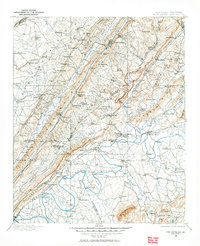 1898 Fort Payne1964 Print · USGSDeKalb and Cherokee counties in the late 1890s are defined by the steep ridges of Lookout Mountain and a bustling network of river ferries. Genealogists can trace family roots through numerous river crossings like Hardwick Ferry and early industrial sites such as Sloan Mill or Abernathy Mill.
 - 1900 Map of Fort Payne
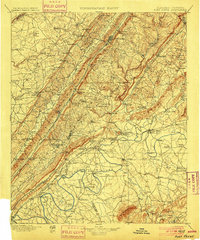 1900 Fort Payne1900 Print · USGSNortheast Alabama is defined by its deep ridges and river valleys in the late nineteenth century. Researchers can trace the era's ferry network across the Coosa River and find old family-run landmarks like Wagners Store and Santy Mills.6 unique versions available
 - 1936 Map of Dugout Valley
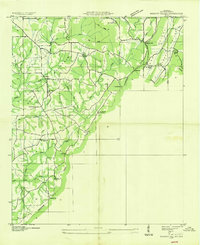 1936 Dugout Valley1936 Print · USGSDeKalb County mountain life in the mid-1930s is captured here, showing the scattered farmsteads and schools along SAND MOUNTAIN. Genealogists can locate family landmarks such as Hawkins Chapel Sch, Blackburns Store, and Mt Parron Ch tucked between the ridges.
 - 1936 Map of Chavies
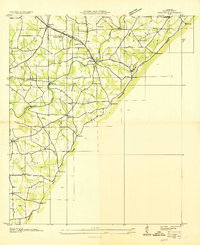 1936 Chavies1936 Print · USGSDeKalb County is captured here in the mid-1930s, showing a landscape of upland farms and mountain gaps along the Tennessee Basin Divide. Researchers can trace rural life through sites like Peeks Corner Sch, Bohannon Ford, and the many churches of Rainsville.
 - 1936 Map of Little Falls
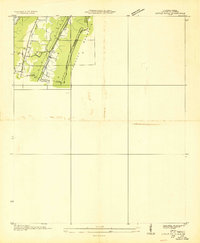 1936 Little Falls1936 Print · USGSDeKalb County, Alabama, is captured in the mid-1930s just as the Tennessee Valley Authority began modernizing the region. Researchers can trace rural life through the upland community of Violet Hill, its Violet Hill Ch, and the high ridges of Lookout Mountain.
 - 1946 Map of Dugout Valley, 1956 Print
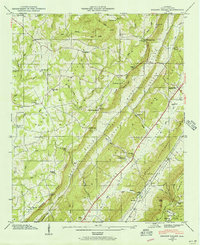 1946 Dugout Valley1956 Print · USGSDe Kalb County is shown here in the mid-1940s, where the dramatic ridges of Sand Mountain and Lookout Mountain frame a landscape of traditional farming and rail transport. Genealogists can locate family landmarks like White Hall Cem, Lea Chapel, and the rural community of Stamp.2 unique versions available
 - 1946 Map of Valley Head, 1956 Print
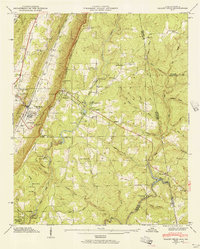 1946 Valley Head1956 Print · USGSThe Alabama-Georgia state line and the slopes of Lookout Mountain are captured here in the mid-1940s. Genealogists and researchers can locate the Southern Railroad corridor, rural schools like Moon Lake Sch, and local landmarks including Mentone and Valley Head.2 unique versions available
 - 1946 Map of Ft Payne, 1960 Print
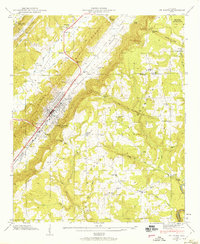 1946 Ft Payne1960 Print · USGSDeKalb County’s rugged valley terrain is captured here just after the war, showing the industrial core of Fort Payne nestled beneath Lookout Mountain. Genealogists can trace family landmarks like Fisher Crossroads, Manitou Cave, and the Log Cabin Chapel.5 unique versions available
 - 1946 Map of Chavies, 1964 Print
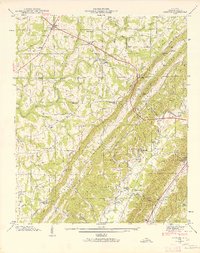 1946 Chavies1964 Print · USGSDeKalb County’s plateau and valley communities are captured in detail just after the war, showing the rural networks of Rainsville and Chavies. Researchers can locate old schools and river crossings like Log Cabin School, Suttell Ford, and the Mt Herman Cemetery.3 unique versions available
 - 1947 Map of Dugout Valley
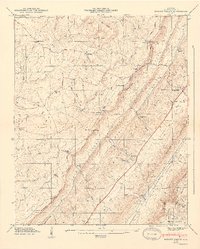 1947 Dugout Valley1947 Print · USGSDeKalb County’s high ridges and deep valleys are documented here just after the war, showing the rural communities of the Sand Mountain plateau. Researchers can locate family landmarks like Davenport Cem, New Home, and the original footprint of De Soto State Park.2 unique versions available
 - 1947 Map of Valley Head
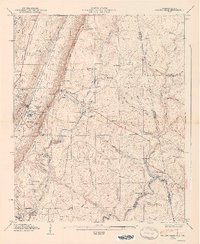 1947 Valley Head1947 Print · USGSDeKalb County and the Alabama-Georgia borderlands are captured here just after the war, showing the mountain communities and valley rail lines of the late 1940s. Genealogists can locate family landmarks like Jones Cem, Johns Chapel, and the Davenport Chapel School.2 unique versions available
 - 1947 Map of Ft Payne
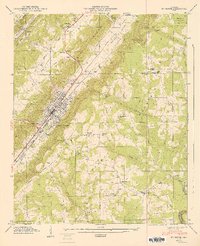 1947 Ft Payne1947 Print · USGSThe valley city of Fort Payne and the surrounding ridges of DeKalb County appear in great detail during the late 1940s. Researchers can trace family history through sites like Fisher Sch, Manitou Cave, and the Glenwood Cem burial grounds.2 unique versions available
 - 1947 Map of Chavies
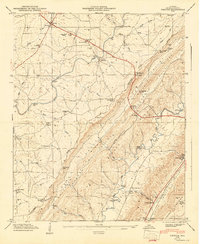 1947 Chavies1947 Print · USGSDeKalb County ridge-and-valley country is captured here in the late 1940s, showing the rural uplands of SAND MOUNTAIN and the BIG WILLS VALLEY below. Genealogists and historians can trace local landmarks like Plainview Sch, Hughes Mill, and old river crossings at Franklin Ford.
 - 1955 Map of Rome
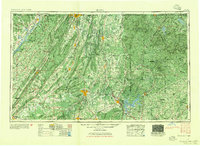 1955 Rome1955 Print · USGSThe tri-state borderlands of Georgia, Alabama, and Tennessee appear in the mid-fifties as a landscape of ridge-and-valley industry and river navigation. Genealogists can trace family footprints near Chattanooga, the iron works of Gadsden, and textile towns like Trion or Summerville.
 - 1958 Map of Rome, 1966 Print
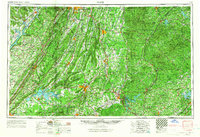 1958 Rome1966 Print · USGSNorthwest Georgia and neighboring Tennessee and Alabama are captured here in the late fifties, showcasing a landscape of high ridges and river valleys. Researchers can trace historic rail lines like the Seaboard Air Line RR and explore the bounds of Cloudland Canyon State Park or Fort Oglethorpe.3 unique versions available
 - 1961 Map of Rome
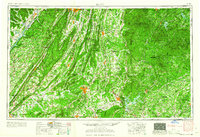 1961 Rome1961 Print · USGSNorthwest Georgia and neighboring Tennessee and Alabama are shown here at a moment of significant mid-century growth. Researchers can trace the rail networks of the Central of Georgia or locate landmarks within Chickamauga and Chattanooga Nat Military Park.
 - 1963 Map of Rome
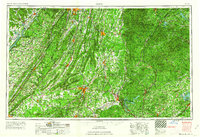 1963 Rome1963 Print · USGSThe tri-state corner of Georgia, Alabama, and Tennessee is captured here during a period of massive reservoir expansion and post-war growth. Genealogists and historians can trace the rail corridors of the Southern Ry or locate landmarks like Fort Oglethorpe and Cloudland Canyon State Park.
 - 1967 Map of Little River, 1969 Print
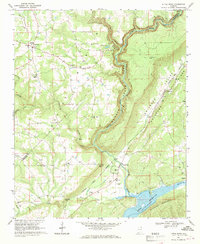 1967 Little River1969 Print · USGSThe deep gorge of Little River Canyon and the surrounding Alabama plateau are captured here in the late sixties. Genealogists and hikers can trace old mountain roads to Dog Town, family burial sites like Starling Cem, and Walkers Chapel.3 unique versions available
 - 1967 Map of Jamestown, 1969 Print
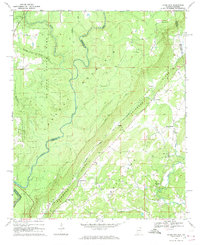 1967 Jamestown1969 Print · USGSNortheast Alabama and the Georgia borderlands appear here in the late sixties as a landscape of dramatic ridges and quiet valley settlements. Genealogists and hikers can trace family sites like Smith Cem and Alexander Cem or explore the wilder reaches of Little River Canyon.2 unique versions available
 - 1975 Map of Dugout Valley, 1977 Print
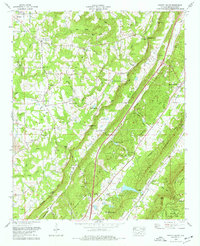 1975 Dugout Valley1977 Print · USGSDeKalb County is captured in the mid-1970s as industrial strip mining and valley farming coexist beneath the heights of LOOKOUT MOUNTAIN. Researchers can trace family sites at Hawkins Chapel, Welcome View Ch, and Price Cem, or follow the old SOUTHERN RAILWAY line through DUGOUT VALLEY.
 - 1981 Map of Chickamauga, 1982 Print
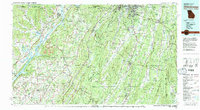 1981 Chickamauga1982 Print · USGSThe tri-state border region of Georgia, Alabama, and Tennessee comes into focus during the early eighties, defined by the towering ridges of the Appalachians. Historians can trace the preserved grounds of Chickamauga and Chattanooga National Military Park and old rail stops like Rising Fawn or Sulphur Springs.2 unique versions available
Showing maps 1-25 of 57
Top cities near Fort Payne
- Rainsville historical maps
- Henagar historical maps
- Collinsville historical maps
- Cedar Bluff historical maps
- Sylvania historical maps
- Powell historical maps
See more
Top neighborhoods of Fort Payne
- Lakewood historical maps
- Douglas historical maps
- Fischer Crossroads historical maps
- Minvale historical maps
- Wills Valley historical maps
Frequently asked questions
- What are the different types of historical maps available for Fort Payne?
- What is the oldest map of Fort Payne?
- Where can I purchase historical maps of Fort Payne for my home or office?
- Where can I download high-res historical maps of Fort Payne?
- Are there historical topographic maps available for Fort Payne?
- Is there historical aerial imagery available for Fort Payne?
- Where are historical maps of Fort Payne sourced from?