1930s Maps of Marshall County, Alabama
Explore 19 historic maps of Marshall County from the 1930s. These maps offer a rare glimpse into what life looked like during the 1930s — showing old roads, neighborhoods, homes, and landmarks that have changed or disappeared over time.
Whether you're researching your family's past, planning a metal detecting trip, or studying how Marshall County's landscape evolved across the 1930s, these high-resolution maps are a powerful tool for exploring the history of this region.
- Focus on a specific era: All maps on this page are from the 1930s, giving you a focused view of this time period.
- See what’s changed: Compare century-old streets, trails, and buildings to today's modern landscape using overlays and satellite layers.
- Research with precision: Use these maps for genealogy, historical research, land use analysis, or educational projects.
- View, download, or print: Maps are fully viewable online in high resolution, and can be downloaded or printed for your own records.
Start exploring Marshall County's history through authentic maps from the 1930s. This is your window into the past.
Marshall County, AL maps
(19)- 1936 Map of Painter
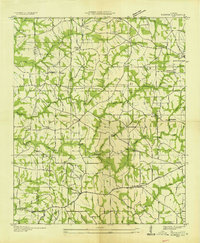 1936 Painter1936 Print · USGSDeKalb and Marshall counties are shown here during the mid-1930s, documenting a landscape of plateau farms and essential creek crossings. Genealogists can trace family roots through landmarks like Blessing Sch, Dalrymple Cem, and rural centers like Whiton and Lathamville.
 - 1936 Map of Guntersville
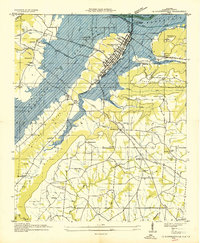 1936 Guntersville1936 Print · USGSGuntersville and the Tennessee River valley are shown here in the mid-thirties during the early stages of reservoir flooding. Researchers can trace the river's transformation near Smith Landing Field or locate rural landmarks like Lattiswood Sch and Warrenton Ch.
 - 1936 Map of Mountainboro
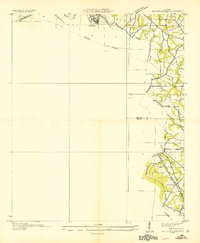 1936 Mountainboro1936 Print · USGSThe Marshall and Etowah County borderlands are captured here in the mid-1930s, defined by the crossing of the Old Cherokee Boundary. You can trace the rural infrastructure of the day, from the Bethsaida Sch to the Nashville Chattanooga and St Louis railroad.
 - 1936 Map of Columbus City
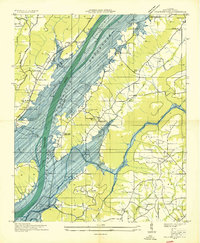 1936 Columbus City1936 Print · USGSThe Tennessee River valley stands on the brink of transformation in the mid-1930s as the TVA prepares for the Guntersville Reservoir. You can trace the pre-inundation landscape of Columbus City, the Town Creek Ferry, and local landmarks like Haney Chapel.
 - 1936 Map of New Hope
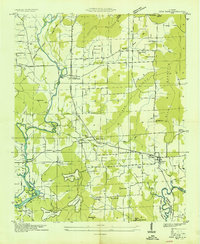 1936 New Hope1936 Print · USGSThe Flint River valley in the mid-1930s shows a landscape on the brink of change as the Wheeler Reservoir reaches its high-water mark. Researchers can locate family landmarks like Baker Cem, Owens Cross Roads, and local hubs like Buggs Chapel or Cherokee School.
 - 1936 Map of Guntersville Dam
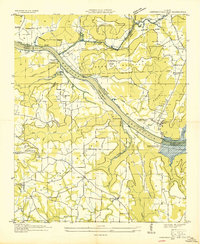 1936 Guntersville Dam1936 Print · USGSMarshall County is captured during the transformative construction of the TVA system in the mid-1930s. Researchers can locate landmarks like Neighbors Mill, the Construction Camp, and old schools including Mobbs Sch and Lamont Sch.
 - 1936 Map of Hulaco
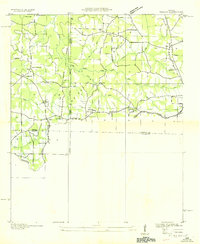 1936 Hulaco1936 Print · USGSDuring the mid-1930s, this portion of northern Alabama was a landscape of mountain crossroads and rural congregations. Genealogists and researchers can trace family landmarks like Crawford Cem, Harvells Store, and local schools including Hulaco Sch.
 - 1936 Map of Langston
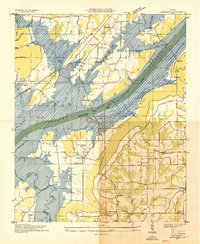 1936 Langston1936 Print · USGSJackson and Marshall counties are captured during the 1930s as the Tennessee Valley Authority prepared to flood the valley. Local historians can trace the original landscape around Langston before the reservoir arrived, including Larkins Ferry, Kelley Cem, and St Joseph Sch.
 - 1936 Map of Rodentown
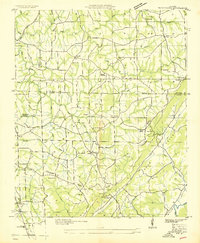 1936 Rodentown1936 Print · USGSNortheast Alabama hill country is captured here during the mid-thirties, showing the rural communities of Sand Mountain. Researchers can trace family roots through numerous local landmarks like Whitesboro, Smith Chapel, and Duck Springs Sch.
 - 1936 Map of Arab
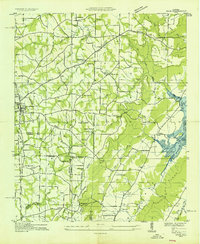 1936 Arab1936 Print · USGSThe town of Arab and the surrounding ridges of Marshall and Cullman counties appear here in the mid-1930s. Researchers can trace the early footprint of the Guntersville Reservoir alongside Ellenberg's Mill and Rocky Mtn Ch.
 - 1936 Map of Grant
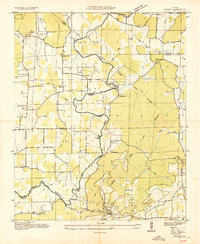 1936 Grant1936 Print · USGSAs the mid-1930s brought the Tennessee Valley Authority to Marshall County, this area balanced its mountain heritage with new river developments. Genealogists and researchers can trace family landmarks like Butlers Mill, Fishtrap Ford, and the DAR Sch.
 - 1936 Map of Mt Carmel
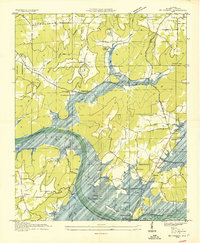 1936 Mt Carmel1936 Print · USGSMarshall County is caught in a moment of transformation in the mid-1930s as the Tennessee River begins its change into a massive reservoir. Genealogists can trace family footprints at Cem Manchester, Simpson Point Ch, and the Claysville School.
 - 1936 Map of Grove Oak
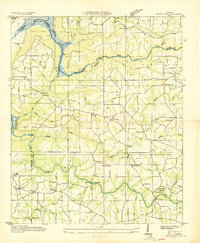 1936 Grove Oak1936 Print · USGSDeKalb and Marshall counties are captured in the mid-1930s as the Tennessee Valley Authority began transforming the river landscape. Genealogists can locate numerous rural landmarks like Prospect Ch, Old Beulah Ch, and High Falls Bridge.
 - 1936 Map of Brooksville
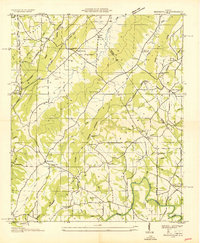 1936 Brooksville1936 Print · USGSBlount and Marshall Counties meet in the mid-1930s among the ridgelines of the Cherokee Basin. Researchers can trace the early road network of Old Tennessee State Highway No 38 to find old community hubs like Nixon Chapel and Oak Hill Sch.
 - 1936 Map of High Point
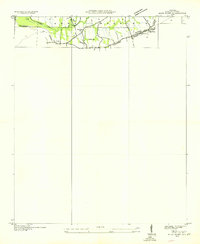 1936 High Point1936 Print · USGSMarshall County's upland plateau is captured in the mid-1930s during a period of significant Tennessee Valley Authority activity. Genealogists and local historians can trace family locations near Hyatt, High Point, and the Rock Spring Ch along the heights of Sand Mountain.
 - 1936 Map of Swearengin
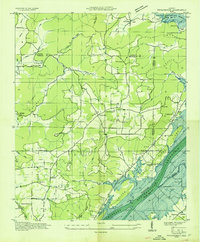 1936 Swearengin1936 Print · USGSMarshall and Jackson counties appear here just as the Tennessee Valley Authority began transforming the region in the mid-1930s. Genealogists and historians can trace family locations through sites like Old Barclay Mill, the State Prison Camp C, and the Zions Rest Cem before the reservoir waters rose.
 - 1936 Map of Farley
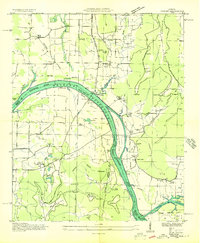 1936 Farley1936 Print · USGSThe Tennessee River valley is captured here in the mid-1930s during its transformation by the TVA. Researchers can trace historic family names and early rural sites like Gaines Chapel, Whitesburg, and the Old Chickasaw Boundary.
 - 1936 Map of Albertville
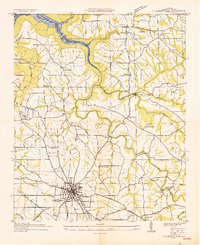 1936 Albertville1936 Print · USGSMarshall County's upland plateau is captured here during the mid-1930s as the Tennessee Valley Authority began transforming the landscape. Researchers can trace rural lineages through sites like Martling Cem, Alder Springs, and Brashier Chapel Sch.
 - 1936 Map of Newsome Sinks
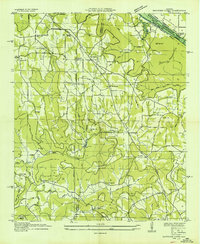 1936 Newsome Sinks1936 Print · USGSMarshall County is captured here during the 1930s as the Tennessee Valley Authority began flooding the valley for the new reservoir. Researchers can trace family homesteads near Old Rescue and Oleander or locate rural landmarks like Science Hill Sch and Mt Tabor Ch.
End of results
Showing maps 1-19 of 19
Top cities of Marshall County
- Albertville historical maps
- Guntersville historical maps
- Arab historical maps
- Grant historical maps
- Douglas historical maps
- Union Grove historical maps
Frequently asked questions
- What are the different types of historical maps available for Marshall County?
- What is the oldest map of Marshall County?
- Where can I purchase historical maps of Marshall County for my home or office?
- Where can I download high-res historical maps of Marshall County?
- Are there historical topographic maps available for Marshall County?
- Is there historical aerial imagery available for Marshall County?
- Where are historical maps of Marshall County sourced from?