1940s Maps of Marshall County, Alabama
Explore 18 historic maps of Marshall County from the 1940s. These maps offer a rare glimpse into what life looked like during the 1940s — showing old roads, neighborhoods, homes, and landmarks that have changed or disappeared over time.
Whether you're researching your family's past, planning a metal detecting trip, or studying how Marshall County's landscape evolved across the 1940s, these high-resolution maps are a powerful tool for exploring the history of this region.
- Focus on a specific era: All maps on this page are from the 1940s, giving you a focused view of this time period.
- See what’s changed: Compare century-old streets, trails, and buildings to today's modern landscape using overlays and satellite layers.
- Research with precision: Use these maps for genealogy, historical research, land use analysis, or educational projects.
- View, download, or print: Maps are fully viewable online in high resolution, and can be downloaded or printed for your own records.
Start exploring Marshall County's history through authentic maps from the 1940s. This is your window into the past.
Marshall County, AL maps
(18)- 1946 Map of Grove Oak, 1972 Print
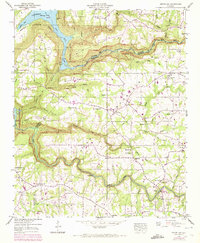 1946 Grove Oak1972 Print · USGSThe plateaus of DeKalb and Marshall Counties are captured here mid-century, just as rural land use began to shift. Genealogists can locate family landmarks like Bethlehem Sch and several country meeting houses, including Salem Ch and Mt Nebo Ch.2 unique versions available
 - 1947 Map of Farley, 1956 Print
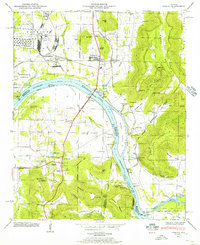 1947 Farley1956 Print · USGSThe Tennessee River valley north of Laceys Spring is captured here just after the war, showing the expansion of federal reservations. Trace family roots at Laceys Spring Cem or locate old community hubs like St Lukes Church and the Cherokee School.
 - 1947 Map of New Hope, 1964 Print
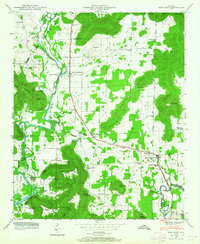 1947 New Hope1964 Print · USGSMadison County at the end of the 1940s reveals a rural landscape defined by the Tennessee River's backwaters and the foothills of the Appalachians. Researchers can trace family history through dozens of named sites like Owens Cross Roads, Cherokee School, and New Hope Cem.3 unique versions available
 - 1947 Map of Albertville, 1965 Print
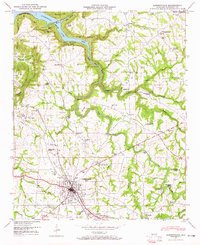 1947 Albertville1965 Print · USGSMarshall County's plateau and the southern reaches of Guntersville Lake come into focus just after the war. Local historians can trace the rail-and-road economy through the Nashville Chattanooga and St Louis Railway and landmarks like Rice Mill Bridge and Ephesus Ch.4 unique versions available
 - 1947 Map of Newsome Sinks, 1967 Print
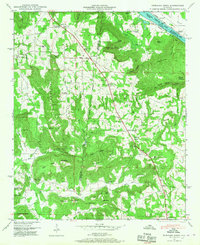 1947 Newsome Sinks1967 Print · USGSIn the mid-1940s, this area of Marshall County was a landscape of high ridges and deep coves where the Huntsville Meridian defines the local grid. Researchers can trace rural life through landmarks like Clarksville Landing, Pleasant Valley Church, and the New Horton School.3 unique versions available
 - 1947 Map of Grant, 1970 Print
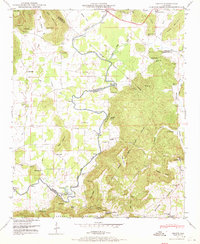 1947 Grant1970 Print · USGSNortheastern Alabama’s river valleys and mountain ridges are captured here just after the war, showing the rural landscape where three counties meet. Genealogists can trace family landmarks like Keel Cem, Butler Mill, and the many river crossings including Hellum Ford.4 unique versions available
 - 1947 Map of Columbus City, 1972 Print
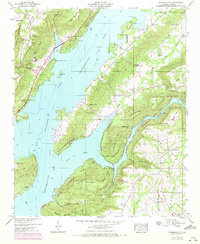 1947 Columbus City1972 Print · USGSThe Alabama shoreline and Marshall County highlands are captured here after the Tennessee River was dammed to form Guntersville Lake. Genealogists can trace old family sites like Rainey Cem and settlements at Columbus City or Meltonsville.3 unique versions available
 - 1947 Map of Langston, 1972 Print
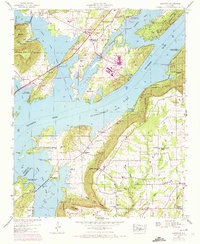 1947 Langston1972 Print · USGSNortheast Alabama during the mid-century transition shows a landscape defined by the Tennessee River and the rising waters of Guntersville Lake. Genealogists and local historians can trace family locations near Langston, explore several churches like Hollis Memorial Church, and find family burial grounds including Finney Cem and Kelly Cem.2 unique versions available
 - 1947 Map of Swearengin, 1972 Print
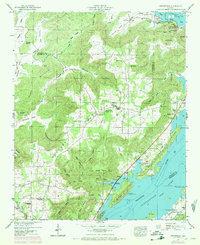 1947 Swearengin1972 Print · USGSNortheast Alabama's river-cut plateau comes into focus here just after the mid-century, showing the rugged intersection of Guntersville Lake and the mountain coves. Genealogists and hikers can trace the rural landscape of Swearengin, from the depths of Cathedral Caverns to Zions Rest Cem.2 unique versions available
 - 1947 Map of Painter, 1973 Print
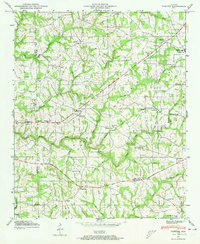 1947 Painter1973 Print · USGSDeKalb and Marshall counties are captured here in the late 1940s, showing the settled ridges of Sand Mountain. Genealogists can trace early homesteads near Painter and Geraldine, or locate sites like Gilbreath Chapel and Colvin Bridge.2 unique versions available
 - 1948 Map of Guntersville, 1969 Print
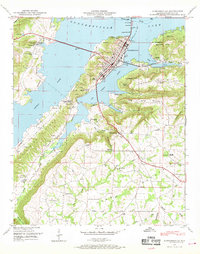 1948 Guntersville1969 Print · USGSMarshall County in the late 1940s reveals a region defined by the waters of Guntersville Lake and its busy river crossings. Genealogists can trace family names at Warrenton Cem or locate community hubs like Crossroads School and the N C & St L Ry Ferry.3 unique versions available
 - 1948 Map of Mt Carmel, 1971 Print
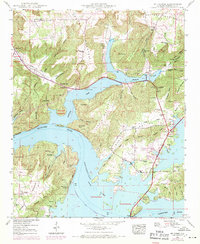 1948 Mt Carmel1971 Print · USGSThe Tennessee River valley in Alabama comes alive in this post-war survey of the newly formed reservoir landscape. Trace the evolution of the shoreline near Cottonville and Seibold or locate old family sites like Abel Cem and Henryville Cem.3 unique versions available
 - 1948 Map of Guntersville Dam, 1972 Print
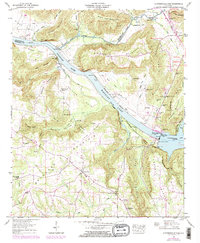 1948 Guntersville Dam1972 Print · USGSThe Tennessee River valley in the late 1940s centers on the massive Guntersville Dam and its surrounding mountain reservations. Genealogists can trace family landmarks like Neighbors Mill, Patterson Cem, and the remote Mobb School.2 unique versions available
 - 1948 Map of Arab, 1974 Print
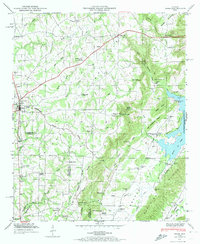 1948 Arab1974 Print · USGSMarshall County's upland plateaus and the Tennessee Valley Divide are captured here shortly after the Second World War. Researchers can trace rural lineages through sites like Johnsons Mill, Thrasher Crossroads, and the Brashier Chapel Cem.3 unique versions available
 - 1949 Map of Grove Oak
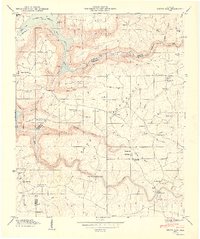 1949 Grove Oak1949 Print · USGSDeKalb and Marshall counties are shown here just after the war, where the plateau of Sand Mountain meets the backwaters of the Tennessee River. Researchers can trace rural life through dozens of landmarks like Poplar Springs Ch, Bethlehem Sch, and the Elrod Bridge.2 unique versions available
 - 1949 Map of Columbus City
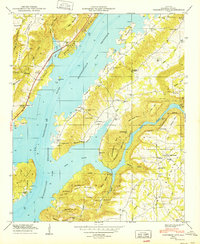 1949 Columbus City1949 Print · USGSInundated valleys and high ridges define this Marshall County landscape just after the war as the Tennessee River reshapes the local geography. Researchers can find old family cemeteries like Kennamer Cem and communities such as Columbus City.2 unique versions available
 - 1949 Map of Painter
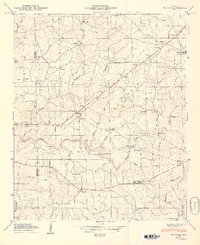 1949 Painter1949 Print · USGSDe Kalb County settlements are spread across the plateau of Sand Mountain in the years following World War II. Researchers can trace rural lineages through numerous family sites and country parishes like Dalrymple Cem, Lathamville, and Concord Ch.2 unique versions available
 - 1949 Map of Hulaco, 1976 Print
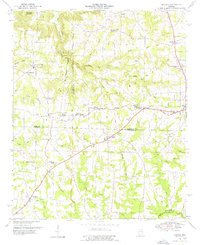 1949 Hulaco1976 Print · USGSNortheastern Cullman County and its neighboring borders are documented here in the late 1940s, showing a landscape defined by the Tennessee Valley Divide. Researchers can trace the early footprints of Joppa, Ryan Crossroads, and Baileyton, or locate rural landmarks like Hulaco Sch and Mt Oak Church.
End of results
Showing maps 1-18 of 18
Top cities of Marshall County
- Albertville historical maps
- Guntersville historical maps
- Arab historical maps
- Grant historical maps
- Douglas historical maps
- Union Grove historical maps
Frequently asked questions
- What are the different types of historical maps available for Marshall County?
- What is the oldest map of Marshall County?
- Where can I purchase historical maps of Marshall County for my home or office?
- Where can I download high-res historical maps of Marshall County?
- Are there historical topographic maps available for Marshall County?
- Is there historical aerial imagery available for Marshall County?
- Where are historical maps of Marshall County sourced from?