Old Maps of Prichard, Alabama for Hiking & Exploration
Hike through history with 43 historic maps of Prichard. Explore old trails, ghost towns, and forgotten backroads — perfect for outdoor adventurers and local explorers.
- Rediscover forgotten places: Map out old mining camps, roads, and footpaths that no longer exist on modern maps.
- Layer with modern tools: Combine with LiDAR or satellite views to plan hikes through historical terrain.
- Made for exploration: Popular among hikers, overlanders, and local history lovers.
Use these maps to find adventure and explore the hidden past of Prichard.
Prichard, AL maps
(43)- 1922 Map of Mobile
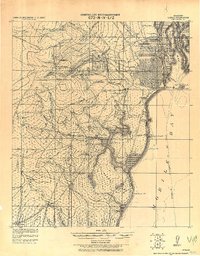 1922 Mobile1922 Print · USGSMobile and its coastal defenses are revealed in the early twentieth century as the city's rail and maritime networks expanded toward the bay. Genealogists and historians can trace family-named routes and vanished stations like Mertz Sta., Knobloch's Wharf., and Spring Hill College.
 - 1940 Map of Mobile
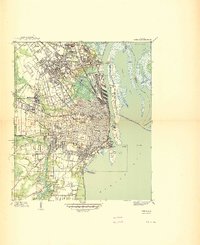 1940 Mobile1940 Print · USGSMobile at the brink of the 1940s reveals a thriving Gulf Coast port where urban industry meets the tidal marshlands. Genealogists and historians can trace the early layout of Prichard, identify long-standing institutions like the Visitation Convent, or locate coastal landmarks such as the Quarantine Sta and Monroe Park Armory.3 unique versions available
 - 1940 Map of Mobile, 1955 Print
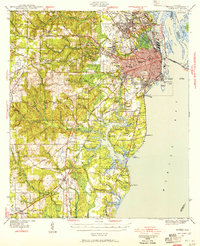 1940 Mobile1955 Print · USGSMobile and its surrounding bayou country appear here just before the mid-century, from the busy State Docks to the quiet reaches of Hollingers Island. Genealogists can locate family landmarks like St Marys Ch, Magnolia Cemetery, and several old rural schools.5 unique versions available
 - 1941 Map of Chickasaw
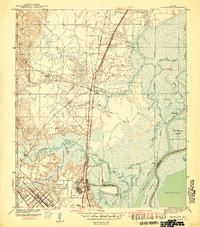 1941 Chickasaw1941 Print · USGSThe industrial riverfront north of Mobile is captured here just before the war, showing the busy Ship Yard and rail hubs. Trace local roots through the early streets of Whistler and Chickasaw or locate family landmarks like Alvarez Bridge and Liveoak Landing.2 unique versions available
 - 1941 Map of Creola, 1959 Print
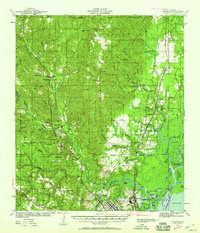 1941 Creola1959 Print · USGSMobile County during the early 1940s was a landscape of rail-connected settlements and coastal bayous. Genealogists can trace family roots through sites like Indian Springs Cem, St Louis Sch, and the riverside town of Creola.3 unique versions available
 - 1942 Map of Kushla
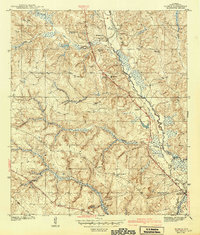 1942 Kushla1942 Print · USGSMobile County settlements and timberlands appear here just before the mid-century boom. Genealogists can trace the rural communities of Kushla and Mauvilla, finding specific family-history sites like Indian Springs Ch and Kushla Sch along the Gulf Mobile and Ohio rail line.2 unique versions available
 - 1943 Map of Creola
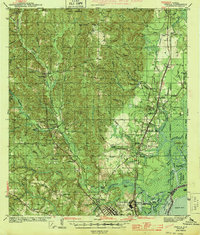 1943 Creola1943 Print · USGSMobile County during the early 1940s shows a landscape of rail-dependent settlements and dense bayous before the mid-century suburban expansion. Researchers can locate family landmarks like Indian Springs Cem, the Oak Grove Sch, and old stops along the Alabama Tennessee and Northern Railroad.2 unique versions available
 - 1943 Map of Chickasaw
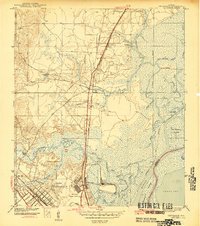 1943 Chickasaw1943 Print · USGSCoastal Alabama was transforming during the early 1940s as industrial and rail networks expanded north of Mobile. Genealogists and historians can trace the early footprints of Saraland and Chickasaw, locate the massive Ship Yard, and study the rail lines of the Southern Railway.3 unique versions available
 - 1943 Map of Mobile
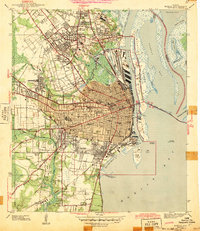 1943 Mobile1943 Print · USGSMobile and its bustling harbor at the height of the Second World War reveal a portrait of Alabama's port city before modern sprawl. Researchers can trace the layout of the State Docks, identify old neighborhood schools like Leinkauf Sch, or locate the historic grounds of Magnolia Cemetery.2 unique versions available
 - 1943 Map of Spring Hill
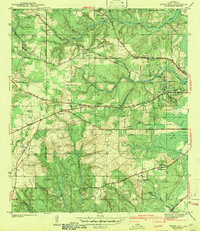 1943 Spring Hill1943 Print · USGSMobile County’s western suburbs and rural outskirts are documented here during the early war years. Researchers can locate family landmarks and early civic sites like Spring Hill College, Cottage Hill Sch, and the Spring Hill Cem.2 unique versions available
 - 1944 Map of Mobile
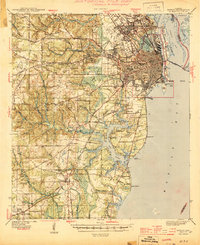 1944 Mobile1944 Print · USGSMobile and its surrounding coastal reaches are captured here during the height of the 1940s. Researchers can trace the city's growth from the dense urban grid out to Spring Hill, locating landmarks like Magnolia Cemetery and the Bankhead Tunnel.4 unique versions available
 - 1953 Map of Spring Hill, 1954 Print
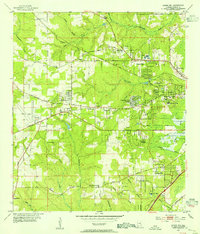 1953 Spring Hill1954 Print · USGSThe suburbs of western Mobile are shown in detail during the early fifties as the city expanded past its traditional limits. Researchers can trace local development through landmarks like Spring Hill College, Bates Field, and the Mobile Country Club.6 unique versions available
 - 1953 Map of Kushla, 1954 Print
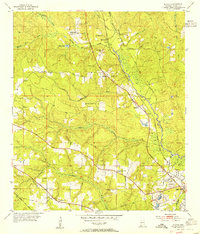 1953 Kushla1954 Print · USGSThe rural outskirts of Mobile are documented in the early fifties as the region's railroad and river networks shaped local life. Genealogists and historians can trace family-named landmarks and centers of worship like St Johns Chapel, Mauvilla Cem, and Mt Pilgrim Ch.6 unique versions available
 - 1953 Map of Chickasaw, 1955 Print
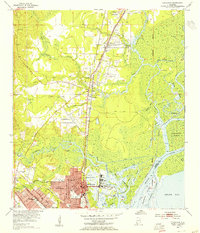 1953 Chickasaw1955 Print · USGSCoastal Alabama's industrial and residential growth comes into focus in this mid-century survey of the Mobile riverfront. Genealogists and historians can trace the foundations of Chickasaw and Saraland, identifying family landmarks like Saraland Cem, Myers Cem, and the old Ship Yard.6 unique versions available
 - 1953 Map of Mobile, 1955 Print
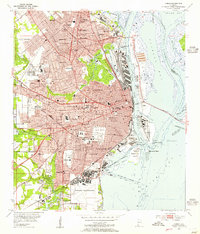 1953 Mobile1955 Print · USGSMobile and its neighboring industrial suburbs thrive in the mid-1950s as the riverfront reaches its peak as a rail and maritime gateway. Researchers can locate specific family homesites near Barton Academy, the sprawling Brookley Air Force Base, or the grounds of Magnolia Cemetery.5 unique versions available
 - 1953 Map of Mobile, 1968 Print
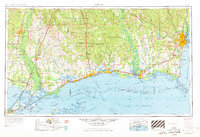 1953 Mobile1968 Print · USGSThe Gulf Coast comes alive in this mid-century survey, from the streets of Mobile to the marshes of New Orleans. Trace family roots in coastal towns like Pass Christian and Bayou La Batre or locate military landmarks including Keesler AFB.3 unique versions available
 - 1957 Map of Mobile
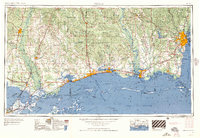 1957 Mobile1957 Print · USGSThe Gulf Coast in the mid-1950s reveals a bustling corridor of rail-and-river commerce connecting Alabama to Louisiana. Genealogists and historians can trace old settlements and military hubs from Keesler Afb to the coastal reaches of Ship Island and Bogalusa.3 unique versions available
 - 1960 Map of Mobile
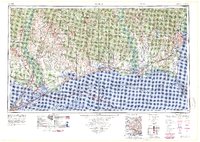 1960 Mobile1960 Print · USGSThe Gulf Coast at the dawn of the sixties shows a landscape of busy ports, military airbases, and barrier islands. Trace the rail lines of the Louisville & Nashville through BILOXI and Pascagoula or find family history in towns like Bayou La Batre and Poplarville.
 - 1963 Map of Mobile
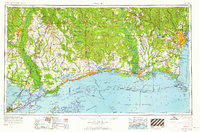 1963 Mobile1963 Print · USGSThe Gulf Coast at the dawn of the sixties shows a thriving maritime and military corridor from Louisiana to Alabama. Genealogists and historians can trace rail lines like the Louisville & Nashville RR and find landmarks from Brookley AFB to Fort Morgan.
 - 1965 Map of Mobile
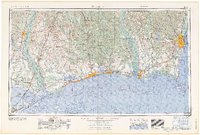 1965 Mobile1965 Print · USGSThe Gulf Coast at mid-century reveals a landscape of expanding ports and vital military installations from Louisiana to Alabama. Genealogists and historians can trace the growth of Biloxi, Pascagoula, and Mobile, alongside the sprawling De Soto National Forest.
 - 1984 Map of Mobile
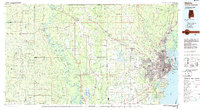 1984 Mobile1984 Print · USGSMobile and its surrounding Gulf Coast backcountry appear in the mid-eighties as a hub of maritime industry and timber management. Genealogists and historians can trace the development of the riverfront near McDuffie Island or explore rural settlements like Lucedale and Chunchula.
 - 1984 Map of Mobile
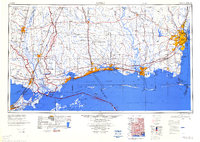 1984 Mobile1984 Print · USGSThe Gulf Coast at the height of the mid-eighties shows a landscape of rapid industrial growth and military significance. Researchers can trace the sprawling rail lines of the Illinois Central Gulf RR, locate the NASA Test Facility, or study the barrier island chain from Cat Island to Petit Bois Island.3 unique versions available
 - 1994 Map of Mobile
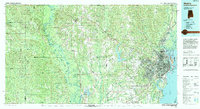 1994 Mobile1994 Print · USGSMobile and its sprawling bay are captured in the mid-nineties as the industrial port and coastal wilderness found a modern balance. Genealogists and historians can trace rail lines like the Illinois Central Gulf RR and find landmarks such as Bonnie Chapel and Hollingers Island.
 - 2011 Map of Kushla, 2011 Print
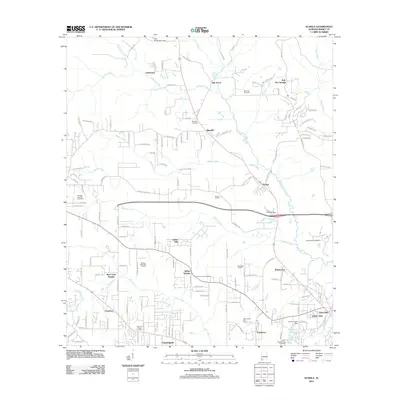 2011 Kushla2011 Print · USGSMobile County settlements and waterways are mapped here in the early twenty-first century as suburban growth expands northward. Researchers can trace family history at the Mauvilla Cemetery or locate landmarks like the University of Mobile and Kali-Oka Springs.
 - 2011 Map of Spring Hill, 2011 Print
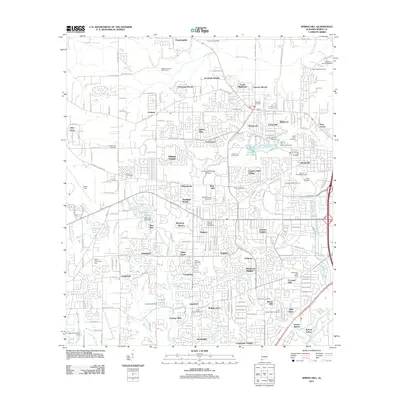 2011 Spring Hill2011 Print · USGSMobile’s western suburbs and college campuses are captured in this 2011 survey of Spring Hill. Researchers can trace local history through numerous burial grounds like Old Spring Hill Cemetery or explore the grounds of the University of South Alabama.
Showing maps 1-25 of 43
Top cities near Prichard
- Mobile historical maps
- Daphne historical maps
- Fairhope historical maps
- Tillmans Corner historical maps
- Saraland historical maps
- Spanish Fort historical maps
See more
Top neighborhoods of Prichard
- Rosehaven historical maps
- Kushla historical maps
- Henry Road Estates historical maps
- Ashley Oaks historical maps
- Eight Mile historical maps
- Parkwood historical maps
See more
Frequently asked questions
- What are the different types of historical maps available for Prichard?
- What is the oldest map of Prichard?
- Where can I purchase historical maps of Prichard for my home or office?
- Where can I download high-res historical maps of Prichard?
- Are there historical topographic maps available for Prichard?
- Is there historical aerial imagery available for Prichard?
- Where are historical maps of Prichard sourced from?