Old Maps of Creola, Alabama
Explore 45 old maps of Creola, spanning from 1941 to today. These high-resolution historic maps reveal how streets, neighborhoods, landmarks, and natural features evolved over time — perfect for genealogy, metal detecting, research, and local history exploration.
What you can do with these maps:
- See how Creola changed over time: Compare historical maps to modern-day views to trace roads, homesites, rail lines & more.
- View detailed metadata: Each map includes creators, publishers, year, scale, and archive source.
- Overlay maps with satellite & LiDAR: Visualize the past alongside modern tools to explore terrain & human change.
- Trusted historical sources: Maps sourced from the USGS, Library of Congress, and other archives.
- Access maps your way: View online, download high-res files, or order prints for personal or research use.
Start exploring old maps of Creola to uncover forgotten places, hidden landmarks, and the deep history beneath your feet.
Creola, AL maps
(45)- 1941 Map of Chickasaw
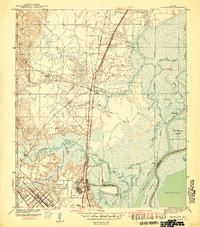 1941 Chickasaw1941 Print · USGSThe industrial riverfront north of Mobile is captured here just before the war, showing the busy Ship Yard and rail hubs. Trace local roots through the early streets of Whistler and Chickasaw or locate family landmarks like Alvarez Bridge and Liveoak Landing.2 unique versions available
 - 1941 Map of Bay Minette, 1955 Print
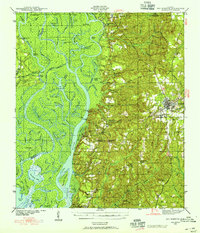 1941 Bay Minette1955 Print · USGSCoastal Alabama at the start of the 1940s is defined here by the complex river delta and the timber-rich uplands of Baldwin County. Genealogists and historians can trace old community centers like Whitehouse Forks, schools such as Stockton Sch, and the path of the Louisville and Nashville RR.2 unique versions available
 - 1941 Map of Creola, 1959 Print
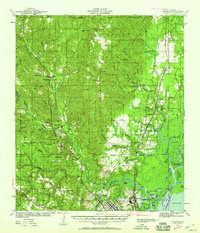 1941 Creola1959 Print · USGSMobile County during the early 1940s was a landscape of rail-connected settlements and coastal bayous. Genealogists can trace family roots through sites like Indian Springs Cem, St Louis Sch, and the riverside town of Creola.3 unique versions available
 - 1942 Map of Hurricane
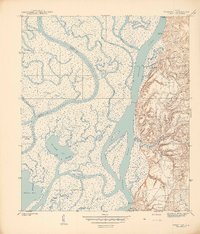 1942 Hurricane1942 Print · USGSThe Mobile and Tensaw River deltas are captured here in the early 1940s, showing a world of tidal bayous and river landings. Genealogists and historians can locate the CIVIL WAR TRENCHES, family sites like Miller Cem, and old river stops including Steam Mill Landing.
 - 1943 Map of Hurricane
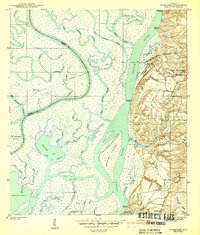 1943 Hurricane1943 Print · USGSThe Mobile-Tensaw Delta in the early 1940s is a intricate network of bayous and river islands where the railroad meets the swamp. Researchers can locate family landmarks like Miller Cem, the Civil War Trenches, and the old Hurricane Sch.2 unique versions available
 - 1943 Map of Creola
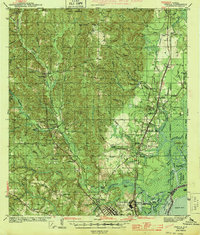 1943 Creola1943 Print · USGSMobile County during the early 1940s shows a landscape of rail-dependent settlements and dense bayous before the mid-century suburban expansion. Researchers can locate family landmarks like Indian Springs Cem, the Oak Grove Sch, and old stops along the Alabama Tennessee and Northern Railroad.2 unique versions available
 - 1943 Map of Chickasaw
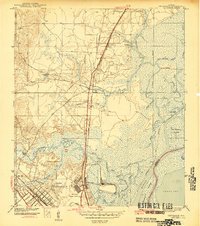 1943 Chickasaw1943 Print · USGSCoastal Alabama was transforming during the early 1940s as industrial and rail networks expanded north of Mobile. Genealogists and historians can trace the early footprints of Saraland and Chickasaw, locate the massive Ship Yard, and study the rail lines of the Southern Railway.3 unique versions available
 - 1943 Map of Bay Minette
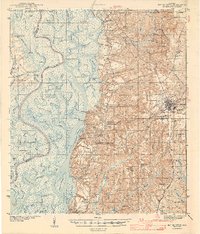 1943 Bay Minette1943 Print · USGSCoastal Alabama settlements and river landings appear in detail during the early 1940s. Researchers can trace the Louisville and Nashville rail lines through Bay Minette and locate family landmarks like Douglasville Cem and Magnolia Ch.2 unique versions available
 - 1953 Map of Hurricane, 1954 Print
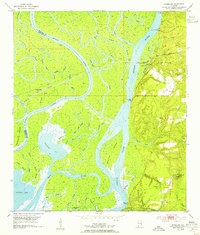 1953 Hurricane1954 Print · USGSThe Alabama delta and its bluff-side settlements are captured here in the early 1950s, showing a landscape defined by its waterways and railroads. Genealogists and historians can locate CIVIL WAR TRENCHES, the historic Blakeley Sch, and numerous family burial grounds like Wilkins Cem.6 unique versions available
 - 1953 Map of Chickasaw, 1955 Print
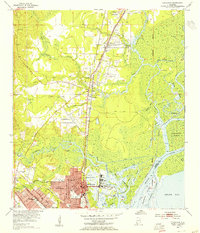 1953 Chickasaw1955 Print · USGSCoastal Alabama's industrial and residential growth comes into focus in this mid-century survey of the Mobile riverfront. Genealogists and historians can trace the foundations of Chickasaw and Saraland, identifying family landmarks like Saraland Cem, Myers Cem, and the old Ship Yard.6 unique versions available
 - 1953 Map of Mobile, 1968 Print
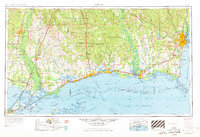 1953 Mobile1968 Print · USGSThe Gulf Coast comes alive in this mid-century survey, from the streets of Mobile to the marshes of New Orleans. Trace family roots in coastal towns like Pass Christian and Bayou La Batre or locate military landmarks including Keesler AFB.3 unique versions available
 - 1957 Map of Mobile
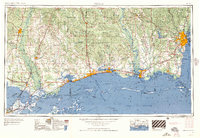 1957 Mobile1957 Print · USGSThe Gulf Coast in the mid-1950s reveals a bustling corridor of rail-and-river commerce connecting Alabama to Louisiana. Genealogists and historians can trace old settlements and military hubs from Keesler Afb to the coastal reaches of Ship Island and Bogalusa.3 unique versions available
 - 1957 Map of Pensacola, 1967 Print
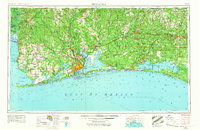 1957 Pensacola1967 Print · USGSThe Florida Panhandle and Alabama coast are seen here at the height of the Cold War, showcasing a unique mix of military aviation and emerging beach tourism. Genealogists and local historians can trace legacy sites like Old Corry Field, the lumber town of Bagdad, and the coastal reaches of Santa Rosa Island.3 unique versions available
 - 1959 Map of Pensacola
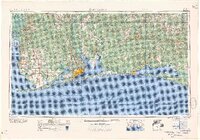 1959 Pensacola1959 Print · USGSThe Florida Panhandle and Alabama coast come alive in this late fifties survey of military aviation and maritime life. Genealogists can trace family roots in Bagdad, Loxley, and Milton while mapping the rails of the Louisville and Nashville.
 - 1960 Map of Pensacola
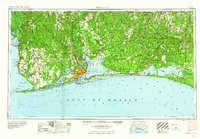 1960 Pensacola1960 Print · USGSThe Florida Panhandle and Alabama's eastern shore are shown during a period of rapid military and coastal growth. Genealogists and historians can trace the mid-century footprints of Warrington, the Pensacola NAS (Chevalier), and the Blackwater River timber lands.
 - 1960 Map of Mobile
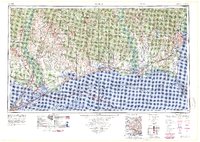 1960 Mobile1960 Print · USGSThe Gulf Coast at the dawn of the sixties shows a landscape of busy ports, military airbases, and barrier islands. Trace the rail lines of the Louisville & Nashville through BILOXI and Pascagoula or find family history in towns like Bayou La Batre and Poplarville.
 - 1963 Map of Mobile
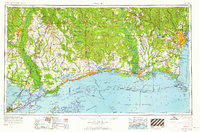 1963 Mobile1963 Print · USGSThe Gulf Coast at the dawn of the sixties shows a thriving maritime and military corridor from Louisiana to Alabama. Genealogists and historians can trace rail lines like the Louisville & Nashville RR and find landmarks from Brookley AFB to Fort Morgan.
 - 1965 Map of Mobile
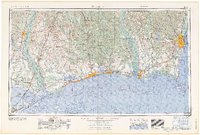 1965 Mobile1965 Print · USGSThe Gulf Coast at mid-century reveals a landscape of expanding ports and vital military installations from Louisiana to Alabama. Genealogists and historians can trace the growth of Biloxi, Pascagoula, and Mobile, alongside the sprawling De Soto National Forest.
 - 1980 Map of The Basin, 1981 Print
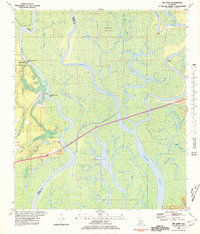 1980 The Basin1981 Print · USGSThe Mobile-Tensaw Delta is captured here during the 1980s, revealing a complex network of bayous and river bends. Local historians can locate the Fort Louis Historical Marker and trace the winding paths of Bayou Dead Lake and Bayou Fisher.3 unique versions available
 - 1981 Map of Bay Minette
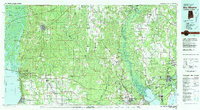 1981 Bay Minette1981 Print · USGSThe Alabama-Florida borderlands come to life in the early 1980s as the river delta meets the growing coastal communities. Researchers can trace the Louisville and Nashville rail lines or locate historical points like Twenty-two Mile Bluff and the Blackwater River State Forest.2 unique versions available
 - 1982 Map of Creola
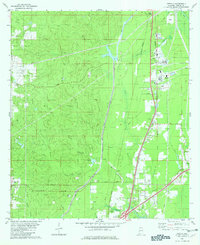 1982 Creola1982 Print · USGSMobile County settlements are mapped in detail during the early eighties as the rail-and-creek landscape of Creola and Axis continued to develop. Genealogists can trace family locations near Forest Lawn Cem, Little Bethel Ch, and the outlying crossroads of Turnerville.3 unique versions available
 - 1984 Map of Mobile
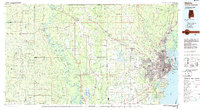 1984 Mobile1984 Print · USGSMobile and its surrounding Gulf Coast backcountry appear in the mid-eighties as a hub of maritime industry and timber management. Genealogists and historians can trace the development of the riverfront near McDuffie Island or explore rural settlements like Lucedale and Chunchula.
 - 1984 Map of Mobile
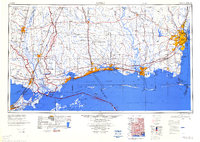 1984 Mobile1984 Print · USGSThe Gulf Coast at the height of the mid-eighties shows a landscape of rapid industrial growth and military significance. Researchers can trace the sprawling rail lines of the Illinois Central Gulf RR, locate the NASA Test Facility, or study the barrier island chain from Cat Island to Petit Bois Island.3 unique versions available
 - 1994 Map of Mobile
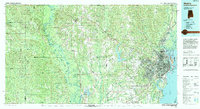 1994 Mobile1994 Print · USGSMobile and its sprawling bay are captured in the mid-nineties as the industrial port and coastal wilderness found a modern balance. Genealogists and historians can trace rail lines like the Illinois Central Gulf RR and find landmarks such as Bonnie Chapel and Hollingers Island.
 - 1997 Map of Hurricane, 2000 Print
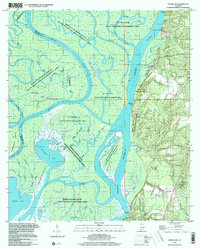 1997 Hurricane2000 Print · USGSThe Mobile-Tensaw Delta is captured here as the millennium approached, showing a complex waterscape of bayous and historic landings. Researchers can trace the Civil War Trenches near Magnolia Ch or locate old sites like Sizemore Landing and Blakely Sch.
Showing maps 1-25 of 45
Top cities near Creola
- Mobile historical maps
- Daphne historical maps
- Prichard historical maps
- Saraland historical maps
- Spanish Fort historical maps
- Bay Minette historical maps
See more
Frequently asked questions
- What are the different types of historical maps available for Creola?
- What is the oldest map of Creola?
- Where can I purchase historical maps of Creola for my home or office?
- Where can I download high-res historical maps of Creola?
- Are there historical topographic maps available for Creola?
- Is there historical aerial imagery available for Creola?
- Where are historical maps of Creola sourced from?