Old Maps of Altamont, Tuscaloosa for Genealogy
Trace your family roots with 13 historic maps of Altamont. These high-res maps reveal old neighborhoods, homesites, landmarks, and streets — helping you uncover where your ancestors lived and how the area evolved over time.
- Explore historic neighborhoods: Identify where your relatives may have lived in the 1800s or 1900s.
- Compare maps over time: Trace the changes in streets, buildings, and landmarks for multi-generational research.
- Perfect for genealogy & ancestry research: Used by family historians and researchers to map out lineage and migration.
These maps are an incredible resource for exploring your personal connection to Altamont's past.
Altamont, Tuscaloosa maps
(13)- 1899 Map of Brookwood
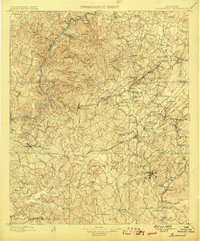 1899 Brookwood1899 Print · USGSCentral Alabama at the close of the nineteenth century is a landscape of growing mining towns and vital river crossings. Trace the early industrial rail lines like the Birmingham Mineral R. R. and locate family landmarks such as Weaver Mill, Pratt Ferry, and Providence Ch.4 unique versions available
 - 1931 Map of Cottondale
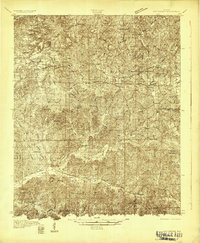 1931 Cottondale1931 Print · USGSTuscaloosa County at the start of the 1930s shows a landscape of timber rails and rural churches. Genealogists and historians can trace the Kaul Lumber Co (Abandoned) line or locate old community centers like Andrews Chapel and Duncanville.
 - 1934 Map of Cottondale
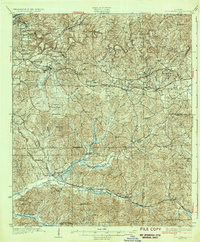 1934 Cottondale1934 Print · USGSDuring the mid-1930s, the rail corridors of the Southern Railway and Mobile and Ohio Railroad shaped the growth of eastern Tuscaloosa County. Genealogists can trace family footprints near Cottondale and Duncanville or locate long-standing landmarks like Emerson Chapel and Howell Sch.3 unique versions available
 - 1953 Map of Birmingham, 1964 Print
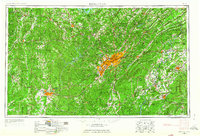 1953 Birmingham1964 Print · USGSCentral Alabama at mid-century shows a landscape defined by industrial expansion and the iron-rich ridges surrounding Birmingham. Researchers can trace the extensive rail networks of the L & N RR or locate historic federal sites like the Anniston Ordnance Depot.4 unique versions available
 - 1956 Map of Birmingham
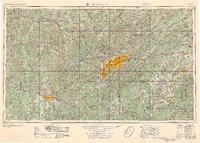 1956 Birmingham1956 Print · USGSCentral Alabama in the mid-fifties exhibits a landscape of growing cities and deep-rooted industrial corridors. Genealogists and historians can trace the development of suburban Mountain Brook or locate regional hubs like Sylacauga and Jasper.
 - 1957 Map of Birmingham
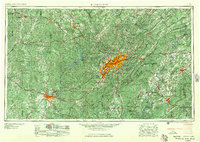 1957 Birmingham1957 Print · USGSNorth-Central Alabama in the mid-fifties is an industrial powerhouse centered on the steel valleys and sprawling iron ridges. Genealogists and historians can trace the rail-linked growth of Birmingham and Tuscaloosa, or locate rural landmarks like Talladega College and the Anniston Ordnance Depot.
 - 1969 Map of Cottondale, 1973 Print
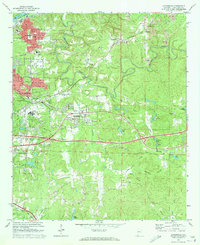 1969 Cottondale1973 Print · USGSEast of Tuscaloosa in the late sixties, the landscape was a mix of growing suburbs and active coal extraction along the rail corridors. Researchers can locate family landmarks like Kennedy Chapel, the Boteler High Sch, and various Strip Mines near Peterson.3 unique versions available
 - 1984 Map of Tuscaloosa, 1985 Print
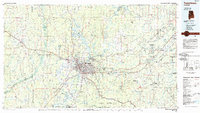 1984 Tuscaloosa1985 Print · USGSWest-central Alabama centers on the mid-1980s expansion of the university and the river economy. Genealogists and historians can trace small-town connections through Burchfield Store, North Johns, and the rail lines of the Southern railroad.2 unique versions available
 - 2011 Map of Cottondale, 2011 Print
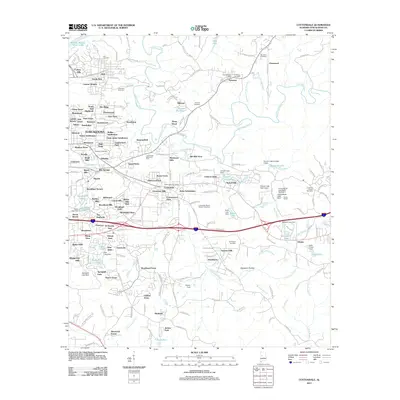 2011 Cottondale2011 Print · USGSEastern Tuscaloosa County in the early twenty-first century shows a complex landscape of expanding subdivisions and historic rural centers. Researchers can trace family roots through Ruhama Cemetery or locate landmarks like Prudes Mill Pond and Peterson Post Office.
 - 2014 Map of Cottondale, 2014 Print
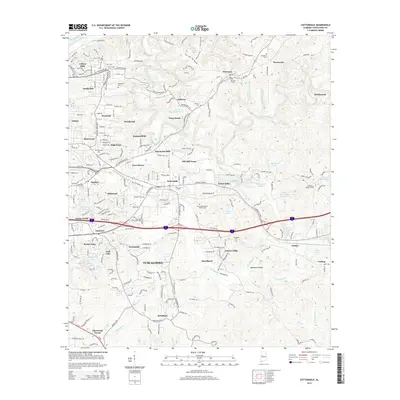 2014 Cottondale2014 Print · USGSTuscaloosa and Cottondale are shown during a period of significant growth east of the city center in the early twenty-first century. Genealogists and local historians can trace family sites at Ruhama Cem, explore the terrain of Opossum Hollow, and locate Prudes Mill Pond.
 - 2018 Map of Cottondale, 2018 Print
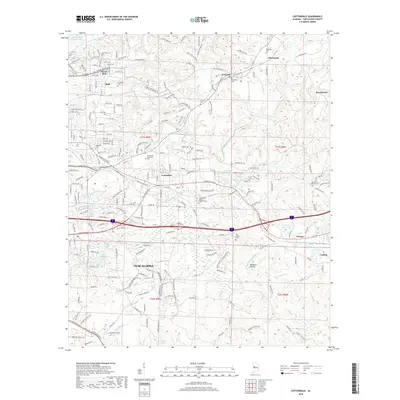 2018 Cottondale2018 Print · USGSThe eastern outskirts of Tuscaloosa and its surrounding hamlets are documented here in the late twenty-teens. Genealogists can locate family landmarks like Ruhama Cem, Prudes Mill Pond, and the community at Peterson along the Hurricane Creek corridor.
 - 2020 Map of Cottondale, 2020 Print
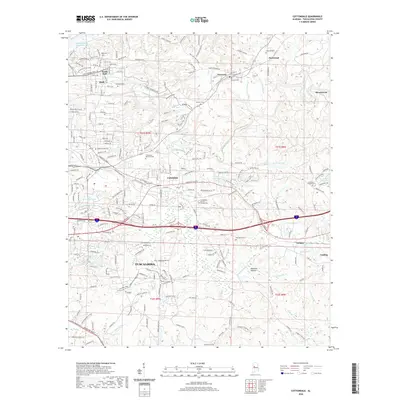 2020 Cottondale2020 Print · USGSTuscaloosa and its eastern settlements are captured here during a time of suburban development and lakeside recreation. Researchers can locate many family-named landmarks and local burial sites like Ruhama Cem, Prudes Mill Pond, and Fleetwood.
 - 2024 Map of Cottondale, 2024 Print
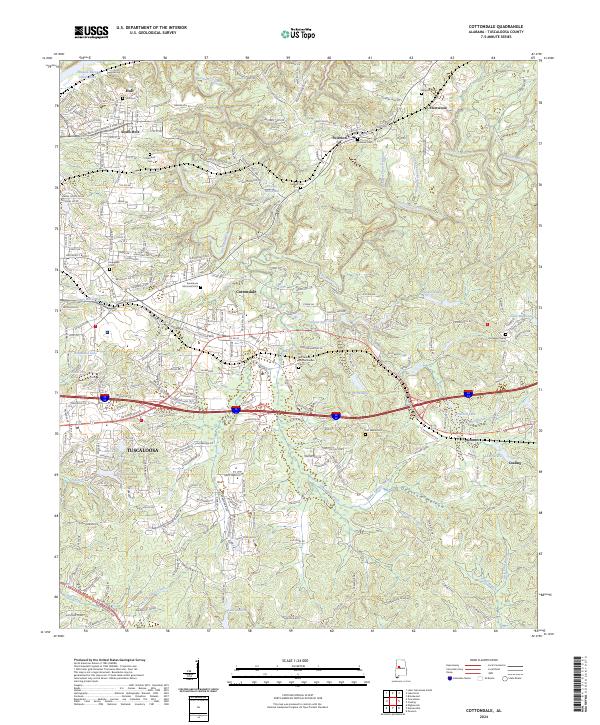 2024 Cottondale2024 Print · USGSEast of Tuscaloosa in the early twenty-first century, this area shows a landscape defined by industrial heritage and a dense network of country roads. Researchers can locate family landmarks like Ruhama Cemetery, Prudes Mill Pond, and the community of Cottondale.
End of results
Showing maps 1-13 of 13
Top cities near Altamont
- Tuscaloosa historical maps
- Northport historical maps
- Holt historical maps
- Cottondale historical maps
- Moundville historical maps
- Brookwood historical maps
See more
Frequently asked questions
- What are the different types of historical maps available for Altamont?
- What is the oldest map of Altamont?
- Where can I purchase historical maps of Altamont for my home or office?
- Where can I download high-res historical maps of Altamont?
- Are there historical topographic maps available for Altamont?
- Is there historical aerial imagery available for Altamont?
- Where are historical maps of Altamont sourced from?