1900s (20th Century) Maps of Chenega Bay, Alaska
Explore 5 historic maps of Chenega Bay from the 1900s (20th Century). These maps offer a rare glimpse into what life looked like during the 1900s — showing old roads, neighborhoods, homes, and landmarks that have changed or disappeared over time.
Whether you're researching your family's past, planning a metal detecting trip, or studying how Chenega Bay's landscape evolved across the 1900s, these high-resolution maps are a powerful tool for exploring the history of this region.
- Focus on a specific era: All maps on this page are from the 1900s, giving you a focused view of this time period.
- See what’s changed: Compare century-old streets, trails, and buildings to today's modern landscape using overlays and satellite layers.
- Research with precision: Use these maps for genealogy, historical research, land use analysis, or educational projects.
- View, download, or print: Maps are fully viewable online in high resolution, and can be downloaded or printed for your own records.
Start exploring Chenega Bay's history through authentic maps from the 1900s. This is your window into the past.
Chenega Bay, AK maps
(5)- 1951 Map of Seward
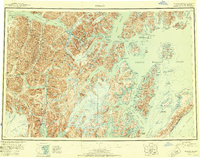 1951 Seward1951 Print · USGSThe Kenai Peninsula and Prince William Sound come to life in the early 1950s as the rail and maritime networks linked remote coastal outposts. Genealogists and historians can trace the Alaska Railroad corridor through Seward, find the Jesse Lee Indian School, and locate isolated camps like Latouche and Chenega.4 unique versions available
 - 1951 Map of Seward A-3, 1965 Print
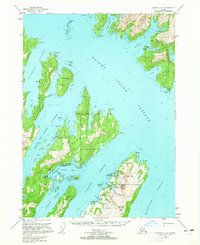 1951 Seward A-31965 Print · USGSPrince William Sound's islands and waterways are documented here during the early fifties, showing a region defined by maritime industry and mining. Researchers can trace the heritage of San Juan Cannery and identify the locations of the Beatson Mine (Aband) and the LIGHTHOUSE RESERVE.3 unique versions available
 - 1952 Map of Seward A-3, 1954 Print
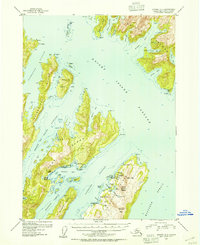 1952 Seward A-31954 Print · USGSCoastal life in the 1950s centered on the fishing and mining outposts of the Prince of Wales Passage. Genealogists and historians can trace the foundations of Latouche, the San Juan Cannery, and several abandoned sites like the Blackbird Mine (Aband).2 unique versions available
 - 1953 Map of Seward, 1956 Print
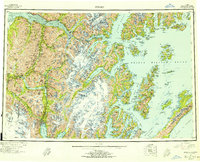 1953 Seward1956 Print · USGSThe Kenai Peninsula and Prince William Sound are documented in the early 1950s as the rail and road networks expanded. Trace the route of the Alaska Railroad and find early settlements like Seward, Moose Pass, and Latouche.12 unique versions available
 - 1959 Map of Seward
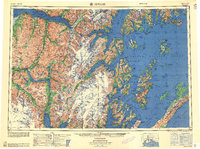 1959 Seward1959 Print · USGSThe Kenai Peninsula and Prince William Sound are captured here during the mid-century, showing the vital transit corridor between Seward and the interior. Researchers can trace the Alaska Railroad through Whittier and locate historic coastal settlements like Chenega and Latouche.
End of results
Showing maps 1-5 of 5
Frequently asked questions
- What are the different types of historical maps available for Chenega Bay?
- What is the oldest map of Chenega Bay?
- Where can I purchase historical maps of Chenega Bay for my home or office?
- Where can I download high-res historical maps of Chenega Bay?
- Are there historical topographic maps available for Chenega Bay?
- Is there historical aerial imagery available for Chenega Bay?
- Where are historical maps of Chenega Bay sourced from?