1900s (20th Century) Maps of Kaihon Kug, Sells
Explore 11 historic maps of Kaihon Kug from the 1900s (20th Century). These maps offer a rare glimpse into what life looked like during the 1900s — showing old roads, neighborhoods, homes, and landmarks that have changed or disappeared over time.
Whether you're researching your family's past, planning a metal detecting trip, or studying how Kaihon Kug's landscape evolved across the 1900s, these high-resolution maps are a powerful tool for exploring the history of this region.
- Focus on a specific era: All maps on this page are from the 1900s, giving you a focused view of this time period.
- See what’s changed: Compare century-old streets, trails, and buildings to today's modern landscape using overlays and satellite layers.
- Research with precision: Use these maps for genealogy, historical research, land use analysis, or educational projects.
- View, download, or print: Maps are fully viewable online in high resolution, and can be downloaded or printed for your own records.
Start exploring Kaihon Kug's history through authentic maps from the 1900s. This is your window into the past.
Kaihon Kug, Sells maps
(11)- 1953 Map of Ajo, 1971 Print
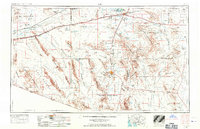 1953 Ajo1971 Print · USGSThe Arizona desert at mid-century reveals a landscape of massive copper mines, tribal reservations, and military testing grounds. Genealogists and historians can trace rail stopovers like Dateland and Mohawk or locate remote sites like the Reward Mine and Gu Achi (Santa Rosa).2 unique versions available
 - 1957 Map of Ajo
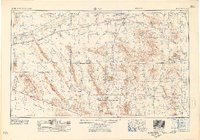 1957 Ajo1957 Print · USGSSouthern Arizona in the fifties reveals a landscape of massive copper mines, remote desert wells, and tribal reservations. Genealogists and historians can trace old cattle outposts like Whitewing Ranch, the Tracy's Trading Post, and the copper works at Ajo.
 - 1958 Map of Ajo
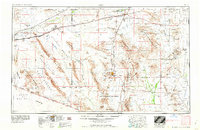 1958 Ajo1958 Print · USGSThe high desert of Pima and Yuma Counties during the late fifties shows a landscape of remote copper mines and military flight paths. Researchers can trace the Southern Pacific Railroad through Gila Bend and find heritage sites like O'Neills Grave or the Christmas Gift Mine.2 unique versions available
 - 1962 Map of Ajo
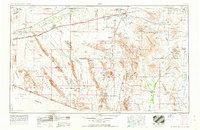 1962 Ajo1962 Print · USGSSouthern Arizona in the early sixties was a landscape of deep-desert mining, military airfields, and tribal lands. Researchers can trace the Cornelia Mine near Ajo, remote outposts like Trays Trading Post, and the path of the Devils Highway.
 - 1963 Map of Ajo
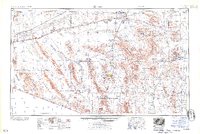 1963 Ajo1963 Print · USGSSouthwestern Arizona in the early sixties reveals a landscape of desert ranches and remote mining outposts. Trace the historic Southern Pacific line or locate isolated landmarks like O'Neils Grave and Tracy's Trading Post.
 - 1963 Map of Quijotoa Mts, 1964 Print
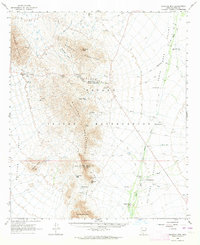 1963 Quijotoa Mts1964 Print · USGSThe Papago Indian Reservation comes into focus during the early sixties, showing a landscape defined by desert mining and traditional settlements. Researchers can locate remote sites like Stoa Vaya, the Quijotoa Trading Post, and numerous workings like the Black Prince Mine.2 unique versions available
 - 1967 Map of Ajo
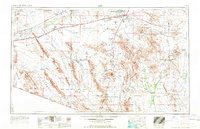 1967 Ajo1967 Print · USGSSouthern Arizona in the mid-1960s is depicted here as a landscape of military aviation and deep-desert ranching. Trace the historical mining operations at Vekol Mine or follow the Southern Pacific rail line through Gila Bend and Dateland.
 - 1980 Map of Ajo, 1996 Print
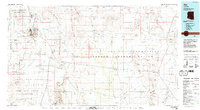 1980 Ajo1996 Print · USGSIn the Sonoran Desert during the early 1980s, mining operations and tribal lands shaped the landscape of Pima County. Researchers can trace the development of Ajo and Why, locate desert outposts like San Simon Well, and identify old workings at the Bluebird Mine.
 - 1982 Map of Ajo
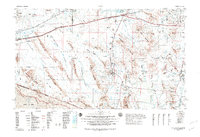 1982 Ajo1982 Print · USGSThe Arizona-Sonora borderlands come into focus in the early eighties, showcasing a landscape of desert mining towns and expansive tribal lands. Trace the Southern Pacific rail line through Gila Bend or explore the remote settlements of Ajo and Lukeville.
 - 1990 Map of Vainom Kug
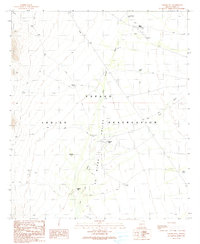 1990 Vainom Kug1990 Print · USGSThe Sonoran desert landscape of the Papago Indian Reservation is captured here in the late twentieth century. Genealogists and desert researchers can trace remote sites like Vainom Kug, the Old Quijotoa Well (Dry), and the archaeological Kui Tatk (Site).
 - 1996 Map of Vainom Kug, 2002 Print
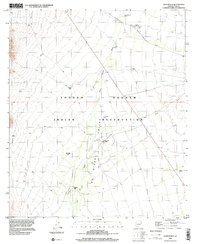 1996 Vainom Kug2002 Print · USGSThe Tohono O'odham Reservation in the late nineties is a landscape shaped by desert washes and vital water infrastructure. Researchers can trace remote settlements like Vainom Kug and Kaihon Kug, alongside scattered landmarks such as Old Quijotoa Well and Francis Tank.
End of results
Showing maps 1-11 of 11
Frequently asked questions
- What are the different types of historical maps available for Kaihon Kug?
- What is the oldest map of Kaihon Kug?
- Where can I purchase historical maps of Kaihon Kug for my home or office?
- Where can I download high-res historical maps of Kaihon Kug?
- Are there historical topographic maps available for Kaihon Kug?
- Is there historical aerial imagery available for Kaihon Kug?
- Where are historical maps of Kaihon Kug sourced from?