1900s (20th Century) Maps of Soldier Camp, Arizona
Explore 11 historic maps of Soldier Camp from the 1900s (20th Century). These maps offer a rare glimpse into what life looked like during the 1900s — showing old roads, neighborhoods, homes, and landmarks that have changed or disappeared over time.
Whether you're researching your family's past, planning a metal detecting trip, or studying how Soldier Camp's landscape evolved across the 1900s, these high-resolution maps are a powerful tool for exploring the history of this region.
- Focus on a specific era: All maps on this page are from the 1900s, giving you a focused view of this time period.
- See what’s changed: Compare century-old streets, trails, and buildings to today's modern landscape using overlays and satellite layers.
- Research with precision: Use these maps for genealogy, historical research, land use analysis, or educational projects.
- View, download, or print: Maps are fully viewable online in high resolution, and can be downloaded or printed for your own records.
Start exploring Soldier Camp's history through authentic maps from the 1900s. This is your window into the past.
Soldier Camp, AZ maps
(11)- 1904 Map of Tucson, 1957 Print
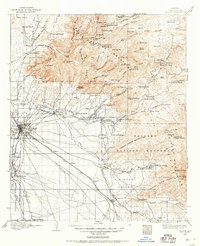 1904 Tucson1957 Print · USGSTucson and its surrounding desert basins are captured here at the turn of the century as the railroad transformed this Pima County landscape. Genealogists and historians can locate early family holdings like Carrillos Ranch, the site of Old Fort Lowell, and the remote Loma Verde Mines.
 - 1905 Map of Tucson
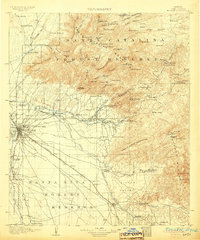 1905 Tucson1905 Print · USGSEarly 1900s Tucson is shown here as a railway hub at the base of the Rincon and Santa Catalina mountains. Genealogists and historians can trace numerous family homesteads like Pusch's Ranch, explore Old Fort Lowell, or locate the Loma Verde Mines.5 unique versions available
 - 1956 Map of Tucson, 1967 Print
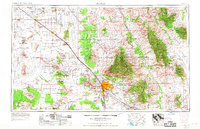 1956 Tucson1967 Print · USGSPost-war Southern Arizona comes into focus as the copper and aviation industries expand around Tucson. Trace family roots in South Tucson or locate early mining sites like the San Manuel Mine and Silver Bell Mine near the Santa Cruz River.3 unique versions available
 - 1957 Map of Bellota Ranch, 1958 Print
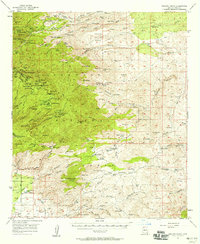 1957 Bellota Ranch1958 Print · USGSThe Santa Catalina Mountains during the late fifties show a transition from heavy mining to federal land management and forest recreation. You can trace early canyon settlements and industrial sites like the Hartman Mine Group, Bellota Ranch, and the Federal Honor Camp.4 unique versions available
 - 1958 Map of Tucson
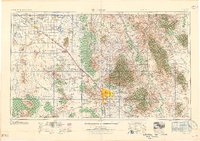 1958 Tucson1958 Print · USGSSouthern Arizona in the late fifties reveals a landscape of desert agriculture and rising military aviation. Trace the rail lines of the Southern Pacific or locate the historic San Xavier Del Bac Mission and the Casa Grande Natl Mon.
 - 1959 Map of Tucson
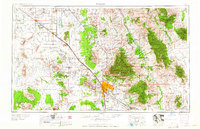 1959 Tucson1959 Print · USGSSouthern Arizona in the late fifties shows a landscape of military growth and desert industry. Genealogists and historians can trace the footprint of Davis-Monthan Air Force Base and old mining sites like the San Manuel Mine near Mammoth.2 unique versions available
 - 1962 Map of Tucson
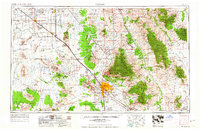 1962 Tucson1962 Print · USGSSouthern Arizona in the early sixties showcases a landscape defined by burgeoning desert cities and massive military installations. Researchers can trace tribal settlements like Schuchk, legacy mining sites at Silver Bell Mine, and the early footprint of Davis-Monthan Air Force Base.
 - 1964 Map of Tucson
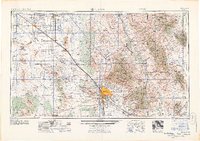 1964 Tucson1964 Print · USGSSouthern Arizona in the mid-1960s shows a landscape of burgeoning desert cities and industrial-scale copper mining. Researchers can trace the development of Tucson and its outlying mining districts, including the Silver Bell Mine and San Manuel Mine.
 - 1981 Map of Mount Bigelow
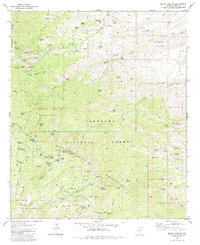 1981 Mount Bigelow1981 Print · USGSThe Santa Catalina Mountains in the early eighties were a mix of active forest management and historical mining claims. Researchers can trace the layout of the Daily Mine Group, the seasonal settlement at Soldier Camp, and high-altitude landmarks like Mount Bigelow.3 unique versions available
 - 1994 Map of Tucson
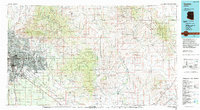 1994 Tucson1994 Print · USGSTucson and the Santa Cruz Valley appear here in the mid-1990s, caught between rapid urban growth and protected wilderness. Researchers can trace the development of Casas Adobes, the operations at Davis Monthan Air Force Base, and the rail lines of the Southern Pacific RR.2 unique versions available
 - 1996 Map of Mount Bigelow, 2002 Print
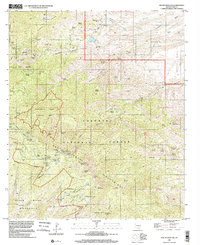 1996 Mount Bigelow2002 Print · USGSThe Santa Catalina Mountains come alive in the mid-nineties, showing the intersection of historic mining and modern forest conservation. Researchers can trace the footprints of the Geesaman Mine Group, the Palisade Ranger Station, and high-altitude landmarks like Mount Bigelow.
End of results
Showing maps 1-11 of 11
Top cities near Soldier Camp
- Tucson historical maps
- Oro Valley historical maps
- Saddlebrooke historical maps
- Catalina historical maps
- South Tucson historical maps
- Oracle historical maps
Frequently asked questions
- What are the different types of historical maps available for Soldier Camp?
- What is the oldest map of Soldier Camp?
- Where can I purchase historical maps of Soldier Camp for my home or office?
- Where can I download high-res historical maps of Soldier Camp?
- Are there historical topographic maps available for Soldier Camp?
- Is there historical aerial imagery available for Soldier Camp?
- Where are historical maps of Soldier Camp sourced from?