Old Maps of Peak, Arkansas for Metal Detecting
Plan your next treasure hunt with 11 historic maps of Peak. Find old homesites, ghost towns, trails, and gathering spots that may be lost to time — perfect for identifying promising metal detecting locations.
- Locate forgotten sites: Uncover places like long-lost settlements, abandoned rail lines, or gathering spots.
- Plan better hunts: Use map overlays combined with LiDAR or satellite views to narrow in on historically rich areas.
- Made for detectorists: Thousands of hobbyists use these maps to discover relics, coins, and hidden history.
Use these historic maps to boost your research and find new opportunities beneath the surface of Peak.
Peak, AR maps
(11)- 1955 Map of Little Rock, 1978 Print
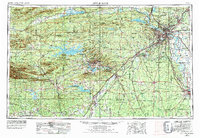 1955 Little Rock1978 Print · USGSCentral Arkansas in the mid-fifties exhibits a landscape of growing cities, massive military installations, and mountain reservoirs. Genealogists and historians can trace the industrial Bauxite Mines, regional rail lines, and local landmarks like Antioch Church.
 - 1956 Map of Little Rock
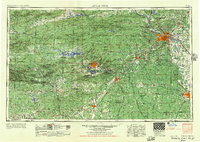 1956 Little Rock1956 Print · USGSCentral Arkansas in the mid-fifties shows a landscape defined by burgeoning military bases and the timber-and-mineral wealth of the Ouachitas. Genealogists and researchers can trace old rail lines like the Missouri Pacific and find established communities such as Bauxite, Sheridan, and Mabelvale.
 - 1960 Map of Little Rock
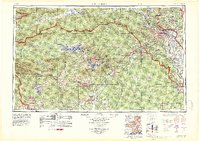 1960 Little Rock1960 Print · USGSCentral Arkansas in the late fifties shows a landscape of growing military bases and massive new reservoirs. Local historians can trace the mid-century expansion of Little Rock and Hot Springs alongside the industrial works at Bauxite and the Pine Bluff Arsenal.
 - 1964 Map of Little Rock
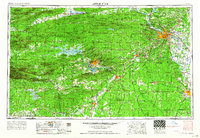 1964 Little Rock1964 Print · USGSCentral Arkansas in the mid-sixties is a landscape of mountain ridges, industrial rail lines, and growing military hubs. Researchers can trace the development of Bauxite and Hot Springs or locate rural landmarks like Sparkman and the Pine Bluff Arsenal.
 - 1966 Map of Bonnerdale, 1967 Print
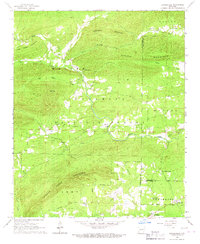 1966 Bonnerdale1967 Print · USGSThe Ouachita foothills in the 1960s reveal a landscape of family-named cemeteries and decommissioned timber routes. Genealogists and historians can trace the Old Railroad Grade and locate historic community centers like Alamo, Old Bonnerdale, and Grants Chapel.
 - 1986 Map of Arkadelphia
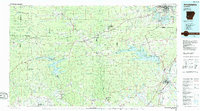 1986 Arkadelphia1986 Print · USGSSouthwest Arkansas in the mid-eighties shows a landscape of timbered ridges and significant new reservoirs. Researchers can trace rural schoolhouses and churches like Sunshine Sch and Hempwallace Ch alongside the famous Crater of Diamonds State Park.2 unique versions available
 - 2011 Map of Bonnerdale, 2011 Print
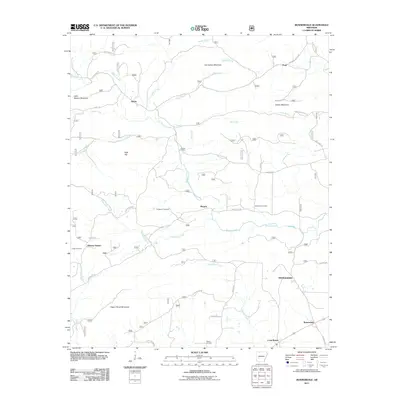 2011 Bonnerdale2011 Print · USGSThe rural valleys and ridges of Garland County come into focus in this early 21st-century record of its local settlements and waterways. Genealogists and historians can trace family locations near Old Bonnerdale, Alamo, and the Wacaster Cemetery along the winding Mazarn Creek.
 - 2014 Map of Bonnerdale, 2014 Print
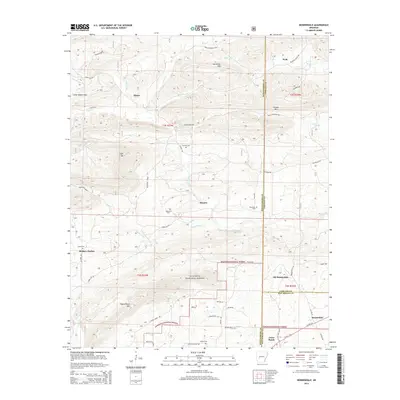 2014 Bonnerdale2014 Print · USGSThe Ouachita foothills west of Hot Springs appear here in the early twenty-first century, showing a landscape of timbered ridges and secluded valleys. Researchers can trace local lineage through numerous family sites like Howton Cem or explore the shifting centers of Old Bonnerdale and Hickory Station.
 - 2017 Map of Bonnerdale, 2017 Print
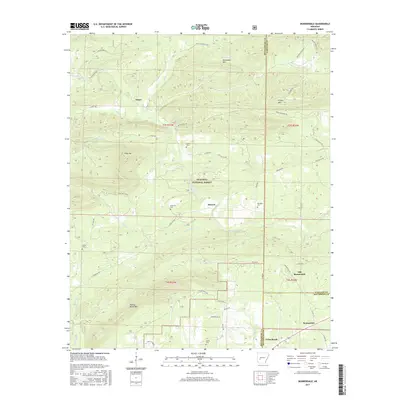 2017 Bonnerdale2017 Print · USGSThe Ouachita foothills near the Garland and Montgomery county line are shown here in the late 2010s. Genealogists and local historians can trace legacy family sites like Howton Cem and Caney Cem or locate the original settlement at Old Bonnerdale.
 - 2020 Map of Bonnerdale, 2020 Print
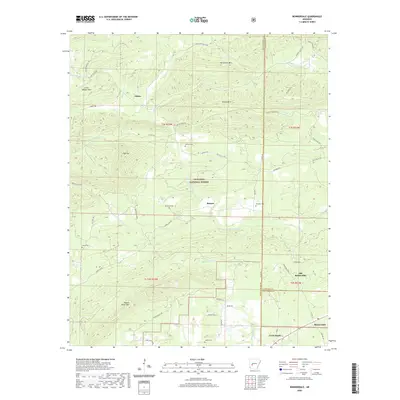 2020 Bonnerdale2020 Print · USGSThe Garland and Montgomery county borderlands are shown here in the 2020s, featuring the mountain ridges and creek valleys of the Ouachita National Forest. Genealogists can trace local roots at Howton Cemetery and Caney Cemetery or locate the site of Old Bonnerdale.
 - 2024 Map of Bonnerdale, 2024 Print
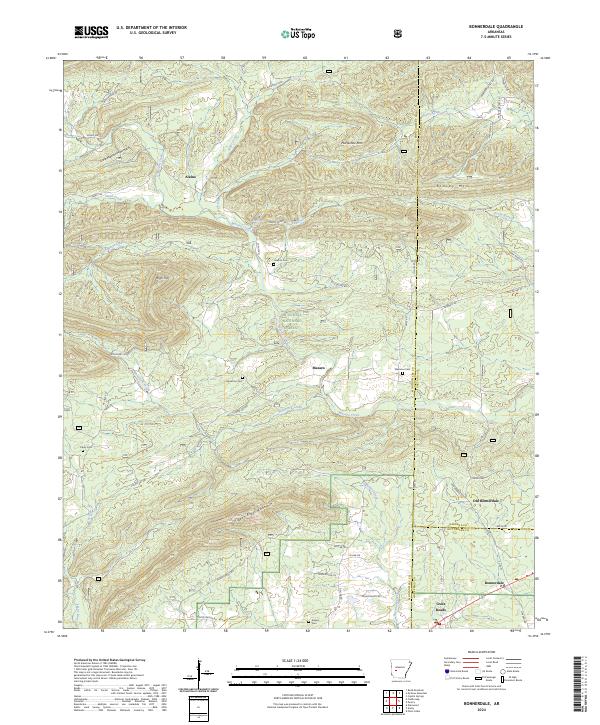 2024 Bonnerdale2024 Print · USGSThe upland ridges of the Ouachita Mountains meet at the junction of three counties in the 2020s. Researchers can trace rural lineages through local sites like Howton Cem, Old Bonnerdale, and Alamo tucked between High Top and Mazarn Creek.
End of results
Showing maps 1-11 of 11
Top cities near Peak
Frequently asked questions
- What are the different types of historical maps available for Peak?
- What is the oldest map of Peak?
- Where can I purchase historical maps of Peak for my home or office?
- Where can I download high-res historical maps of Peak?
- Are there historical topographic maps available for Peak?
- Is there historical aerial imagery available for Peak?
- Where are historical maps of Peak sourced from?