Old Maps of Bigelow, Arkansas for Hiking & Exploration
Hike through history with 41 historic maps of Bigelow. Explore old trails, ghost towns, and forgotten backroads — perfect for outdoor adventurers and local explorers.
- Rediscover forgotten places: Map out old mining camps, roads, and footpaths that no longer exist on modern maps.
- Layer with modern tools: Combine with LiDAR or satellite views to plan hikes through historical terrain.
- Made for exploration: Popular among hikers, overlanders, and local history lovers.
Use these maps to find adventure and explore the hidden past of Bigelow.
Bigelow, AR maps
(41)- 1890 Map of Benton
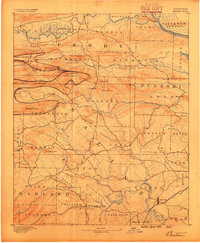 1890 Benton1890 Print · USGSSaline and Pulaski counties are shown here in the late nineteenth century as the rail network began to reshape the river-valley economy. Genealogists and researchers can trace family roots through old settlements like Brazils and Avilla or locate landmarks like Goosepond Mt and Aplin.
 - 1892 Map of Morrillton
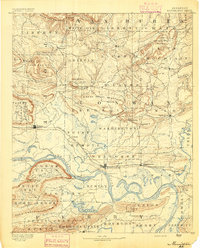 1892 Morrillton1892 Print · USGSThe Arkansas River valley at the end of the nineteenth century was a landscape of vital ferry crossings and early rail expansion. Genealogists and historians can trace the foundations of Morrillton and Perryville or locate river landmarks like Galla Rock Fy. and Stouts Ldg.
 - 1894 Map of Morrillton
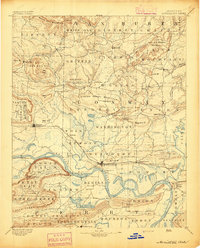 1894 Morrillton1894 Print · USGSThe Arkansas River valley and the Ouachita foothills meet in the 1890s, where river traffic and the rail line define the local economy. Genealogists can trace early homesteads and crossings near Morrillton, Burnetts Ford, and the rugged heights of Cedar Falls Mt.5 unique versions available
 - 1894 Map of Benton
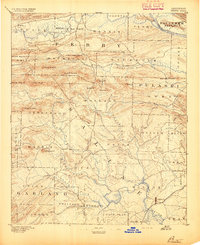 1894 Benton1894 Print · USGSCentral Arkansas in the late nineteenth century was a landscape of steep ridges and critical river crossings. Genealogists and researchers can trace the early rail corridor of the St. Louis Iron Mountain and Southern R. R. near Benton or locate family roots in Avilla and Brazils.5 unique versions available
 - 1955 Map of Little Rock, 1978 Print
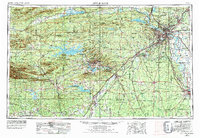 1955 Little Rock1978 Print · USGSCentral Arkansas in the mid-fifties exhibits a landscape of growing cities, massive military installations, and mountain reservoirs. Genealogists and historians can trace the industrial Bauxite Mines, regional rail lines, and local landmarks like Antioch Church.
 - 1956 Map of Little Rock
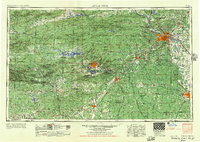 1956 Little Rock1956 Print · USGSCentral Arkansas in the mid-fifties shows a landscape defined by burgeoning military bases and the timber-and-mineral wealth of the Ouachitas. Genealogists and researchers can trace old rail lines like the Missouri Pacific and find established communities such as Bauxite, Sheridan, and Mabelvale.
 - 1956 Map of Russellville
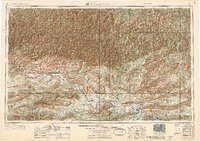 1956 Russellville1956 Print · USGSThe Arkansas River valley and the surrounding Boston Mountains are captured here in the mid-fifties, showing a landscape of small timber towns and new reservoirs. Genealogists can trace family roots through upland settlements like Pelsor and Witts Springs or locate the campus of Arkansas Polytechnic College.2 unique versions available
 - 1960 Map of Little Rock
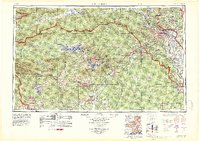 1960 Little Rock1960 Print · USGSCentral Arkansas in the late fifties shows a landscape of growing military bases and massive new reservoirs. Local historians can trace the mid-century expansion of Little Rock and Hot Springs alongside the industrial works at Bauxite and the Pine Bluff Arsenal.
 - 1961 Map of Fourche, 1962 Print
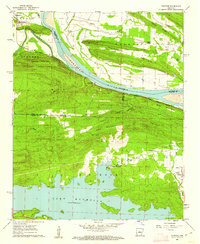 1961 Fourche1962 Print · USGSThe Arkansas River valley meets the Ouachita foothills in the early sixties, showing a landscape of river-bend towns and rising ridgelines. Genealogists can trace family roots through Little Italy and Lundsford Corner, or locate historic sites like Mt Moriah Ch and Rainey Cem.5 unique versions available
 - 1961 Map of Houston, 1962 Print
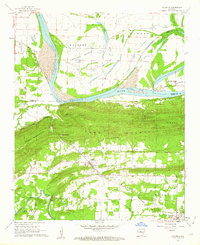 1961 Houston1962 Print · USGSPerry County at the start of the 1960s shows a landscape defined by the winding Arkansas River and the ridges of the Ouachita foothills. Researchers can locate several rural burial sites like Houston Cem and trace the path of the Chicago Rock Island and Pacific railroad through Houston and Bigelow.3 unique versions available
 - 1961 Map of Gleason, 1962 Print
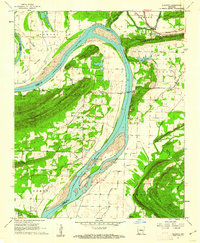 1961 Gleason1962 Print · USGSThe Arkansas River valley comes alive in the early sixties, showing the vital river crossings and mountain ridges of Faulkner and Perry counties. Genealogists and local historians can trace the Toadsuck Ferry, the Missouri Pacific rail line, and rural landmarks like Bethel Ch or Casey Cem.3 unique versions available
 - 1963 Map of Martindale, 1964 Print
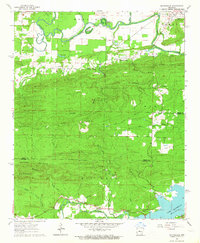 1963 Martindale1964 Print · USGSPerry and Pulaski counties meet in this early 1960s landscape of river bottoms and high ridges before extensive modern development. Researchers can trace rural life through the homes and cemeteries of Wye, the riverfront at Martindale, and old country sanctuaries like Oak Grove Ch.5 unique versions available
 - 1964 Map of Russellville
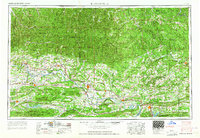 1964 Russellville1964 Print · USGSMid-century Central Arkansas is defined here by the river-valley towns and the surrounding mountain ranges before the full expansion of the interstate system. Genealogists and historians can trace rail-town development along the Missouri Pacific Railroad and locate landmarks like Arkansas Polytechnic College or Petit Jean State Park.
 - 1964 Map of Little Rock
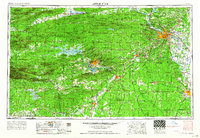 1964 Little Rock1964 Print · USGSCentral Arkansas in the mid-sixties is a landscape of mountain ridges, industrial rail lines, and growing military hubs. Researchers can trace the development of Bauxite and Hot Springs or locate rural landmarks like Sparkman and the Pine Bluff Arsenal.
 - 1977 Map of Russellville
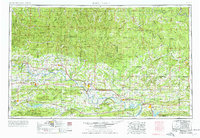 1977 Russellville1977 Print · USGSThe Arkansas River Valley and surrounding Ozark Mountains are documented here during a period of significant postwar growth and infrastructure development. Genealogists and researchers can locate family landmarks such as Mount Carmel Cem, St Josephs Church, and several remote Coal Mine sites along the Missouri Pacific RR line.
 - 1983 Map of Conway, 1984 Print
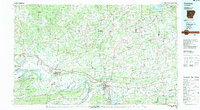 1983 Conway1984 Print · USGSThe Arkansas River valley in the early eighties shows a landscape of river-bend settlements and expanding wildlife areas. Genealogists and historians can trace the Missouri Pacific RR through old river towns like Toad Suck, Morrilton, and Menifee.
 - 1984 Map of Russellville
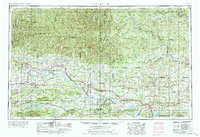 1984 Russellville1984 Print · USGSThe Arkansas River valley was undergoing significant change in the 1950s as transportation and water management reshaped the region from Russellville to Conway. Researchers can trace the era's rail networks like the Missouri Pacific RR and explore landmarks like Magazine Mountain and Petit Jean State Park.
 - 1985 Map of Little Rock, 1988 Print
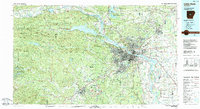 1985 Little Rock1988 Print · USGSLittle Rock and its surrounding river valley are shown in the mid-eighties as the region balanced urban expansion with its industrial and military roots. Genealogists and historians can locate dozens of institutions and family landmarks, including Mount Holly Cem, the Bauxite Mines, and Central High Sch.
 - 1990 Map of Houston, 1995 Print
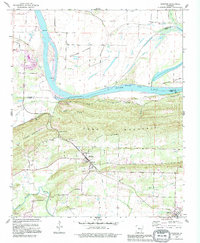 1990 Houston1995 Print · USGSHouston and the Arkansas River valley are captured here in the early nineties, showing a landscape shaped by river bottomlands and mountain ridges. Researchers can trace family history through sites like Leach Cem or explore the geography of Sandtown Bottoms and Toms Mountain.
 - 1991 Map of Gleason, 1995 Print
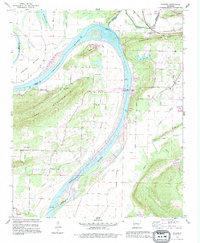 1991 Gleason1995 Print · USGSThe Arkansas River corridor near the Perry and Faulkner county lines comes into focus in the early 1990s. Genealogists and local historians can locate rural landmarks like Stony Point Cem, Pleasant Hill Ch, and the distinctive Toad Suck Ferry Lock & Dam.
 - 1992 Map of Russellville, 1993 Print
 1992 Russellville1993 Print · USGSCentral Arkansas in the early nineties shows a landscape defined by the Arkansas River valley and the surrounding national forests. Trace the development of river towns like Russellville and Dardanelle alongside landmarks such as Lake Dardanelle and Magazine Mtn.
 - 2011 Map of Fourche, 2011 Print
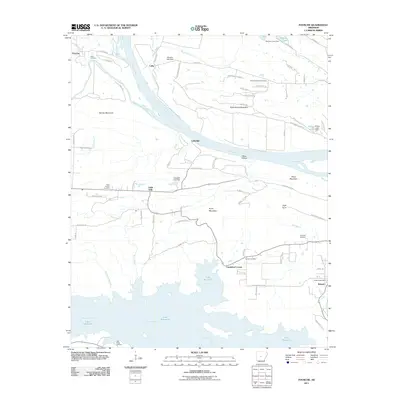 2011 Fourche2011 Print · USGSThe Arkansas River valley comes alive in this 2010s survey, showing the confluence of the Fourche LaFave River near Fourche. Genealogists and local historians can trace rural family roots through Saint Francis Cemetery, Little Italy, and Lundsford Corner.
 - 2011 Map of Martindale, 2011 Print
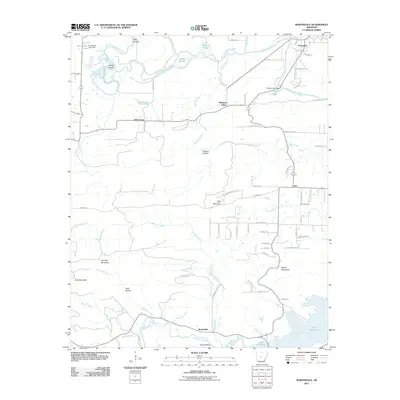 2011 Martindale2011 Print · USGSPerry County at the start of the twenty-first century reveals a landscape shaped by the Maumelle River and upland ridges. Researchers can locate established rural communities like Martindale and Graytown or trace family sites near Wye Cemetery.
 - 2011 Map of Houston, 2011 Print
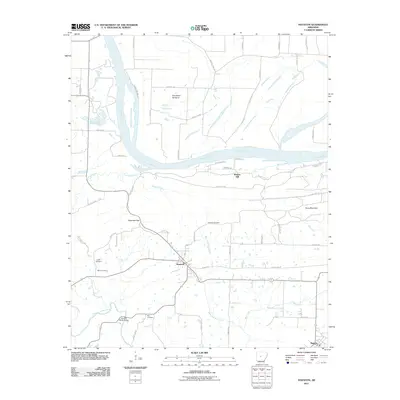 2011 Houston2011 Print · USGSThe rural landscape around Houston and Bigelow is captured here during the early twenty-first century, showing the intersection of river life and ridge-top settlements. Researchers can trace local genealogy and landmarks through Houston Cemetery, Council Bluffs Bridge, and Copperas Gap.
 - 2011 Map of Gleason, 2011 Print
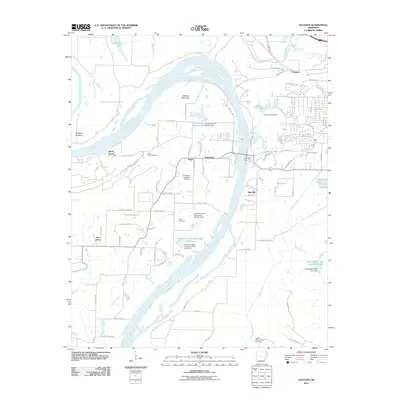 2011 Gleason2011 Print · USGSThe riverfront communities and ferry crossings west of Conway are captured here in the early twenty-first century. Researchers can locate family sites near Salem Cemetery, the historic Toad Suck Ferry, and the settlement of Stony Point.
Showing maps 1-25 of 41
Top cities near Bigelow
- Little Rock historical maps
- Conway historical maps
- Maumelle historical maps
- Morrilton historical maps
- Greenbrier historical maps
- Mayflower historical maps
See more
Top neighborhoods of Bigelow
Frequently asked questions
- What are the different types of historical maps available for Bigelow?
- What is the oldest map of Bigelow?
- Where can I purchase historical maps of Bigelow for my home or office?
- Where can I download high-res historical maps of Bigelow?
- Are there historical topographic maps available for Bigelow?
- Is there historical aerial imagery available for Bigelow?
- Where are historical maps of Bigelow sourced from?