Old Maps of Maynard, Arkansas for Academic Research
Study the evolution of Maynard with 11 high-resolution historic maps. Whether you're teaching, researching, or modeling changes in land use, these maps provide essential visual documentation of urban, environmental, and geographic change.
- Analyze long-term change: Track patterns in development, transportation, and natural features.
- Ideal for environmental or urban studies: Support academic projects with primary historical map data.
- Use in the classroom or lab: Educators and researchers rely on these maps to bring historical context to life.
These maps are a powerful tool for teaching, research, and visualizing how Maynard has changed over the decades.
Maynard, AR maps
(11)- 1935 Map of Reyno, 1938 Print
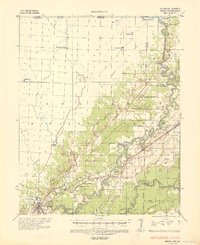 1935 Reyno1938 Print · USGSRandolph and Clay counties are shown in the mid-1930s, documenting a river-dependent economy as the Ozarks meet the alluvial valley. Researchers can trace historic river crossings like Biggers Ferry and rural sites such as Johnson Cem and Cochrum Sch.3 unique versions available
 - 1957 Map of Poplar Bluff, 1968 Print
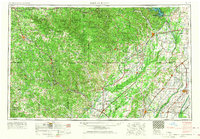 1957 Poplar Bluff1968 Print · USGSThe Missouri-Arkansas border region is captured here as the timber and rail industries shaped the Ozark foothills. Genealogists and historians can trace the Missouri Pacific Railroad through river towns like Pocahontas, Greenville, and Van Buren.3 unique versions available
 - 1959 Map of Poplar Bluff
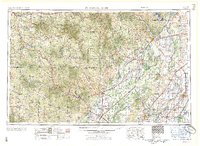 1959 Poplar Bluff1959 Print · USGSThe Missouri Ozarks and Arkansas borderlands meet in this late 1950s study of the region's diverse terrain and rail-fed towns. Researchers can trace the path of the Missouri Pacific Railroad through Poplar Bluff or locate smaller settlements like Birch Tree and Myrtle.
 - 1960 Map of Poplar Bluff
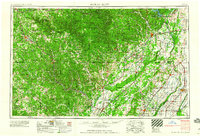 1960 Poplar Bluff1960 Print · USGSSoutheast Missouri and Northeast Arkansas are captured here during the post-war era, showing the transition from the Ozark highlands to the Delta. Genealogists and historians can trace rail corridors like the St. Louis Southwestern RR and remote settlements such as Birch Tree and Warm Springs.
 - 1968 Map of Maynard, 1969 Print
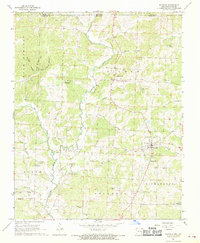 1968 Maynard1969 Print · USGSThe Fourche River valley and the town of Maynard are captured here in the late sixties as they appeared just south of the Missouri line. Genealogists can trace family landmarks and rural homesteads near Middlebrook, Barnett Cem, and Siloam Ch.
 - 1984 Map of Paragould
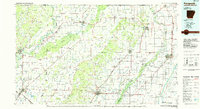 1984 Paragould1984 Print · USGSNortheast Arkansas and the Missouri Bootheel appear here in the mid-1980s as a landscape of ridge-top towns and engineered delta drainage. Genealogists and historians can locate rural landmarks like Oak Grove Church, trace the St Louis San Francisco RR, or explore the limits of Crowleys Ridge State Park.2 unique versions available
 - 2011 Map of Maynard, 2011 Print
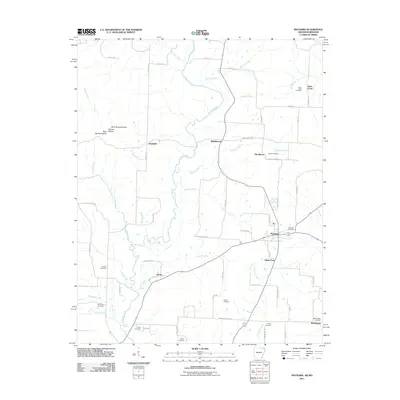 2011 Maynard2011 Print · USGSRandolph County's river valleys and rural crossroads are captured here in the early twenty-first century. Genealogists and local historians can trace family roots through numerous sites like Old Siloam, Brakebill, and the Maynard Cemetery.
 - 2014 Map of Maynard, 2014 Print
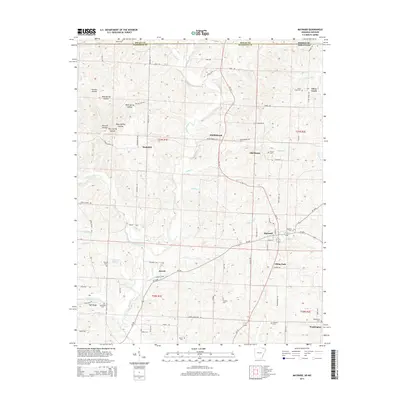 2014 Maynard2014 Print · USGSRandolph County, Arkansas, appears in the early twenty-first century as a landscape of river-bottom settlements and upland ridges. Researchers can locate numerous family burial sites and rural communities like Old Siloam, Maynard Cem, and the high ground of Tyer Ridge.
 - 2017 Map of Maynard, 2017 Print
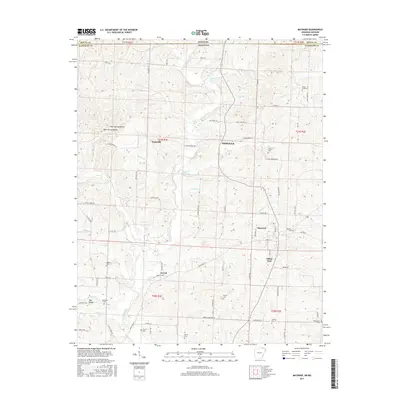 2017 Maynard2017 Print · USGSNear the Missouri border in the late 2010s, this Randolph County region preserves a network of rural settlements and family burial grounds. Researchers can trace ancestral locations at Maynard, Middlebrook, and Jerrett, or locate small plots like Hagood Cem and Martin Cem.
 - 2020 Map of Maynard, 2020 Print
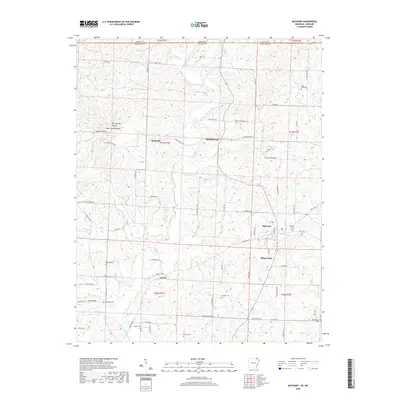 2020 Maynard2020 Print · USGSRandolph County in 2020 retains its rural character, defined by small river settlements and numerous family-named landmarks. Genealogists can trace local heritage through a high density of burial grounds, including the Maynard Cem, Foster Cem, and Glaze Creek Cem.
 - 2024 Map of Maynard, 2024 Print
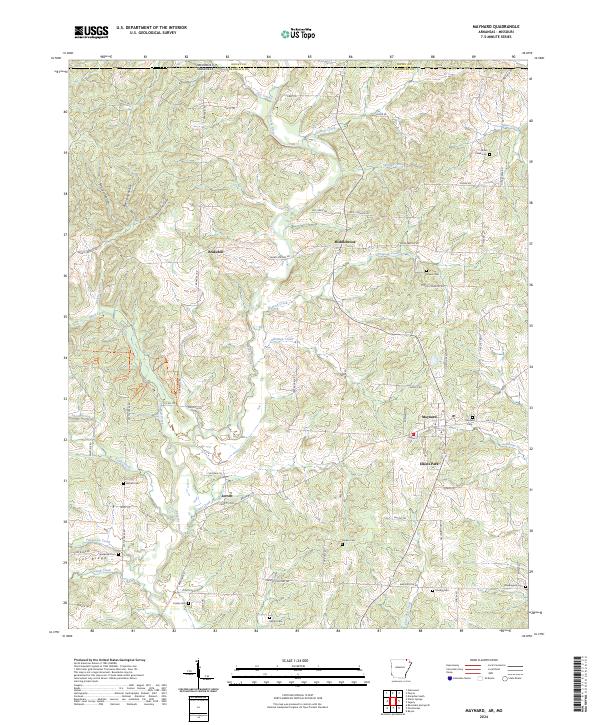 2024 Maynard2024 Print · USGSRandolph County, Arkansas, is documented here in a landscape defined by the Fourche River and its rural uplands. You can trace family history through a high density of local burial sites like Siloam Cem, Maynard Cem, and the old settlement at Middlebrook.
End of results
Showing maps 1-11 of 11
Top cities near Maynard
- Pocahontas historical maps
- Doniphan historical maps
- Reyno historical maps
- Biggers historical maps
- Success historical maps
- Delaplaine historical maps
See more
Frequently asked questions
- What are the different types of historical maps available for Maynard?
- What is the oldest map of Maynard?
- Where can I purchase historical maps of Maynard for my home or office?
- Where can I download high-res historical maps of Maynard?
- Are there historical topographic maps available for Maynard?
- Is there historical aerial imagery available for Maynard?
- Where are historical maps of Maynard sourced from?