Old Maps of Haskell, Arkansas for Metal Detecting
Plan your next treasure hunt with 36 historic maps of Haskell. Find old homesites, ghost towns, trails, and gathering spots that may be lost to time — perfect for identifying promising metal detecting locations.
- Locate forgotten sites: Uncover places like long-lost settlements, abandoned rail lines, or gathering spots.
- Plan better hunts: Use map overlays combined with LiDAR or satellite views to narrow in on historically rich areas.
- Made for detectorists: Thousands of hobbyists use these maps to discover relics, coins, and hidden history.
Use these historic maps to boost your research and find new opportunities beneath the surface of Haskell.
Haskell, AR maps
(36)- 1890 Map of Benton
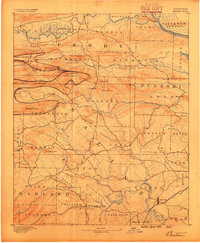 1890 Benton1890 Print · USGSSaline and Pulaski counties are shown here in the late nineteenth century as the rail network began to reshape the river-valley economy. Genealogists and researchers can trace family roots through old settlements like Brazils and Avilla or locate landmarks like Goosepond Mt and Aplin.
 - 1894 Map of Benton
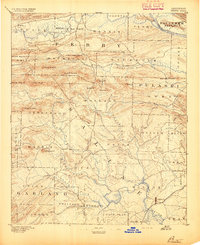 1894 Benton1894 Print · USGSCentral Arkansas in the late nineteenth century was a landscape of steep ridges and critical river crossings. Genealogists and researchers can trace the early rail corridor of the St. Louis Iron Mountain and Southern R. R. near Benton or locate family roots in Avilla and Brazils.5 unique versions available
 - 1938 Map of Benton
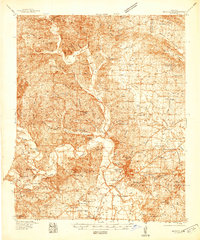 1938 Benton1938 Print · USGSSaline County industry and rural life are captured here in the late 1930s, just as the Bauxite Mines were fueling the local economy. Researchers can trace family roots through numerous country churches like Grape Chapel or locate old river crossings such as Wray Ford and Daniels Ford.4 unique versions available
 - 1944 Map of Benton
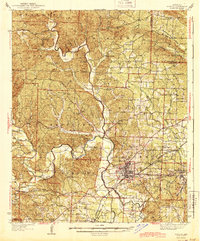 1944 Benton1944 Print · USGSSaline County in the mid-1940s centers on the industrial hub of Benton and the neighboring Bauxite Mines. Genealogists and historians can trace family roots through numerous rural landmarks like Grape Chapel, Pitkin Cem, and the State Hospital.
 - 1944 Map of Benton, 1946 Print
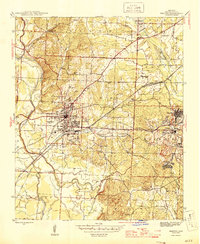 1944 Benton1946 Print · USGSBenton and the surrounding aluminum mining districts come to life in the years following the war. Genealogists and historians can trace rail lines like the Rock Island, locate rural schools like Bennett Sch, and find family names at Lee Cem or Liberty Cem.4 unique versions available
 - 1955 Map of Little Rock, 1978 Print
 1955 Little Rock1978 Print · USGSCentral Arkansas in the mid-fifties exhibits a landscape of growing cities, massive military installations, and mountain reservoirs. Genealogists and historians can trace the industrial Bauxite Mines, regional rail lines, and local landmarks like Antioch Church.
 - 1956 Map of Little Rock
 1956 Little Rock1956 Print · USGSCentral Arkansas in the mid-fifties shows a landscape defined by burgeoning military bases and the timber-and-mineral wealth of the Ouachitas. Genealogists and researchers can trace old rail lines like the Missouri Pacific and find established communities such as Bauxite, Sheridan, and Mabelvale.
 - 1960 Map of Little Rock
 1960 Little Rock1960 Print · USGSCentral Arkansas in the late fifties shows a landscape of growing military bases and massive new reservoirs. Local historians can trace the mid-century expansion of Little Rock and Hot Springs alongside the industrial works at Bauxite and the Pine Bluff Arsenal.
 - 1963 Map of Traskwood, 1964 Print
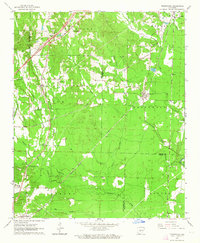 1963 Traskwood1964 Print · USGSSaline and Hot Spring counties are captured here in the early sixties as new highway construction began to reshape the rural landscape. Genealogists and local historians can trace the foundations of Glen Rose, Francois, and Traskwood, alongside landmarks like Holy Ridge Ch and the Fairplay Cem.4 unique versions available
 - 1963 Map of Tull, 1964 Print
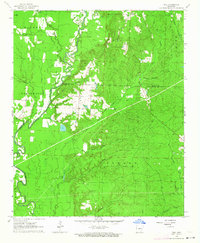 1963 Tull1964 Print · USGSIn the early sixties, the Saline and Grant county line was a landscape of river crossings and small settlements like Tull. Researchers can locate several family burial grounds, including Ashcraft Cem and Jacob Cem, or trace the Missouri Pacific rail line.3 unique versions available
 - 1964 Map of Little Rock
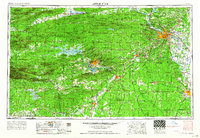 1964 Little Rock1964 Print · USGSCentral Arkansas in the mid-sixties is a landscape of mountain ridges, industrial rail lines, and growing military hubs. Researchers can trace the development of Bauxite and Hot Springs or locate rural landmarks like Sparkman and the Pine Bluff Arsenal.
 - 1974 Map of Benton, 1977 Print
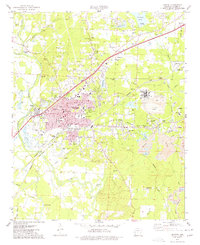 1974 Benton1977 Print · USGSBenton and the surrounding Saline County mining district are captured in the mid-seventies just as the aluminum industry and rail lines shaped the local economy. Researchers can locate family landmarks like Woodland Cem, early schools such as Perrin Sch, and the extensive Mine works near Bauxite.2 unique versions available
 - 1974 Map of Haskell, 1977 Print
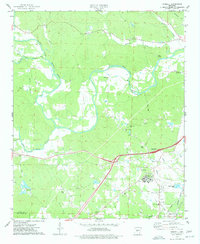 1974 Haskell1977 Print · USGSThe Saline River valley in the mid-1970s reveals a transitioning landscape of rural homesteads and emerging infrastructure. Researchers can locate family burial grounds like Grimm Cem, study the MISSOURI PACIFIC rail lines, or trace the grounds of the Benton State Hospital.3 unique versions available
 - 1985 Map of Malvern
 1985 Malvern1985 Print · USGSCentral Arkansas in the mid-eighties shows a landscape of timberlands and river valleys anchored by the industrial hubs of Malvern and Pine Bluff. Genealogists can locate family landmarks and rural institutions like Social Hill Sch, Magnet Cove, and Pine Bluff Arsenal.2 unique versions available
 - 1985 Map of Little Rock, 1988 Print
 1985 Little Rock1988 Print · USGSLittle Rock and its surrounding river valley are shown in the mid-eighties as the region balanced urban expansion with its industrial and military roots. Genealogists and historians can locate dozens of institutions and family landmarks, including Mount Holly Cem, the Bauxite Mines, and Central High Sch.
 - 1994 Map of Benton, 2000 Print
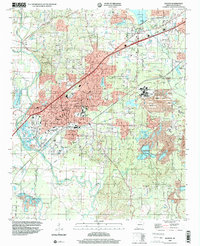 1994 Benton2000 Print · USGSBenton and the surrounding Saline County countryside are shown here in the mid-1990s, capturing a landscape shaped by the local mining industry and river geography. Researchers can trace historic family burial grounds like Lee Cem or locate community centers such as Wright Chapel and the Saline County Airport.
 - 2011 Map of Benton, 2011 Print
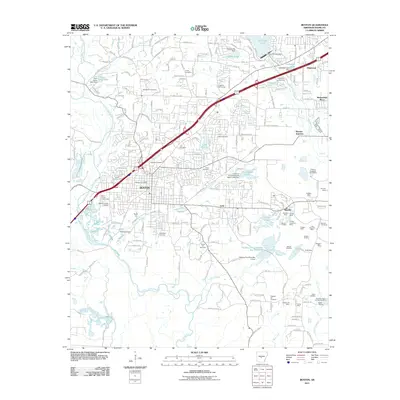 2011 Benton2011 Print · USGSBenton and the industrial corridor of Saline County are shown in detail during a period of sustained growth. Researchers can trace the legacy of local mining at Bauxite, locate family plots at Rosmont Cemetery, and explore the hydrology of the Saline River.
 - 2011 Map of Haskell, 2011 Print
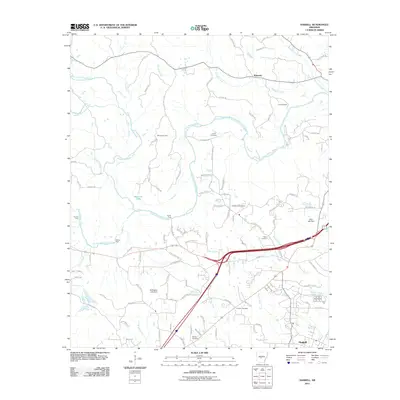 2011 Haskell2011 Print · USGSSaline County at the start of the 2010s shows a landscape of river forks and rural settlements. Genealogists and local historians can trace family landmarks and river crossings like James Cemetery, Winters Cemetery, and the Will James Ford.
 - 2011 Map of Tull, 2011 Print
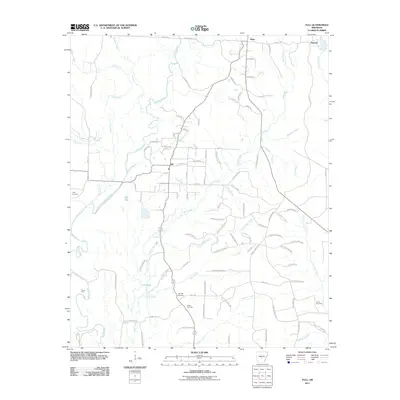 2011 Tull2011 Print · USGSSaline County at the start of the 2010s reveals a landscape of river-bottom settlements and forest management. Researchers can trace family roots through several local landmarks including Holly Cemetery, Nance Ford, and the community of Tull.
 - 2011 Map of Traskwood, 2011 Print
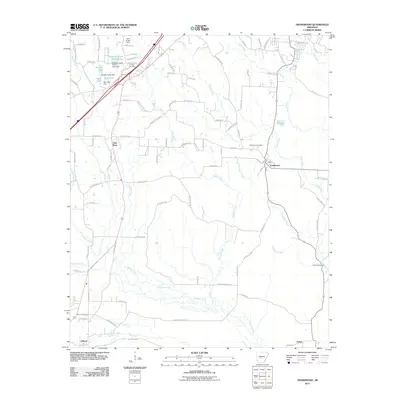 2011 Traskwood2011 Print · USGSTraskwood and Saline County are documented here in 2011, showing the modern settlement patterns over an older industrial and agricultural landscape. Local historians can trace old transit lines like the Gifford Tram and find family sites near Fairplay Cemetery or Summerville Ford.
 - 2014 Map of Tull, 2014 Print
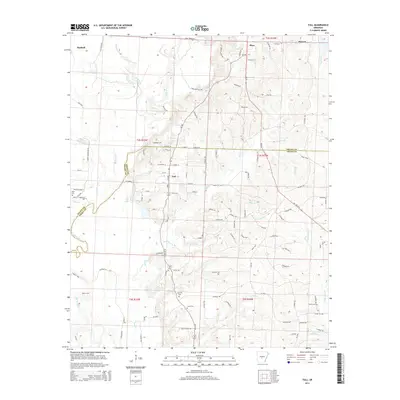 2014 Tull2014 Print · USGSThe rural landscapes between Haskell and Tull are captured in the mid-2010s as community life centers on the river and local crossroads. Researchers can locate family landmarks like Ashcraft Cem and Jacob Cem or trace the path of the Saline River.
 - 2014 Map of Traskwood, 2014 Print
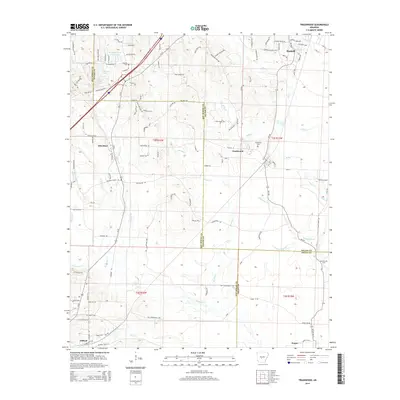 2014 Traskwood2014 Print · USGSHaskell and Traskwood are documented in this 2014 survey as the Union Pacific corridor connects the small towns of Saline and Hot Spring counties. Genealogists and local historians can locate the Fairplay Cem, Holy Ridge Ch, and the Glen Rose Sch amidst the timbered landscape.
 - 2014 Map of Benton, 2014 Print
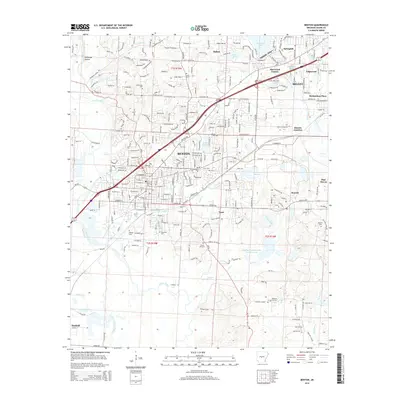 2014 Benton2014 Print · USGSBenton and Bryant appear here during a phase of modern growth, balancing residential expansion with a deep industrial heritage. Researchers can trace the Bauxite & Northern RR corridor and locate historic family burial sites like Social Hill Cem and Woodland Cem.
 - 2014 Map of Haskell, 2014 Print
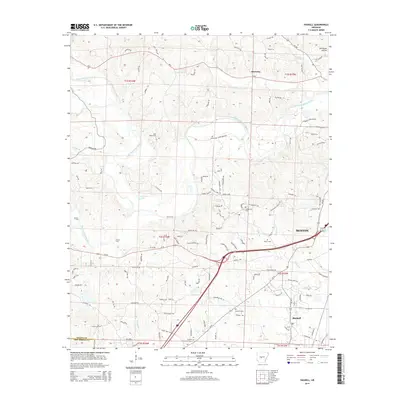 2014 Haskell2014 Print · USGSSaline County at the start of the 2010s shows a landscape defined by the convergence of the Saline River forks and growing municipal hubs. Researchers can locate family landmarks such as Winters Cem and Graham Cem or trace rural routes near Kentucky and Haskell.
 - 2017 Map of Traskwood, 2017 Print
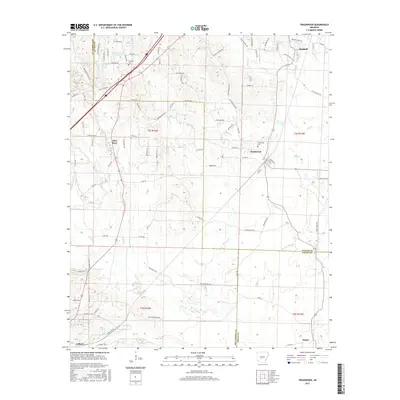 2017 Traskwood2017 Print · USGSThe borderlands of Saline and Hot Spring counties are captured here in the late twenty-teens as the region maintained its timber-and-creek character. Family historians can trace local roots at Fairplay Cem and the rail-linked settlements of Traskwood and Fenter.
Showing maps 1-25 of 36
Top cities near Haskell
- Little Rock historical maps
- Benton historical maps
- Bryant historical maps
- Malvern historical maps
- Sheridan historical maps
- Alexander historical maps
See more
Frequently asked questions
- What are the different types of historical maps available for Haskell?
- What is the oldest map of Haskell?
- Where can I purchase historical maps of Haskell for my home or office?
- Where can I download high-res historical maps of Haskell?
- Are there historical topographic maps available for Haskell?
- Is there historical aerial imagery available for Haskell?
- Where are historical maps of Haskell sourced from?