Old Maps of Sebastian County, Arkansas
Explore 175 old maps of Sebastian County, spanning from 1879 to today. These high-resolution historic maps reveal how streets, neighborhoods, landmarks, and natural features evolved over time — perfect for genealogy, metal detecting, research, and local history exploration.
What you can do with these maps:
- See how Sebastian County changed over time: Compare historical maps to modern-day views to trace roads, homesites, rail lines & more.
- View detailed metadata: Each map includes creators, publishers, year, scale, and archive source.
- Overlay maps with satellite & LiDAR: Visualize the past alongside modern tools to explore terrain & human change.
- Trusted historical sources: Maps sourced from the USGS, Library of Congress, and other archives.
- Access maps your way: View online, download high-res files, or order prints for personal or research use.
Start exploring old maps of Sebastian County to uncover forgotten places, hidden landmarks, and the deep history beneath your feet.
Sebastian County, AR maps
(175)- 1879 Map of Poteau Mountain
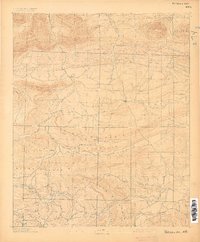 1879 Poteau Mountain1879 Print · USGSScott County settlements and mountain ridges come into focus in the late nineteenth century as the region's river systems are meticulously documented. Genealogists and researchers can locate early homesteads near Waldron and trace old paths through Lockout Gap or along the Poteau River.
 - 1879 Map of Fort Smith
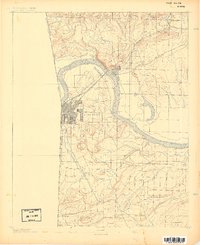 1879 Fort Smith1879 Print · USGSFort Smith and Van Buren stand at the edge of the frontier in the late eighteen-seventies, just as the railroads began to reshape the Arkansas River valley. Trace the early town plats and find rural community anchors like Zenobia P.O., Lillie, and the Ferry crossings.
 - 1887 Map of Poteau Mountain #1
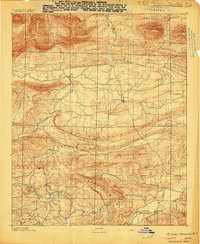 1887 Poteau Mountain #11887 Print · USGSScott County settlements and mountain ridges are captured here in the late nineteenth century, just after this area was surveyed by the Geological Survey of Arkansas. Genealogists can trace old homesteads near Waldron or locate vanished landmarks like Chalybeate Spring and the remote settlement of Blansett.
 - 1887 Map of Van Buren
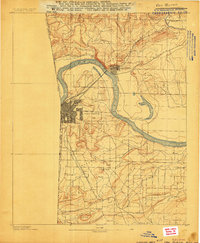 1887 Van Buren1887 Print · USGSThe Arkansas frontier meets the Indian Territory in the late nineteenth century, centered on the growing river hubs of Fort Smith and Van Buren. Genealogists and researchers can locate old post offices like Cavanaugh P.O. and trace the early routes of the Ft. Smith & Southern R. R.
 - 1887 Map of Poteau Mountain #2
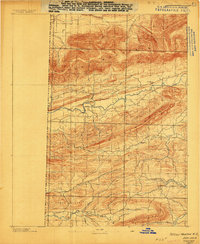 1887 Poteau Mountain #21887 Print · USGSWestern Arkansas in the late nineteenth century was a land of high ridges and isolated river valleys. You can trace the early footprints of Scott County through settlements like Cauthron and Gipson or follow the waters of the Poteau River.
 - 1887 Map of Greenwood
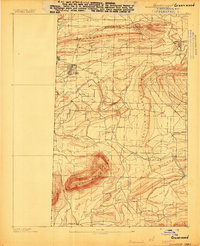 1887 Greenwood1887 Print · USGSSebastian County was undergoing a period of rapid development in the 1880s as the rail network expanded through its ridge-and-valley terrain. Genealogists can trace the early layouts of Greenwood and Hackett City or find family sites near Jenny Lind and Sugar Loaf Mountain.
 - 1890 Map of Fort Smith
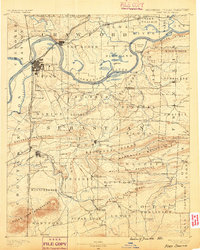 1890 Fort Smith1890 Print · USGSThe Arkansas-Indian Territory border was a landscape of rapid transition in the late nineteenth century. Genealogists and historians can trace early post offices like Jenny Lind P.O. and Oak Bower (Lavaca P.O.) or follow the path of the St. Louis and San Francisco Railroad.7 unique versions available
 - 1890 Map of Poteau Mountain
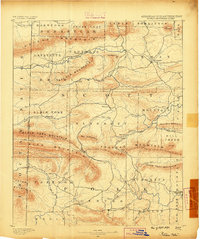 1890 Poteau Mountain1890 Print · USGSWestern Arkansas and the Indian Territory border are mapped in the late 1880s as the frontier gives way to established settlements. Genealogists can trace early homesteads and post offices like Waldron, Dallas, and Cherry Hill, or locate the historic Toll Gate and Talihina Trail.2 unique versions available
 - 1899 Map of Poteau Mountain
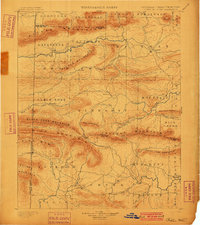 1899 Poteau Mountain1899 Print · USGSThe Arkansas borderlands and the Choctaw Nation frontier are captured here just before the turn of the century. Local historians can trace old homesteads and post offices near Waldron, Dallas, and the remote Cherry Hill (Egger P.O.) along the upper Ouachita.6 unique versions available
 - 1906 Map of Lavaca
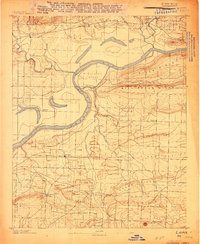 1906 Lavaca1906 Print · USGSThe Arkansas River valley comes to life in the late nineteenth century as railroads and ridges define the growing settlements of Sebastian County. Researchers can trace the original locations of Lavaca, Alma, and Vesta, or locate family-named landmarks like Butler's Knob and Arbuckles Island.
 - 1906 Map of Barber
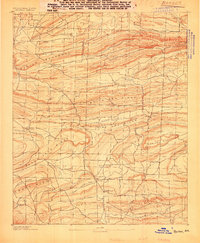 1906 Barber1906 Print · USGSSebastian County’s ridges and valley settlements are shown here at the start of the twentieth century, during a time of rural expansion. Researchers can trace early family sites and commerce through landmarks like the Toll Bridge and settlements such as Burnville and Sulphur Spring.
 - 1939 Map of Waldron, 1954 Print
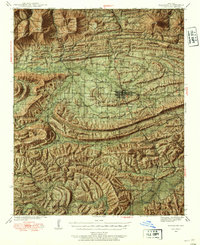 1939 Waldron1954 Print · USGSWaldron and the surrounding Scott County highlands are captured here in the late thirties as the railroad-driven economy shaped these mountain valleys. Genealogists can locate family landmarks like Old Salem Cem, the Jenkins Sch, and rural communities such as Winfield and Boles.8 unique versions available
 - 1940 Map of Waldron
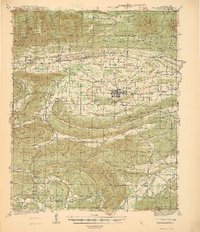 1940 Waldron1940 Print · USGSWaldron and the surrounding Ouachita highlands are shown here in the years leading up to the Second World War. Researchers can trace the heritage of rural Scott County through its many local schools and cemeteries, from Evening Shade Sch to the County Farm and Hon Cem.
 - 1941 Map of Waldron
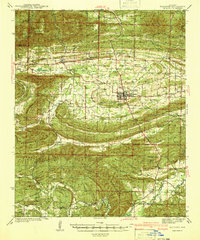 1941 Waldron1941 Print · USGSThe Scott County highlands come alive in the late 1930s, showing the vital rail junction at Waldron. Researchers can locate rural landmarks like Old Salem Ch, Hon Cem, and old mountain schoolhouses like Whisenhunt Sch.
 - 1943 Map of Fort Smith
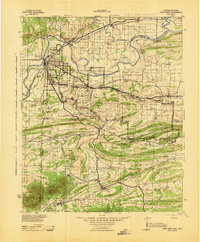 1943 Fort Smith1943 Print · USGSFort Smith and the Arkansas River valley are shown here during the height of the Second World War as the region became a major military hub. Genealogists and researchers can locate several rural schools and churches, such as St Marys School and Pleasant Ridge Church and Cem, alongside industrial sites like the Strip Mine and Smelter.
 - 1946 Map of Fort Smith
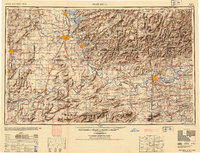 1946 Fort Smith1946 Print · USGSThe Arkansas-Oklahoma borderlands appear here in the mid-forties, as new reservoirs began to transform the river valleys. Genealogists and historians can trace rail-served towns from Muskogee to Fort Smith and locate landmarks like Camp Chaffee.
 - 1946 Map of Charleston, 1973 Print
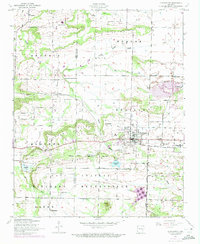 1946 Charleston1973 Print · USGSCharleston and its surrounding prairies appear here at the intersection of rail and military expansion during the mid-twentieth century. Genealogists can locate family burial sites like Nixon and Killings, or trace the grounds of the Rosenwall School and Fort Chaffee.2 unique versions available
 - 1947 Map of Lavaca, 1954 Print
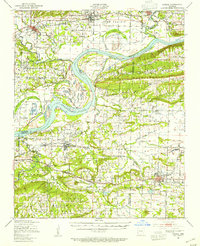 1947 Lavaca1954 Print · USGSThe Arkansas River valley in the late 1940s reveals a landscape of growing energy production and military expansion. Genealogists can trace family roots through Nixon Cem, Harmony Ch, and the streets of Charleston and Lavaca.
 - 1947 Map of Van Buren, 1954 Print
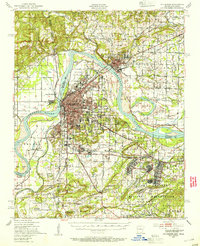 1947 Van Buren1954 Print · USGSThe riverfront cities of Fort Smith and Van Buren are shown in the late 1940s, just as the regional industrial footprint was expanding. Researchers can trace the rail lines of the Missouri Pacific or locate local landmarks like St Scholastica Academy and the Zinc Smelter.
 - 1947 Map of Greenwood, 1954 Print
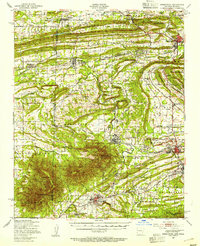 1947 Greenwood1954 Print · USGSThe Arkansas-Oklahoma border region thrived on coal and rail just after the war. Researchers can trace family ties at Old Jenny Lind and locate industrial landmarks like the Frazier Mine or the Midland Valley railroad.
 - 1947 Map of Barber, 1954 Print
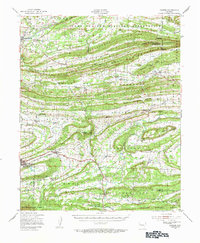 1947 Barber1954 Print · USGSSebastian County and the surrounding ridges are captured in the late 1940s, showing the intersection of military expansion and rural Arkansas life. Genealogists and historians can trace family locations through Union Ridge Cem, Milltown, and Liberty Ch.
 - 1947 Map of Fort Smith, 1966 Print
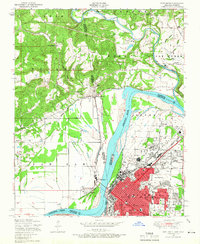 1947 Fort Smith1966 Print · USGSPost-war Arkansas and Oklahoma meet at the river bend during this era of urban expansion and rail dominance. Researchers can trace the development of FORT SMITH neighborhoods and identify local landmarks like St Boniface Church and School and Twin City Hospital.4 unique versions available
 - 1947 Map of Hartford, 1969 Print
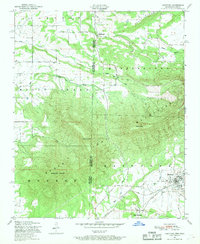 1947 Hartford1969 Print · USGSThe Arkansas-Oklahoma borderlands come alive in this post-war survey of the coal country surrounding Hartford. Genealogists and historians can trace old mining sites marked as Coal, find rural settlements like Slaytonville, and map the rugged slopes of Sugar Loaf Mountain.3 unique versions available
 - 1947 Map of Van Buren, 1969 Print
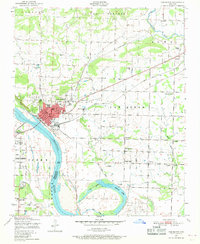 1947 Van Buren1969 Print · USGSVan Buren and the northern reaches of Fort Smith are shown in the late 1940s during a period of heavy industrial activity. Researchers can find numerous strip mines, the zinc smelter, and several country churches including Sunnyside Church.3 unique versions available
 - 1947 Map of Barling, 1971 Print
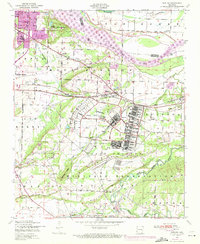 1947 Barling1971 Print · USGSThe Arkansas River valley south of Fort Smith is shown here during a period of significant military and industrial presence. Genealogists and local historians can trace the foundations of Fort Chaffee and find local landmarks like St Marys Ch and Sch, the tuberculosis sanitorium, and the settlement of Jenny Lind.2 unique versions available
Showing maps 1-25 of 175
Top cities of Sebastian County
- Fort Smith historical maps
- Greenwood historical maps
- Barling historical maps
- Lavaca historical maps
- Hackett historical maps
- Hartford historical maps
See more
Frequently asked questions
- What are the different types of historical maps available for Sebastian County?
- What is the oldest map of Sebastian County?
- Where can I purchase historical maps of Sebastian County for my home or office?
- Where can I download high-res historical maps of Sebastian County?
- Are there historical topographic maps available for Sebastian County?
- Is there historical aerial imagery available for Sebastian County?
- Where are historical maps of Sebastian County sourced from?