1900s (20th Century) Maps of Strong, Arkansas
Explore 10 historic maps of Strong from the 1900s (20th Century). These maps offer a rare glimpse into what life looked like during the 1900s — showing old roads, neighborhoods, homes, and landmarks that have changed or disappeared over time.
Whether you're researching your family's past, planning a metal detecting trip, or studying how Strong's landscape evolved across the 1900s, these high-resolution maps are a powerful tool for exploring the history of this region.
- Focus on a specific era: All maps on this page are from the 1900s, giving you a focused view of this time period.
- See what’s changed: Compare century-old streets, trails, and buildings to today's modern landscape using overlays and satellite layers.
- Research with precision: Use these maps for genealogy, historical research, land use analysis, or educational projects.
- View, download, or print: Maps are fully viewable online in high resolution, and can be downloaded or printed for your own records.
Start exploring Strong's history through authentic maps from the 1900s. This is your window into the past.
Strong, AR maps
(10)- 1933 Map of Strong, 1954 Print
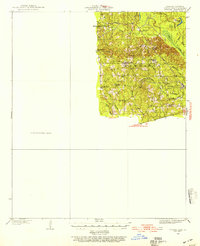 1933 Strong1954 Print · USGSUnion County, Arkansas, was a landscape of bayous and timber mills during the early 1930s. Genealogists and local historians can trace the rural fabric of the region through landmarks like George Cem, New London, and the Mcclendon Mill.
 - 1937 Map of Strong
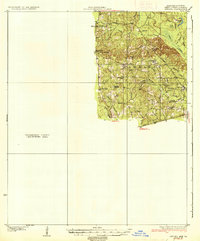 1937 Strong1937 Print · USGSUnion County and the bayou country of southern Arkansas are captured here during the 1930s. Genealogists and local historians can trace rural roots through landmarks like Wallace Cem, McClendon Mill, and Ebenezer Ch.2 unique versions available
 - 1939 Map of Strong, 1948 Print
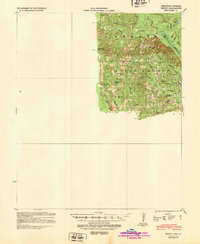 1939 Strong1948 Print · USGSUnion County, Arkansas, comes to life in the 1930s as a land of small timber settlements and rural parishes. Researchers can trace family roots through sites like Ebenezer Cem, McGlendon Mill, and the many schools including Gill Sch.
 - 1953 Map of El Dorado, 1967 Print
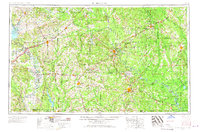 1953 El Dorado1967 Print · USGSSouth Arkansas in the mid-1960s was a landscape of industrial growth and river-fed commerce. Researchers can trace the extensive Oil and Gas Fields around Magnolia, the expansive U S Naval Ammunition Depot, and the busy rail lines of the Missouri Pacific.3 unique versions available
 - 1957 Map of El Dorado
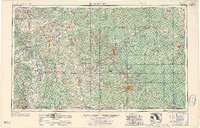 1957 El Dorado1957 Print · USGSSouth Arkansas in the mid-1950s was a critical hub of military logistics and rail-river commerce. Genealogists and historians can trace family land across the Arkansas Louisiana border and locate sites like the U.S. Naval Ammunition Depot or the rail junctions at Magnolia and Camden.
 - 1958 Map of El Dorado
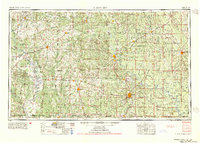 1958 El Dorado1958 Print · USGSSouthern Arkansas and the Louisiana borderlands are shown during a period of heavy rail traffic and defense industry activity. Researchers can trace the legacy of the U. S. Naval Ammunition Depot or locate family roots in Smackover, Huttig, and Nashville.3 unique versions available
 - 1960 Map of El Dorado
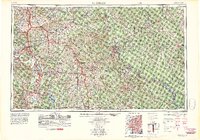 1960 El Dorado1960 Print · USGSSouth Central Arkansas in the late fifties was a hub of energy production and defense industry. Researchers can trace the extensive Oil and Gas Fields around El Dorado or locate family landmarks like Old Park Cem and New Hope Church.
 - 1981 Map of Strong
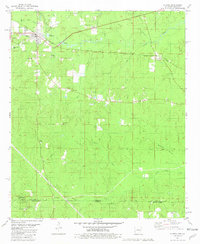 1981 Strong1981 Print · USGSThe Arkansas-Louisiana borderlands come into focus in the early eighties, centered on the rail-driven town of Strong. Researchers can trace old family burial sites and rural communities like Victoria or locate landmarks such as Batts Chapel and the Strong Oil Field.
 - 1985 Map of El Dorado, 1986 Print
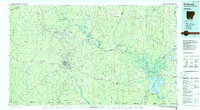 1985 El Dorado1986 Print · USGSSouth-central Arkansas and the Louisiana borderlands appear here in the mid-1980s, defined by the energy industry and river bottomlands. Genealogists and historians can locate rural landmarks like Old Parkers Chapel Cem, the Smackover Gas Field, and the El Dorado & Wesson RR.2 unique versions available
 - 1989 Map of El Dorado, 1990 Print
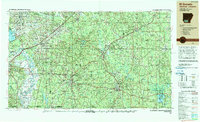 1989 El Dorado1990 Print · USGSThe Arkansas-Louisiana borderlands in the late eighties show a landscape of heavy industry and wildlife conservation centered on the Ouachita River. Researchers can trace the legacy of timber and transport via the Missouri Pacific RR, Poison Springs State Forest, and the vast Felsenthal Pool.
End of results
Showing maps 1-10 of 10
Top cities near Strong
Frequently asked questions
- What are the different types of historical maps available for Strong?
- What is the oldest map of Strong?
- Where can I purchase historical maps of Strong for my home or office?
- Where can I download high-res historical maps of Strong?
- Are there historical topographic maps available for Strong?
- Is there historical aerial imagery available for Strong?
- Where are historical maps of Strong sourced from?