1950s Maps of Concord, California
Explore 15 historic maps of Concord from the 1950s. These maps offer a rare glimpse into what life looked like during the 1950s — showing old roads, neighborhoods, homes, and landmarks that have changed or disappeared over time.
Whether you're researching your family's past, planning a metal detecting trip, or studying how Concord's landscape evolved across the 1950s, these high-resolution maps are a powerful tool for exploring the history of this region.
- Focus on a specific era: All maps on this page are from the 1950s, giving you a focused view of this time period.
- See what’s changed: Compare century-old streets, trails, and buildings to today's modern landscape using overlays and satellite layers.
- Research with precision: Use these maps for genealogy, historical research, land use analysis, or educational projects.
- View, download, or print: Maps are fully viewable online in high resolution, and can be downloaded or printed for your own records.
Start exploring Concord's history through authentic maps from the 1950s. This is your window into the past.
Concord, CA maps
(15)- 1951 Map of Antioch
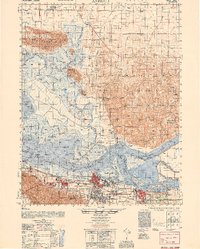 1951 Antioch1951 Print · USGSThe Sacramento Delta comes alive in the early fifties as industrial growth meets a complex world of sloughs and islands. Trace family ties to Birds Landing, the Grizzly Island Ferry, or the sprawling grounds of Camp Stoneman.
 - 1951 Map of Port Chicago
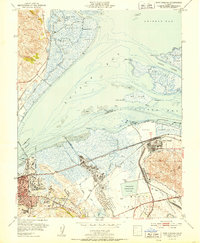 1951 Port Chicago1951 Print · USGSIn the early fifties, the industrial shoreline of Suisun Bay was defined by massive naval installations and oil refineries. Trace the rail-and-water economy through the Port Chicago Naval Reservation, the town of Clyde, and the Avon (Associated PO) refinery.2 unique versions available
 - 1953 Map of Honker Bay, 1955 Print
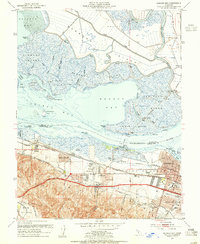 1953 Honker Bay1955 Print · USGSThe Suisun Bay shoreline in the early fifties shows a landscape of heavy industry and military readiness. Researchers can trace the mid-century layout of Pittsburg, the housing at Shore Acres, and the expansive grounds of Camp Stoneman.7 unique versions available
 - 1953 Map of Clayton, 1955 Print
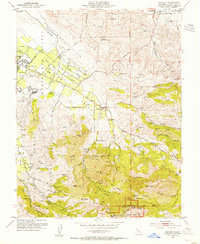 1953 Clayton1955 Print · USGSThe foothills of Mount Diablo are captured here in the mid-fifties as the ranching and mining landscape began to meet suburban growth. Genealogists and historians can locate the Cowell Cemetery, the Mt Diablo Mine, and the vanished settlement at Nortonville.9 unique versions available
 - 1953 Map of Pittsburg, 1960 Print
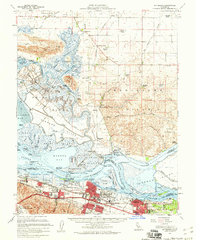 1953 Pittsburg1960 Print · USGSThe Suisun Bay waterfront and the Delta's tidal marshes are captured here in the mid-fifties, showing the industrial growth of Contra Costa County. Genealogists and researchers can trace family-named locations like Hierlihy Ranch, local landmarks like Shilo Church, and the riverfront community of Collinsville.2 unique versions available
 - 1955 Map of San Francisco
 1955 San Francisco1955 Print · USGSThe San Francisco Bay Area and central coast are captured during the postwar boom as suburbs and infrastructure expanded rapidly. Trace the development of local communities and military installations like the Presidio and Fort Mason, or follow the Southern Pacific rail lines.
 - 1956 Map of San Jose
 1956 San Jose1956 Print · USGSCentral California in the mid-fifties reveals the transition from sprawling orchards to growing urban hubs like San Jose and Stockton. Genealogists and historians can trace the rail-era landscape of the Mother Lode through Chinese Camp and Tuttletown, or follow the water through the Joaquin River and Calaveras Reservoir.
 - 1956 Map of Sacramento
 1956 Sacramento1956 Print · USGSMid-century California unfolds from the delta to the high Sierra, capturing a landscape of growing valley cities and burgeoning military airbases. Genealogists and historians can trace the rail lines and river towns from Woodland to Lodi, or explore the foothill settlements of Placerville and Jackson.2 unique versions available
 - 1956 Map of San Francisco
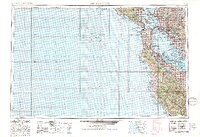 1956 San Francisco1956 Print · USGSThe San Francisco Bay Area is captured in the mid-fifties, showing a landscape of rapid post-war growth and massive military installations. Researchers can trace the sprawling rail lines of the Southern Pacific and locate historic sites like Stanford University or the Hunters Point Naval Shipyard.4 unique versions available
 - 1957 Map of San Francisco
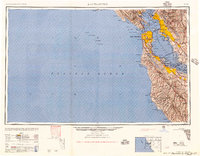 1957 San Francisco1957 Print · USGSThe Bay Area in the mid-fifties reveals a rapidly growing metropolitan landscape connected by its iconic spans and rail networks. Researchers can trace the layout of military sites like the Presidio and the extent of the Southern Pacific and Western Pacific railroads.
 - 1957 Map of Sacramento, 1966 Print
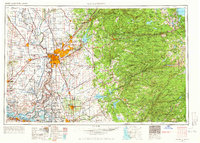 1957 Sacramento1966 Print · USGSIn the mid-twentieth century, the California heartland was a hub of river transport, rail lines, and military airbases. Genealogists and historians can trace the development of Gold Country towns like Angels Camp and Sonora or follow the path of the Southern Pacific RR through the growing suburbs of Sacramento.4 unique versions available
 - 1958 Map of Santa Rosa, 1968 Print
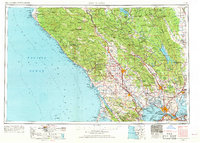 1958 Santa Rosa1968 Print · USGSThe North Bay and Wine Country are captured in the mid-twentieth century as the region balanced its agricultural roots with a growing military and recreational footprint. Researchers can trace the Northwestern Pacific RR through the Russian River valley or locate landmarks like the Petaluma Adobe Historical Monument and The Geysers Resort.3 unique versions available
 - 1959 Map of Walnut Creek, 1960 Print
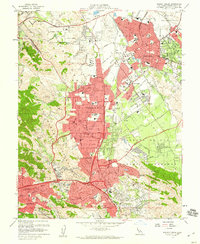 1959 Walnut Creek1960 Print · USGSContra Costa County undergoes rapid suburbanization in the late fifties as residential blocks fill the valleys between Lafayette and Concord. Researchers can trace the development of local schools, the Naval Reservation, and old landmarks like the IOOF Cemetery.7 unique versions available
 - 1959 Map of Port Chicago, 1960 Print
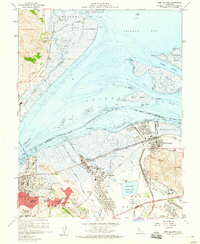 1959 Port Chicago1960 Print · USGSThe industrial Suisun Bay shoreline and neighboring Contra Costa communities are documented here during the late fifties. Researchers can trace the mid-century footprints of Port Chicago and Clyde alongside the expansive Naval Reservation and the Benicia Arsenal.5 unique versions available
 - 1959 Map of Concord, 1961 Print
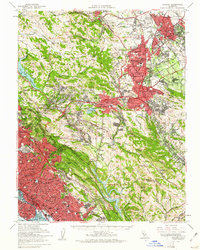 1959 Concord1961 Print · USGSThe East Bay's mid-century expansion is on full display here as suburban growth reaches into the interior valleys and ridges. Genealogists and local historians can trace legacy sites like Lafayette Cem, the small settlement of Eastport, and the campus of St Marys College.2 unique versions available
End of results
Showing maps 1-15 of 15
Top cities near Concord
- Oakland historical maps
- Vallejo historical maps
- Fairfield historical maps
- Antioch historical maps
- San Ramon historical maps
- Piedmont historical maps
See more
Top neighborhoods of Concord
- Meinert historical maps
- Cowell historical maps
- Sun Terrace historical maps
- Brookview Park historical maps
- Ygnacio Wood historical maps
- Rose Glen historical maps
See more
Frequently asked questions
- What are the different types of historical maps available for Concord?
- What is the oldest map of Concord?
- Where can I purchase historical maps of Concord for my home or office?
- Where can I download high-res historical maps of Concord?
- Are there historical topographic maps available for Concord?
- Is there historical aerial imagery available for Concord?
- Where are historical maps of Concord sourced from?