1900s (20th Century) Maps of Panoche Junction, California
Explore 11 historic maps of Panoche Junction from the 1900s (20th Century). These maps offer a rare glimpse into what life looked like during the 1900s — showing old roads, neighborhoods, homes, and landmarks that have changed or disappeared over time.
Whether you're researching your family's past, planning a metal detecting trip, or studying how Panoche Junction's landscape evolved across the 1900s, these high-resolution maps are a powerful tool for exploring the history of this region.
- Focus on a specific era: All maps on this page are from the 1900s, giving you a focused view of this time period.
- See what’s changed: Compare century-old streets, trails, and buildings to today's modern landscape using overlays and satellite layers.
- Research with precision: Use these maps for genealogy, historical research, land use analysis, or educational projects.
- View, download, or print: Maps are fully viewable online in high resolution, and can be downloaded or printed for your own records.
Start exploring Panoche Junction's history through authentic maps from the 1900s. This is your window into the past.
Panoche Junction, CA maps
(11)- 1923 Map of Levis
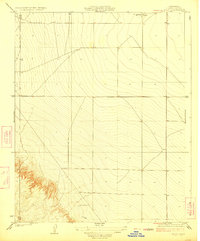 1923 Levis1923 Print · USGSFresno County oil and ranching lands come into focus during the early twenties as the valley floor meets the western hills. Researchers can trace the legacy of petroleum at the Oil Pumping Sta and locate early landholdings such as Englebrecht Ranch near Levis.2 unique versions available
 - 1946 Map of Tranquillity, 1953 Print
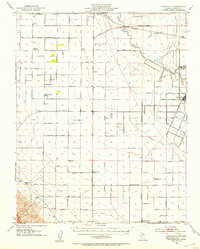 1946 Tranquillity1953 Print · USGSAgricultural life in Fresno County during the mid-1940s revolved around rail transport and water management. Genealogists and historians can trace family operations like Coit Ranch and Englebrecht Ranch or follow the Southern Pacific through Tranquillity.
 - 1947 Map of Levis
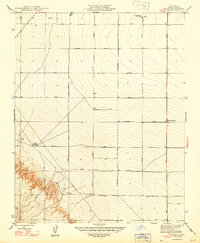 1947 Levis1947 Print · USGSFresno County ranch lands and irrigation networks are captured here just after the war, showing the early infrastructure of the Central Valley. Researchers can trace the development of small settlements like Levis and Panoche Junction or locate specific agricultural sites like Midway Ranch and the Oil Pumping Sta.
 - 1948 Map of Santa Cruz
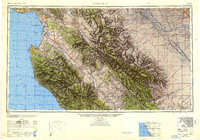 1948 Santa Cruz1948 Print · USGSThe Central Coast and San Joaquin Valley meet in this mid-century look at the region's agricultural and military geography. Genealogists and historians can trace the paths of El Camino Real, locate family farms near Hollister, or study the footprint of the Fort Ord Military Reservation.2 unique versions available
 - 1955 Map of Santa Cruz
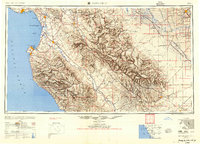 1955 Santa Cruz1955 Print · USGSCoastal Monterey Bay and the fertile Salinas Valley are captured here during the post-war expansion of the mid-fifties. Researchers can trace the era's rail-and-road network via the Southern Pacific lines and find landmarks like Fort Ord or the Lonoak School.
 - 1956 Map of Levis, 1958 Print
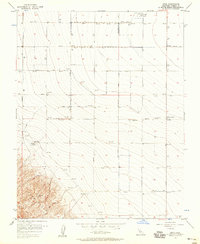 1956 Levis1958 Print · USGSFresno County agriculture and oil infrastructure dominate this mid-century landscape near Levis. Researchers can trace the layout of Midway Ranch, find scattered Labor Camps, and see the transition into the Ciervo Hills.3 unique versions available
 - 1957 Map of Santa Cruz
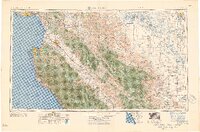 1957 Santa Cruz1957 Print · USGSCentral California comes into sharp focus during the late fifties, from the fog-swept Monterey Bay to the sun-drenched San Joaquin Valley. Genealogists and historians can trace the mid-century footprints of Fort Ord Military Reservation, the Southern Pacific line, and the historic streets of San Juan Bautista.
 - 1958 Map of Santa Cruz
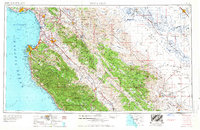 1958 Santa Cruz1958 Print · USGSCoastal California and the central valleys are shown during the mid-fifties, capturing a landscape of massive military reserves and vital rail arteries. Genealogists and historians can trace the Southern Pacific line through Salinas or explore the early footprints of the Fort Ord Military Reservation and San Juan Bautista.2 unique versions available
 - 1965 Map of Santa Cruz, 1968 Print
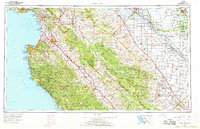 1965 Santa Cruz1968 Print · USGSThe Central Coast and San Joaquin Valley meet here during the mid-sixties, capturing the growth of agricultural and coastal hubs. Trace the historic Southern Pacific RR lines and locate sites like the Presidio of Monterey or Pinnacles National Monument.
 - 1974 Map of Monterey, 1977 Print
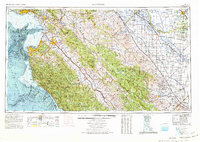 1974 Monterey1977 Print · USGSThe Central Coast and San Joaquin Valley meet in this mid-seventies survey of the Monterey region. Genealogists and historians can locate Spanish-era sites like the San Antonio de Padua Mission, early industrial markers such as the New Idria Mine, and coastal landmarks like the Point Sur Lighthouse.
 - 1982 Map of Mendota, 1983 Print
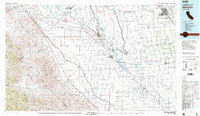 1982 Mendota1983 Print · USGSThe Central Valley's massive water-moving infrastructure is in full view during the early eighties, from the San Joaquin River to the California Aqueduct. Researchers can trace the Southern Pacific rail lines through towns like Mendota, Firebaugh, and Tranquillity.2 unique versions available
End of results
Showing maps 1-11 of 11
Top cities near Panoche Junction
Frequently asked questions
- What are the different types of historical maps available for Panoche Junction?
- What is the oldest map of Panoche Junction?
- Where can I purchase historical maps of Panoche Junction for my home or office?
- Where can I download high-res historical maps of Panoche Junction?
- Are there historical topographic maps available for Panoche Junction?
- Is there historical aerial imagery available for Panoche Junction?
- Where are historical maps of Panoche Junction sourced from?