1900s (20th Century) Maps of Paymaster Landing, California
Explore 11 historic maps of Paymaster Landing from the 1900s (20th Century). These maps offer a rare glimpse into what life looked like during the 1900s — showing old roads, neighborhoods, homes, and landmarks that have changed or disappeared over time.
Whether you're researching your family's past, planning a metal detecting trip, or studying how Paymaster Landing's landscape evolved across the 1900s, these high-resolution maps are a powerful tool for exploring the history of this region.
- Focus on a specific era: All maps on this page are from the 1900s, giving you a focused view of this time period.
- See what’s changed: Compare century-old streets, trails, and buildings to today's modern landscape using overlays and satellite layers.
- Research with precision: Use these maps for genealogy, historical research, land use analysis, or educational projects.
- View, download, or print: Maps are fully viewable online in high resolution, and can be downloaded or printed for your own records.
Start exploring Paymaster Landing's history through authentic maps from the 1900s. This is your window into the past.
Paymaster Landing, CA maps
(11)- 1942 Map of Blythe
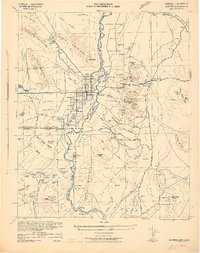 1942 Blythe1942 Print · USGSThe Lower Colorado River valley appears here in the early 1940s, showcasing the agricultural development of the Palo Verde Mesa alongside a booming mining industry. Researchers can locate remote desert outposts and extraction sites like Midland, the U S Gypsum Mine, and Nortons Landing.2 unique versions available
 - 1945 Map of Picacho
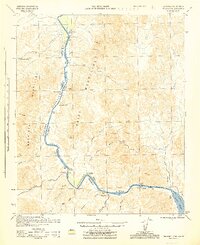 1945 Picacho1945 Print · USGSThe Lower Colorado River corridor is captured here in the mid-1940s, showing a landscape defined by remote mining camps and vital ferry crossings. Trace the history of the regional mineral boom through the Red Cloud Mine, Hoge Ferry, and the Adobe Ruins.
 - 1951 Map of Picacho, 1952 Print
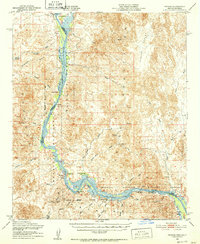 1951 Picacho1952 Print · USGSThe Colorado River corridor along the Arizona-California border is shown here in the early fifties, balancing wildlife conservation with a legacy of desert mining. Researchers can trace historic river landings and mountain operations like Nortons Landing (Site), Picacho, and the Red Cloud Mine.3 unique versions available
 - 1954 Map of Salton Sea
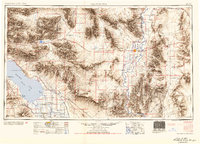 1954 Salton Sea1954 Print · USGSThe Colorado River and Imperial Valley desert frontiers are captured here in the 1950s. Trace the irrigation networks of Calipatria and mining sites like Eagle Mountain Mine.
 - 1954 Map of Picacho NW, 1955 Print
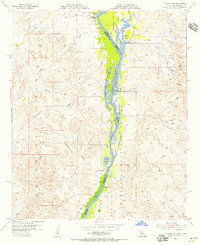 1954 Picacho NW1955 Print · USGSThe Colorado River borderlands during the 1950s reveal a remote landscape of backwater lakes and desert washes. Researchers can trace early river crossings and landing sites like Paymaster Landing, explore the site of the Clip Mill, or locate landmarks such as Lighthouse Rock.2 unique versions available
 - 1955 Map of Salton Sea
 1955 Salton Sea1955 Print · USGSThe Colorado River and Imperial Valley desert basins appear here during the mid-fifties, revealing a landscape of remote mines and agricultural irrigation. Genealogists and researchers can trace locations like the Parker Alien Reception Center Unit No 1, Blythe, and the Kane Springs School.2 unique versions available
 - 1959 Map of Salton Sea, 1968 Print
 1959 Salton Sea1968 Print · USGSThe Colorado River and Salton Sea basin are shown here during a decade of intense military and agricultural activity. Trace family roots in Blythe or Niland, and locate historical mining operations like the Eagle Mountain Mine and Red Cloud Mine.4 unique versions available
 - 1963 Map of Salton Sea
 1963 Salton Sea1963 Print · USGSThe Colorado Desert during the early sixties shows a landscape defined by massive water projects and Cold War military ranges. Trace the growth of Salton City and Brawley, or locate remote desert outposts like the Paymaster Mine and Desert Center.
 - 1965 Map of Salton Sea
 1965 Salton Sea1965 Print · USGSThe Colorado Desert and Imperial Valley are caught in a period of intense irrigation and military expansion during the mid-sixties. Researchers can trace the desert's industrial footprint through the Eagle Mountain Mine, the remote Desert Center, and the Salton Sea Test Base.
 - 1965 Map of Picacho NW, 1966 Print
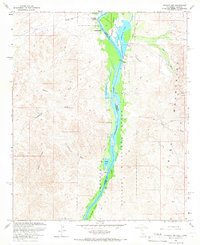 1965 Picacho NW1966 Print · USGSThe Colorado River corridor near the California-Arizona border comes to life in this mid-1960s survey. Researchers can trace the river's original wetlands and backwaters, locating specific historical sites like Paymaster Landing, Walters Camp, and the Clip Mill (Site).2 unique versions available
 - 1986 Map of Trigo Mts
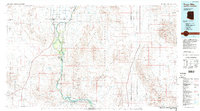 1986 Trigo Mts1986 Print · USGSThe Colorado River corridor is captured here in the mid-eighties as it winds between Arizona and California. Researchers can trace decades of desert enterprise through locations like Paymaster Mine, the Cibola National Wildlife Refuge, and Walters Camp.2 unique versions available
End of results
Showing maps 1-11 of 11
Top cities near Paymaster Landing
Frequently asked questions
- What are the different types of historical maps available for Paymaster Landing?
- What is the oldest map of Paymaster Landing?
- Where can I purchase historical maps of Paymaster Landing for my home or office?
- Where can I download high-res historical maps of Paymaster Landing?
- Are there historical topographic maps available for Paymaster Landing?
- Is there historical aerial imagery available for Paymaster Landing?
- Where are historical maps of Paymaster Landing sourced from?