1900s (20th Century) Maps of Arvin, California
Explore 12 historic maps of Arvin from the 1900s (20th Century). These maps offer a rare glimpse into what life looked like during the 1900s — showing old roads, neighborhoods, homes, and landmarks that have changed or disappeared over time.
Whether you're researching your family's past, planning a metal detecting trip, or studying how Arvin's landscape evolved across the 1900s, these high-resolution maps are a powerful tool for exploring the history of this region.
- Focus on a specific era: All maps on this page are from the 1900s, giving you a focused view of this time period.
- See what’s changed: Compare century-old streets, trails, and buildings to today's modern landscape using overlays and satellite layers.
- Research with precision: Use these maps for genealogy, historical research, land use analysis, or educational projects.
- View, download, or print: Maps are fully viewable online in high resolution, and can be downloaded or printed for your own records.
Start exploring Arvin's history through authentic maps from the 1900s. This is your window into the past.
Arvin, CA maps
(12)- 1914 Map of Caliente
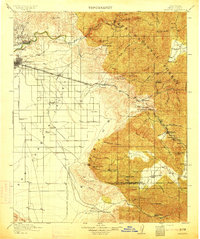 1914 Caliente1914 Print · USGSBakersfield and the southern Joaquin Valley are captured in the early nineteen-teens as the region's rail and oil industries expanded. Genealogists can trace family landmarks like the Tejon Ranch and Rio Bravo Ranch or locate vanished stops such as Woodford Keene P O and Cottonwood Station.7 unique versions available
 - 1930 Map of Arvin
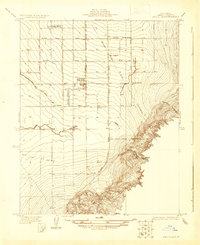 1930 Arvin1930 Print · USGSKern County agriculture and early oil exploration are documented here during the pre-war period. Researchers can trace the rail lines of the Southern Pacific Railroad and locate local landmarks like Rockpile Sch and the Lost Derrick.
 - 1933 Map of Arvin
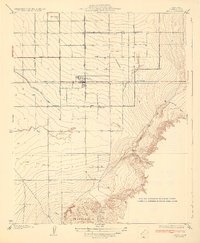 1933 Arvin1933 Print · USGSArvin and the surrounding southern San Joaquin Valley are captured in the early 1930s during a period of intensive agricultural expansion. Researchers can trace the development of irrigation through the Eastside Canal or locate early landmarks like Rock Pile Sch and the settlement at Vaccaro.3 unique versions available
 - 1948 Map of Bakersfield
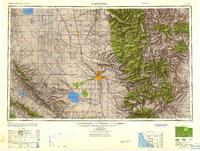 1948 Bakersfield1948 Print · USGSBakersfield and the southern San Joaquin Valley appear in the late 1940s, showing a landscape of burgeoning oil towns, rail junctions, and early irrigation canals. Genealogists and historians can trace the foundations of local industry through Gardner Field, the Sunset Railway, and the shores of Buena Vista Lake.2 unique versions available
 - 1955 Map of Bakersfield
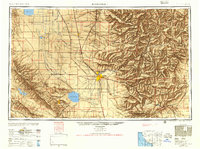 1955 Bakersfield1955 Print · USGSThe southern San Joaquin Valley in the mid-fifties shows an era of massive oil production and industrial irrigation. Trace family roots in Allensworth, the oil fields of Oildale, or the shorelines of Tulare Lake and Buena Vista Lake.
 - 1955 Map of Arvin, 1956 Print
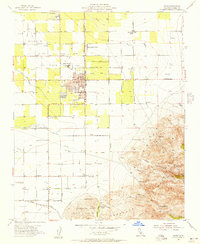 1955 Arvin1956 Print · USGSArvin and the surrounding Kern County ranch lands thrive during the mid-1950s, balanced between heavy industry and large-scale agriculture. Genealogists and local historians can trace the footprint of the Mountain View Oil Field and the early layout of Edmundson Acres.4 unique versions available
 - 1956 Map of Bakersfield
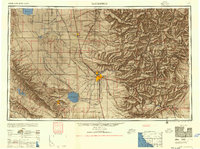 1956 Bakersfield1956 Print · USGSThe southern San Joaquin Valley and High Sierra come alive in the mid-fifties, showing the region's complex agricultural and rail networks. Genealogists and historians can trace family roots in towns like Bakersfield, Taft, and Delano, or locate early infrastructure along the Sunset Railway.
 - 1960 Map of Bakersfield
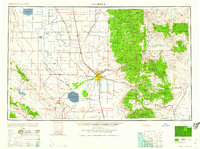 1960 Bakersfield1960 Print · USGSThe Southern San Joaquin Valley at mid-century reveals a complex landscape of petroleum development and massive irrigation projects. Researchers can trace the rail lines of the Southern Pacific, explore oil-era landmarks like Oil City, and locate early settlements including Allensworth and Pixley.2 unique versions available
 - 1962 Map of Bakersfield, 1969 Print
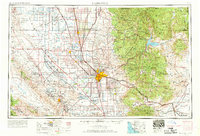 1962 Bakersfield1969 Print · USGSThe Southern San Joaquin Valley is shown in the 1960s as a bustling intersection of petroleum production, irrigation agriculture, and mountain recreation. Researchers can trace the rail lines of the Southern Pacific through the valley or locate early desert developments like California City and Tehachapi.4 unique versions available
 - 1966 Map of Bakersfield
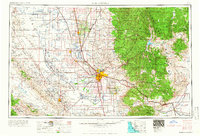 1966 Bakersfield1966 Print · USGSThe southern San Joaquin Valley in the mid-sixties reveals a massive industrial and agricultural landscape shaped by water and oil. Genealogists and historians can trace the growth of Bakersfield and Oildale, or locate remote airfields like Minter Field and Mojave-Kern County No. 7 Airport.
 - 1978 Map of Tehachapi, 1993 Print
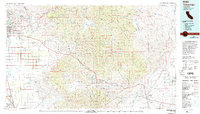 1978 Tehachapi1993 Print · USGSThe Kern County landscape in the late seventies reveals the transition from valley agriculture to high mountain passes. Trace the rail lines of the Southern Pacific and explore early settlements like Weed Patch, Loraine, and Edmundson Acres.
 - 1992 Map of Arvin, 1995 Print
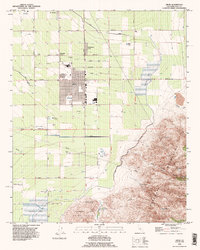 1992 Arvin1995 Print · USGSArvin and the surrounding Kern County ranchlands are shown here in the early nineties, where a grid of intensive agriculture meets the rising Tehachapi foothills. Trace local landmarks like the Cotton Gin, the namesake Di Giorgio settlement, and the Grant Golf Course.
End of results
Showing maps 1-12 of 12
Top cities near Arvin
Frequently asked questions
- What are the different types of historical maps available for Arvin?
- What is the oldest map of Arvin?
- Where can I purchase historical maps of Arvin for my home or office?
- Where can I download high-res historical maps of Arvin?
- Are there historical topographic maps available for Arvin?
- Is there historical aerial imagery available for Arvin?
- Where are historical maps of Arvin sourced from?