1950s Maps of San Rafael, California
Explore 11 historic maps of San Rafael from the 1950s. These maps offer a rare glimpse into what life looked like during the 1950s — showing old roads, neighborhoods, homes, and landmarks that have changed or disappeared over time.
Whether you're researching your family's past, planning a metal detecting trip, or studying how San Rafael's landscape evolved across the 1950s, these high-resolution maps are a powerful tool for exploring the history of this region.
- Focus on a specific era: All maps on this page are from the 1950s, giving you a focused view of this time period.
- See what’s changed: Compare century-old streets, trails, and buildings to today's modern landscape using overlays and satellite layers.
- Research with precision: Use these maps for genealogy, historical research, land use analysis, or educational projects.
- View, download, or print: Maps are fully viewable online in high resolution, and can be downloaded or printed for your own records.
Start exploring San Rafael's history through authentic maps from the 1950s. This is your window into the past.
San Rafael, CA maps
(11)- 1950 Map of Mt. Tamalpais, 1954 Print
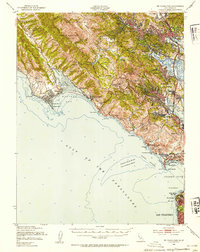 1950 Mt. Tamalpais1954 Print · USGSMarin County's dramatic coastline and the approach to the Golden Gate are shown here in the mid-fifties. Genealogists and historians can trace the early boundaries of Mill Valley, the coastal outposts of Bolinas and Stinson Beach, and several coastal military sites.4 unique versions available
 - 1951 Map of Petaluma Point
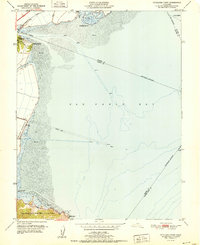 1951 Petaluma Point1951 Print · USGSSan Pablo Bay and the Marin shoreline are captured here in the early fifties, detailing the transition from tidal marsh to inland hills. Trace the path of the Northwestern Pacific railroad past Rose or explore the historic site at China Camp.2 unique versions available
 - 1954 Map of San Rafael, 1955 Print
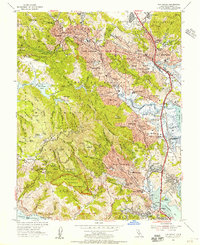 1954 San Rafael1955 Print · USGSMid-century Marin County is captured here in detail, from the slopes of the redwood canyons to the bayside marshes. Genealogists and historians can trace the footprint of early schools like Alto School and Short School, or locate family sites near Mt Tamalpais Cemetery and Baltimore Park.7 unique versions available
 - 1954 Map of Novato, 1955 Print
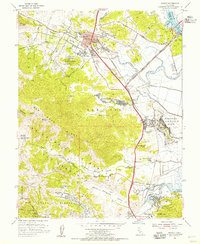 1954 Novato1955 Print · USGSMarin County's mid-century landscape is transitioning from a rural railroad corridor to a postwar suburban hub. Researchers can trace the layout of Hamilton Air Force Base, old schoolhouses like Dixie Sch, and the winding Northwestern Pacific line.6 unique versions available
 - 1954 Map of Petaluma, 1959 Print
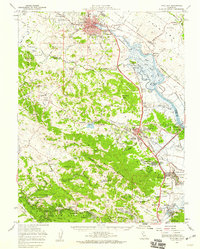 1954 Petaluma1959 Print · USGSCoastal mountains and river sloughs define the Marin and Sonoma borderlands in the mid-1950s, a period of military expansion and rural transition. Genealogists and historians can trace family-named schools like Iowa School or Wilson Sch and the extensive infrastructure of Hamilton Air Force Base.3 unique versions available
 - 1955 Map of San Francisco
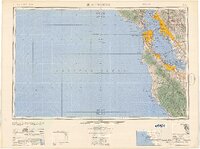 1955 San Francisco1955 Print · USGSThe San Francisco Bay Area and central coast are captured during the postwar boom as suburbs and infrastructure expanded rapidly. Trace the development of local communities and military installations like the Presidio and Fort Mason, or follow the Southern Pacific rail lines.
 - 1956 Map of San Francisco
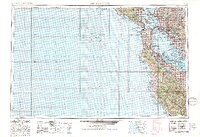 1956 San Francisco1956 Print · USGSThe San Francisco Bay Area is captured in the mid-fifties, showing a landscape of rapid post-war growth and massive military installations. Researchers can trace the sprawling rail lines of the Southern Pacific and locate historic sites like Stanford University or the Hunters Point Naval Shipyard.4 unique versions available
 - 1957 Map of San Francisco
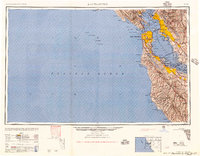 1957 San Francisco1957 Print · USGSThe Bay Area in the mid-fifties reveals a rapidly growing metropolitan landscape connected by its iconic spans and rail networks. Researchers can trace the layout of military sites like the Presidio and the extent of the Southern Pacific and Western Pacific railroads.
 - 1958 Map of Santa Rosa, 1968 Print
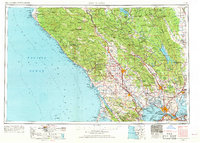 1958 Santa Rosa1968 Print · USGSThe North Bay and Wine Country are captured in the mid-twentieth century as the region balanced its agricultural roots with a growing military and recreational footprint. Researchers can trace the Northwestern Pacific RR through the Russian River valley or locate landmarks like the Petaluma Adobe Historical Monument and The Geysers Resort.3 unique versions available
 - 1959 Map of San Quentin, 1960 Print
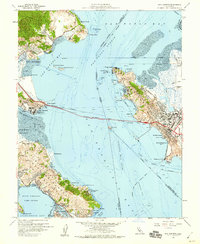 1959 San Quentin1960 Print · USGSThe northern reaches of the San Francisco Bay area are seen here during the late fifties, as the new toll bridge reshaped regional travel. Trace the footprint of the San Quentin State Prison, the Tiburon Naval Net Depot, and the Atchison Topeka & Santa Fe rail lines.5 unique versions available
 - 1959 Map of Petaluma Point, 1960 Print
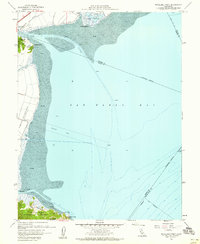 1959 Petaluma Point1960 Print · USGSThe northern reaches of San Pablo Bay are captured here in the late fifties, a period when maritime navigation and military presence shaped the Marin shoreline. Researchers can trace the layout of Hamilton Air Force Base and the rail path of the Northwestern Pacific near China Camp.6 unique versions available
End of results
Showing maps 1-11 of 11
Top cities near San Rafael
- San Francisco historical maps
- Oakland historical maps
- Vallejo historical maps
- Berkeley historical maps
- Richmond historical maps
- Alameda historical maps
See more
Top neighborhoods of San Rafael
- Gallinas historical maps
- Cerro historical maps
- McNears Beach historical maps
- Terra Linda historical maps
- Las Gallinas historical maps
- Dominican historical maps
See more
Frequently asked questions
- What are the different types of historical maps available for San Rafael?
- What is the oldest map of San Rafael?
- Where can I purchase historical maps of San Rafael for my home or office?
- Where can I download high-res historical maps of San Rafael?
- Are there historical topographic maps available for San Rafael?
- Is there historical aerial imagery available for San Rafael?
- Where are historical maps of San Rafael sourced from?