1900s (20th Century) Maps of Bluewater, California
Explore 12 historic maps of Bluewater from the 1900s (20th Century). These maps offer a rare glimpse into what life looked like during the 1900s — showing old roads, neighborhoods, homes, and landmarks that have changed or disappeared over time.
Whether you're researching your family's past, planning a metal detecting trip, or studying how Bluewater's landscape evolved across the 1900s, these high-resolution maps are a powerful tool for exploring the history of this region.
- Focus on a specific era: All maps on this page are from the 1900s, giving you a focused view of this time period.
- See what’s changed: Compare century-old streets, trails, and buildings to today's modern landscape using overlays and satellite layers.
- Research with precision: Use these maps for genealogy, historical research, land use analysis, or educational projects.
- View, download, or print: Maps are fully viewable online in high resolution, and can be downloaded or printed for your own records.
Start exploring Bluewater's history through authentic maps from the 1900s. This is your window into the past.
Bluewater, CA maps
(12)- 1911 Map of Parker
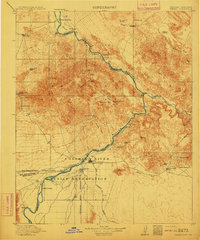 1911 Parker1911 Print · USGSThe Arizona-California borderlands are captured here in the early twentieth century as the river and rail networks began to transform the desert. Researchers can trace the development of the Colorado River Indian Reservation, the rail hub at Parker, and early mining sites like the Billy Mack Mine.3 unique versions available
 - 1943 Map of Parker
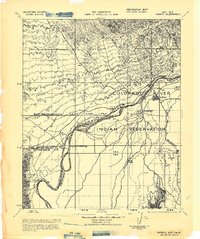 1943 Parker1943 Print · USGSThe Lower Colorado riverfront was a vital military and transport corridor during the 1940s. Genealogists and historians can trace the rail and river network connecting Parker to the Colorado River Indian Reservation, Agency, and Doyles Landing.
 - 1949 Map of Parker, 1960 Print
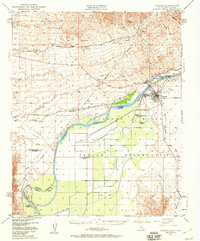 1949 Parker1960 Print · USGSThe Colorado River borderlands in the late 1940s show a fascinating mix of tribal lands, railroad stops, and desert mining. Genealogists and historians can locate the Mojave Indian Ch, the Cremation Ground, and the old Colorado River Day Sch within the reservation.2 unique versions available
 - 1950 Map of Parker Dam Area
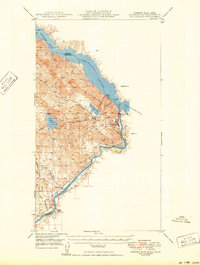 1950 Parker Dam Area1950 Print · USGSThe California-Arizona borderlands come into focus at the mid-century mark, centered on the engineering of the Parker Dam. Trace the river economy through the Colorado River Indian Reservation and remote landmarks like Bandit Pass and Cienega Springs.2 unique versions available
 - 1950 Map of Parker
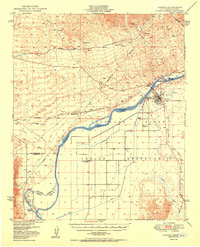 1950 Parker1950 Print · USGSThe Lower Colorado River valley in the mid-century shows a landscape defined by massive water projects and tribal lands. Researchers can trace the Colorado River Indian Reservation boundary, the Headgate Rock Dam, and desert mining at the Blue Cloud Mine.2 unique versions available
 - 1954 Map of Needles
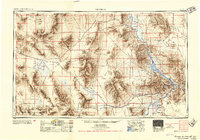 1954 Needles1954 Print · USGSThe Mojave Desert at the height of the mid-century era shows a landscape defined by the Atchison Topeka and Santa Fe railroad and the legendary U S Highway 66. Genealogists and historians can trace rail stops like Goffs, mining sites such as the Bonanza King Mine, and the early borders of the Chemehuevi Indian Reservation.
 - 1956 Map of Needles
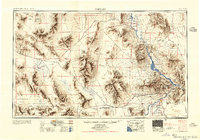 1956 Needles1956 Print · USGSThe Mojave Desert and Colorado River come alive in the mid-fifties, showing the intersection of vital rail lines and massive water projects. Trace the Atchison Topeka and Santa Fe line through Amboy or locate remote sites like the Copper World Mine and Rio Vista Guest Ranch.7 unique versions available
 - 1959 Map of Cross Roads, 1960 Print
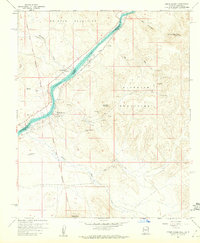 1959 Cross Roads1960 Print · USGSThe Colorado River borderlands in the late fifties show a landscape of isolated river settlements and hard-rock mining claims. Genealogists and historians can trace old homesteads and mining sites like Cross Roads, Empire, and the Billy Mack Mine.5 unique versions available
 - 1959 Map of Black Peak, 1961 Print
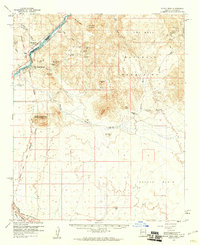 1959 Black Peak1961 Print · USGSThe Colorado River borderlands in the late fifties reveal a landscape of active mining and desert transit. Genealogists and historians can trace industrial activity at the Mineral Hill Mines or locate river-side life at Cross Roads and Cienega Springs.4 unique versions available
 - 1970 Map of Parker, 1973 Print
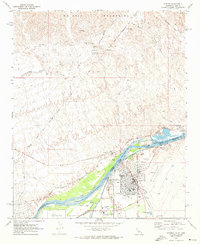 1970 Parker1973 Print · USGSThe Colorado River borderlands in the early 1970s reveal the growth of Parker alongside massive water infrastructure like the Headgate Rock Dam. Genealogists and historians can trace the Wyatt Earp House and the Indian Agency Headquarters.3 unique versions available
 - 1981 Map of Needles, 1987 Print
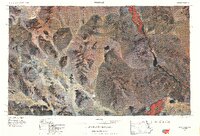 1981 Needles1987 Print · USGSThe High Desert and Colorado River valley are seen here in the early 1980s through the unique lens of satellite imagery. Trace the isolated outposts of the AT & SF railroad at Goffs and Essex, or explore the sprawling shores of Lake Havasu.
 - 1985 Map of Parker
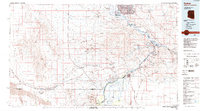 1985 Parker1985 Print · USGSThe Colorado River valley in the mid-eighties was a hub of desert transit, mining, and water management. Researchers can trace the path of the Atchison Topeka and Santa Fe railroad through Vidal Junction and locate numerous historic diggings like the Gold Hill Mine or Billy Mack Mine.2 unique versions available
End of results
Showing maps 1-12 of 12
Top cities near Bluewater
- Parker historical maps
- Parker historical maps
- Cienega Springs historical maps
- Big River historical maps
- Bouse historical maps
- Bluewater historical maps
See more
Top neighborhoods of Bluewater
Frequently asked questions
- What are the different types of historical maps available for Bluewater?
- What is the oldest map of Bluewater?
- Where can I purchase historical maps of Bluewater for my home or office?
- Where can I download high-res historical maps of Bluewater?
- Are there historical topographic maps available for Bluewater?
- Is there historical aerial imagery available for Bluewater?
- Where are historical maps of Bluewater sourced from?