Old Maps of Parker Strip, Arizona
Explore 26 old maps of Parker Strip, spanning from 1911 to today. These high-resolution historic maps reveal how streets, neighborhoods, landmarks, and natural features evolved over time — perfect for genealogy, metal detecting, research, and local history exploration.
What you can do with these maps:
- See how Parker Strip changed over time: Compare historical maps to modern-day views to trace roads, homesites, rail lines & more.
- View detailed metadata: Each map includes creators, publishers, year, scale, and archive source.
- Overlay maps with satellite & LiDAR: Visualize the past alongside modern tools to explore terrain & human change.
- Trusted historical sources: Maps sourced from the USGS, Library of Congress, and other archives.
- Access maps your way: View online, download high-res files, or order prints for personal or research use.
Start exploring old maps of Parker Strip to uncover forgotten places, hidden landmarks, and the deep history beneath your feet.
Parker Strip, AZ maps
(26)- 1911 Map of Parker
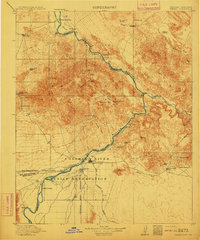 1911 Parker1911 Print · USGSThe Arizona-California borderlands are captured here in the early twentieth century as the river and rail networks began to transform the desert. Researchers can trace the development of the Colorado River Indian Reservation, the rail hub at Parker, and early mining sites like the Billy Mack Mine.3 unique versions available
 - 1943 Map of Giers Basin
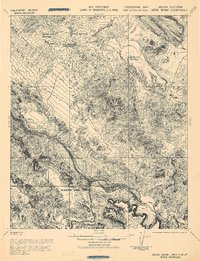 1943 Giers Basin1943 Print · USGSThe Colorado River borderlands come into focus during the early years of the war, when this area served as a military maneuver zone. Researchers can locate desert water sources like Mohave Spring and Screwbean Spring or trace the early footprint of Parker Dam.
 - 1950 Map of Parker Dam Area
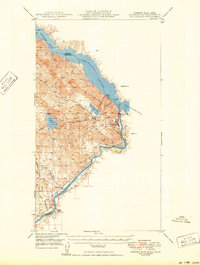 1950 Parker Dam Area1950 Print · USGSThe California-Arizona borderlands come into focus at the mid-century mark, centered on the engineering of the Parker Dam. Trace the river economy through the Colorado River Indian Reservation and remote landmarks like Bandit Pass and Cienega Springs.2 unique versions available
 - 1954 Map of Needles
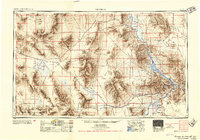 1954 Needles1954 Print · USGSThe Mojave Desert at the height of the mid-century era shows a landscape defined by the Atchison Topeka and Santa Fe railroad and the legendary U S Highway 66. Genealogists and historians can trace rail stops like Goffs, mining sites such as the Bonanza King Mine, and the early borders of the Chemehuevi Indian Reservation.
 - 1956 Map of Needles
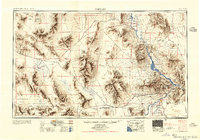 1956 Needles1956 Print · USGSThe Mojave Desert and Colorado River come alive in the mid-fifties, showing the intersection of vital rail lines and massive water projects. Trace the Atchison Topeka and Santa Fe line through Amboy or locate remote sites like the Copper World Mine and Rio Vista Guest Ranch.7 unique versions available
 - 1959 Map of Parker Dam, 1960 Print
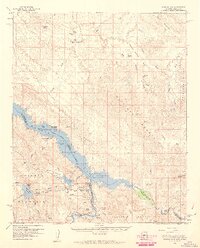 1959 Parker Dam1960 Print · USGSThe Lower Colorado River is captured here in the late fifties as a hub of massive water infrastructure and remote desert mining. Trace the complex engineering of Parker Dam, locate the historic Kohen Ranch, or find early mining sites like the Manitowoc Mine.3 unique versions available
 - 1959 Map of Cross Roads, 1960 Print
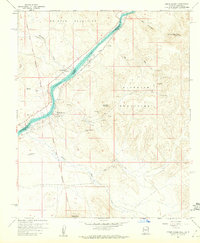 1959 Cross Roads1960 Print · USGSThe Colorado River borderlands in the late fifties show a landscape of isolated river settlements and hard-rock mining claims. Genealogists and historians can trace old homesteads and mining sites like Cross Roads, Empire, and the Billy Mack Mine.5 unique versions available
 - 1959 Map of Gene Wash, 1960 Print
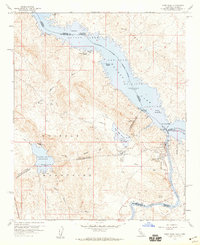 1959 Gene Wash1960 Print · USGSThe California-Arizona borderlands and the Colorado River are captured here in the late fifties as massive water projects reshaped the desert. Trace the path of the Colorado River Aqueduct through the Whipple Mountains and locate remote landings like Black Meadow Landing.3 unique versions available
 - 1959 Map of Monkeys Head, 1960 Print
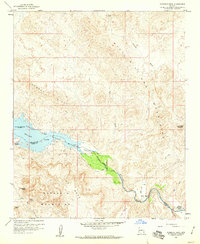 1959 Monkeys Head1960 Print · USGSThe Mohave and Yuma county line was a desert frontier in the late fifties, defined by the winding Bill Williams River. Genealogists and historians can trace old homesteads like Kohen Ranch and Ramon Esquerra Ranch or locate the remote Paloma Prospect.2 unique versions available
 - 1959 Map of Black Peak, 1961 Print
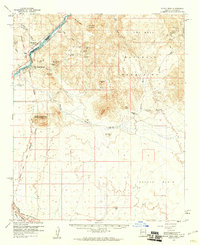 1959 Black Peak1961 Print · USGSThe Colorado River borderlands in the late fifties reveal a landscape of active mining and desert transit. Genealogists and historians can trace industrial activity at the Mineral Hill Mines or locate river-side life at Cross Roads and Cienega Springs.4 unique versions available
 - 1981 Map of Needles, 1987 Print
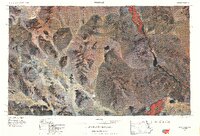 1981 Needles1987 Print · USGSThe High Desert and Colorado River valley are seen here in the early 1980s through the unique lens of satellite imagery. Trace the isolated outposts of the AT & SF railroad at Goffs and Essex, or explore the sprawling shores of Lake Havasu.
 - 1985 Map of Parker
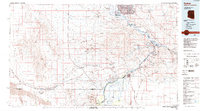 1985 Parker1985 Print · USGSThe Colorado River valley in the mid-eighties was a hub of desert transit, mining, and water management. Researchers can trace the path of the Atchison Topeka and Santa Fe railroad through Vidal Junction and locate numerous historic diggings like the Gold Hill Mine or Billy Mack Mine.2 unique versions available
 - 1990 Map of Monkeys Head
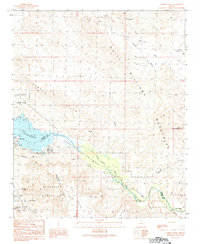 1990 Monkeys Head1990 Print · USGSThe Mohave and La Paz county line follows the river and reservoir during the late twentieth century. Researchers can trace desert water management and local landmarks from the Hayden-Rhodes Aqueduct to Kohen Ranch and the Monkeys Head peaks.
 - 2011 Map of Monkeys Head, 2011 Print
 2011 Monkeys Head2011 Print · USGSArizona's desert interior near the Bill Williams River is captured here in the early 2000s, showing a land of remote ranching and rugged drainages. Trace the geography of isolated homesteads and landmarks like Larneds Landing, Kohen Ranch, and Monkeys Head.
 - 2012 Map of Cross Roads, 2012 Print
 2012 Cross Roads2012 Print · USGSAlong the Arizona-California border in the early 2010s, this desert landscape showcases the riverside communities thriving along the Colorado River. Genealogists and local historians can trace the growth of Cienega Springs and Parker Strip, or locate inland landmarks like Billy Mack Mountain and the Billy Mack Mine Rd.
 - 2012 Map of Gene Wash, 2012 Print
 2012 Gene Wash2012 Print · USGSThe Colorado River and its massive engineering works are captured here in the early twenty-first century. Researchers can trace the path of the COLORADO RIVER AQUEDUCT through the Copper Basin Tunnel and locate landings like Black Meadow Landing and Parker Dam.
 - 2014 Map of Monkeys Head, 2014 Print
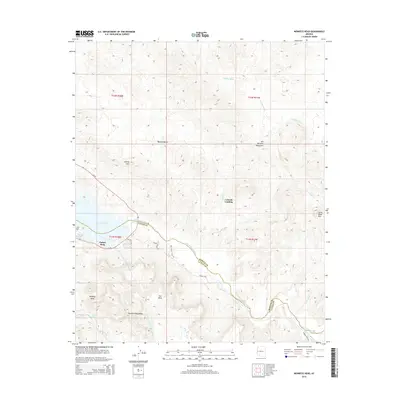 2014 Monkeys Head2014 Print · USGSThe high desert along the Bill Williams River comes into focus in the mid-2010s, where the Arizona landscape meets the edge of the Colorado River system. Researchers can trace the modern paths of Planet Ranch Rd and the Central Arizona Project Aqueduct near Monkeys Head.
 - 2015 Map of Gene Wash, 2015 Print
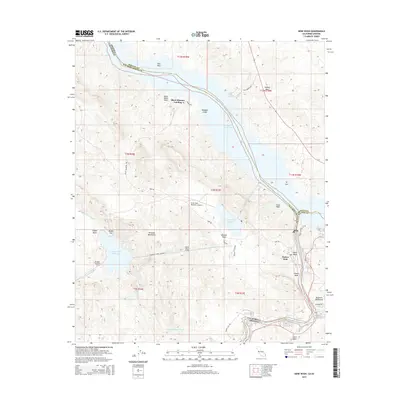 2015 Gene Wash2015 Print · USGSThe Colorado River borderlands at the California-Arizona line show a landscape dominated by massive water projects in the 2010s. Trace the path of the Colorado River Aqueduct through the Whipple Mountains or locate landmarks like Parker Dam and Black Meadow Landing.
 - 2015 Map of Cross Roads, 2015 Print
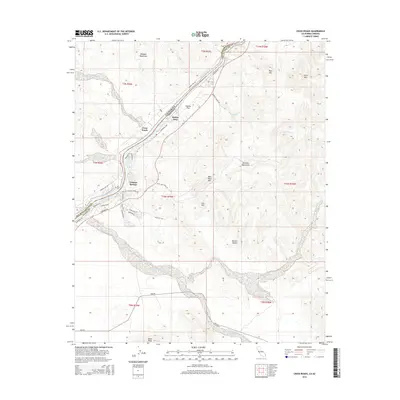 2015 Cross Roads2015 Print · USGSThe Arizona-California borderland along the Colorado River is shown here in the mid-2010s during a period of established riverside development. Researchers can trace the layout of waterfront communities like Parker Strip and Cienega Springs or locate landmarks such as Black Peak.
 - 2018 Map of Monkeys Head, 2018 Print
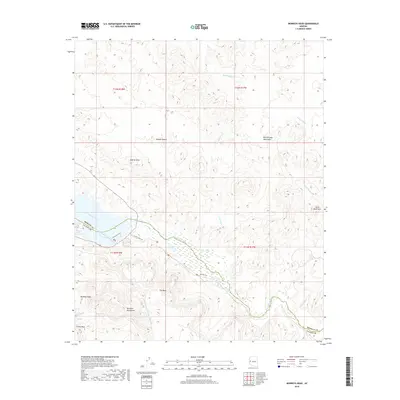 2018 Monkeys Head2018 Print · USGSThe Lower Colorado River Valley comes into focus in this late 2010s survey of the Arizona desert. Trace the path of the Bill Williams River past notable peaks like Monkeys Head and landmarks such as Castle Rock.
 - 2018 Map of Gene Wash, 2018 Print
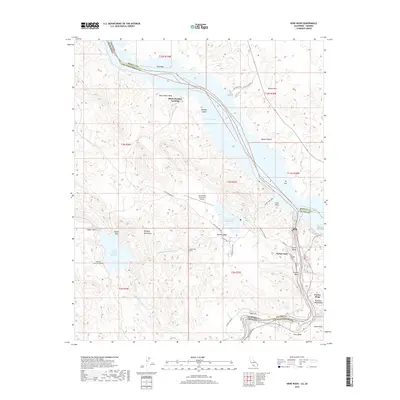 2018 Gene Wash2018 Print · USGSThe Colorado River borderlands come into focus in the late 2010s, showing the massive water infrastructure near Parker Dam. Researchers can trace the path of the Colorado River Aqueduct through the Whipple Mountain Tunnel and locate landings like Black Meadow Landing.
 - 2018 Map of Cross Roads, 2018 Print
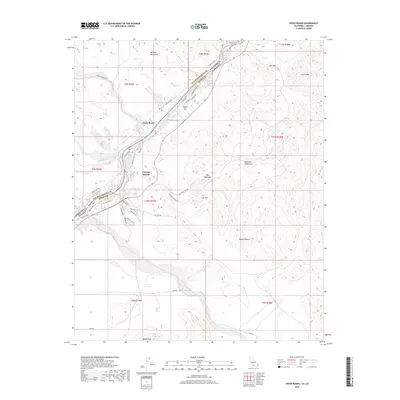 2018 Cross Roads2018 Print · USGSThe Colorado River borderlands in the late 2010s are defined by the meeting of three states and the desert peaks of the Whipple Mountains. Researchers can trace riverside development at Cienega Springs and Empire Flat or locate remote landmarks like Billy Mack Mtn.
 - 2021 Map of Monkeys Head, 2021 Print
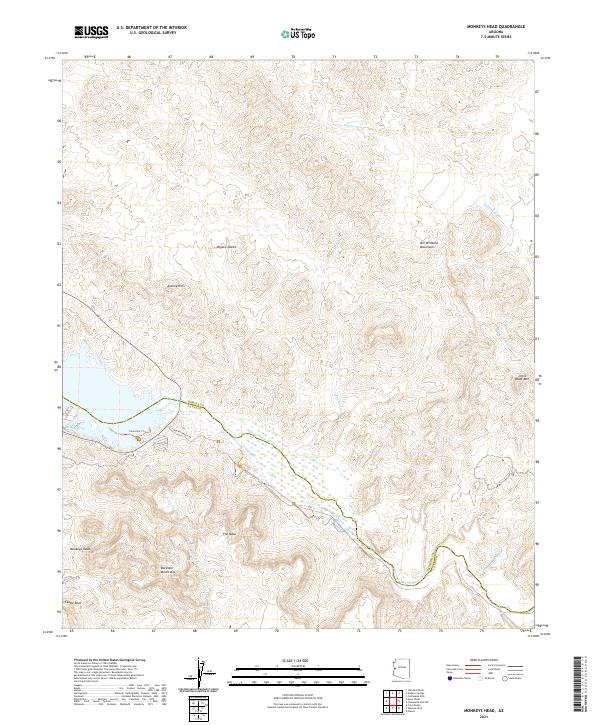 2021 Monkeys Head2021 Print · USGSMohave and La Paz counties meet along the Bill Williams River in this modern topographic study of the Arizona desert. Trace the massive Central Arizona Project Aqueduct as it cuts past local landmarks like Monkeys Head and Havasu Spring.
 - 2021 Map of Cross Roads, 2021 Print
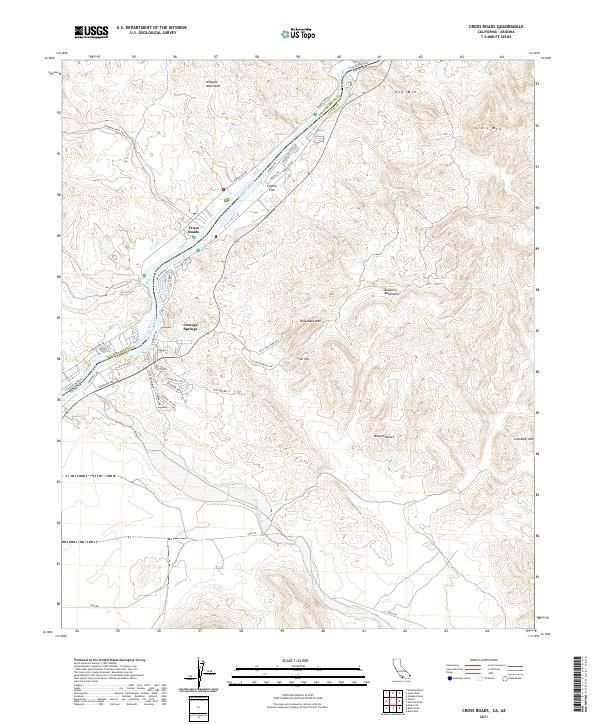 2021 Cross Roads2021 Print · USGSThe Colorado River borderlands come into focus in the early 2020s, showing the residential and desert landscape at the California-Arizona line. Trace the local geography of Cienega Springs and Empire Flat or follow the path of Billy Mack Mine Rd toward Lion Hill.
 - 2021 Map of Gene Wash, 2021 Print
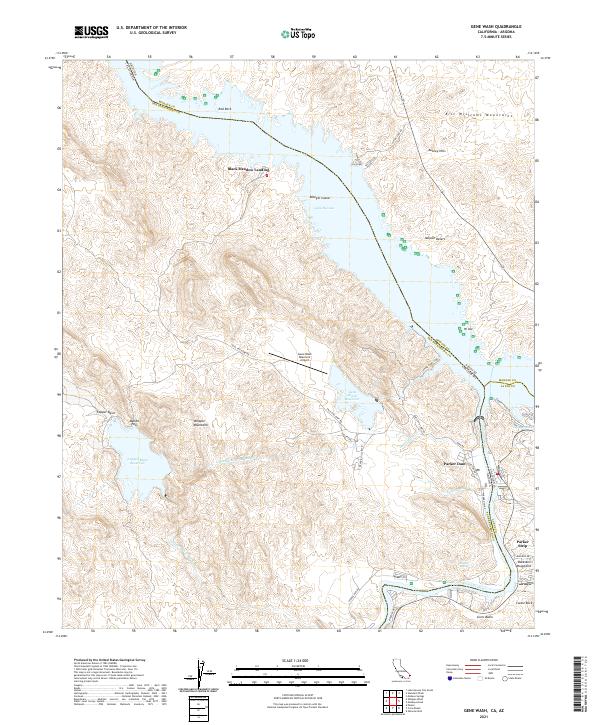 2021 Gene Wash2021 Print · USGSThe California-Arizona borderlands come into focus in 2021 as the Colorado River reaches the massive infrastructure of Parker Dam. Local history enthusiasts can trace the Colorado River Aqueduct and locate the Gene Wash Reservoir Airport and Black Meadow Landing.
Showing maps 1-25 of 26
Top cities near Parker Strip
- Lake Havasu City historical maps
- Parker historical maps
- Parker historical maps
- Cienega Springs historical maps
- Big River historical maps
- Bouse historical maps
See more
Top neighborhoods of Parker Strip
Frequently asked questions
- What are the different types of historical maps available for Parker Strip?
- What is the oldest map of Parker Strip?
- Where can I purchase historical maps of Parker Strip for my home or office?
- Where can I download high-res historical maps of Parker Strip?
- Are there historical topographic maps available for Parker Strip?
- Is there historical aerial imagery available for Parker Strip?
- Where are historical maps of Parker Strip sourced from?